A contract for differences is a unique trading opportunity. Allowing investors to speculate on the movements of an underlying asset, they don’t have to own the asset itself. Instead, they take advantage of the differences between its opening and closing prices. Across Europe, governments are looking to entice investment into the renewable energy sector using CFD contracts. While their contracts operate slightly differently from trading CFDs, both offer a great way for small business owners to invest in sustainable power.
The UK’s Bet on CFDs for Sustainability
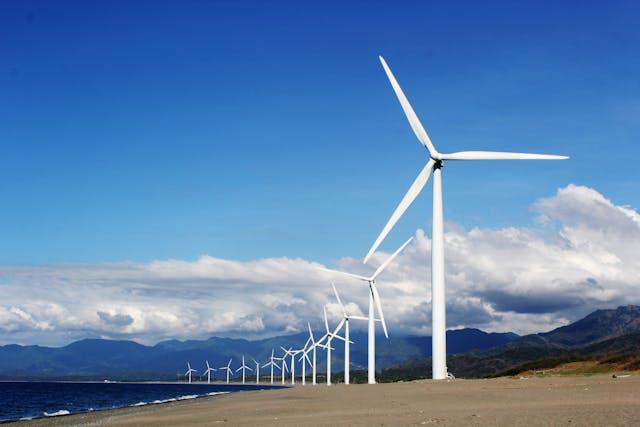
The government of the United Kingdom is one country that has made major changes to CFD schemes. It has extended its contracts from 15 years to 20 years for projects that use solar, offshore or onshore wind. The idea is that the increased length will provide more confidence for investors, lowering risks and costs.
This is part of a wider scheme to help the government meet its clean energy targets. This is known as the net-zero scheme, and it aims to have reduced greenhouse gas emissions by 100% compared to 1990 by the year 2050. A large part of this includes increasing the capacity for offshore wind production from 15 GW to 50 GW in the next five years.
Government CFD products are used to raise money for investment in the energy sector. They work in the same way as a product purchased through a CFD broker would. Both operate on differences between an agreed-upon price and the actual price of the asset, profiting from their opening and closing values. In the case of the government, this is renewable energy, though in trading, it can be anything from stocks to forex and other commodities. In both types of trade, the asset itself is not physically traded.
Romania’s Renewable CFD Offerings
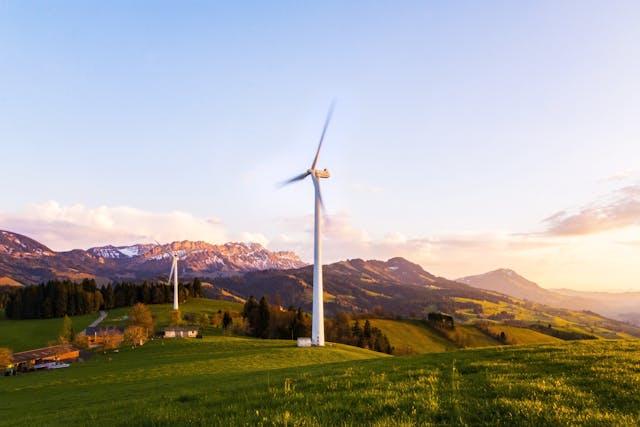
A similar scheme is underway across Europe in Romania, where a second round of CFD auctions has taken place with 3,472 MW of renewable energies on offer. The tender was launched by the Romanian Ministry of Energy and is seeking to attract foreign investment in the sector. Prices have been set at €80/MWh for wind energy and €73/MWh for solar.
The first of these auctions was extremely successful, generating 1,500 MW of power, which it will now incorporate into the national grid. The country has set climate goals for as soon as 2030, aiming for a mix of 30.7% renewable energy.
Poland Steps Towards Renewables
In June, Poland also made amendments to a draft bill concerning renewable energy. It already supports biomethane plants using CFD contracts. This amendment has provided an extension to the support system and rehauling the process for those who want to produce over 1 MW. Producers will be eligible for support for 20 years.
Government contracts are not the only way to invest in renewables. It can be done through stocks, shares and with the right broker, even via CFDs. As a small business owner, it can be a great way to invest in Europe’s sustainable future while making long-term profit.