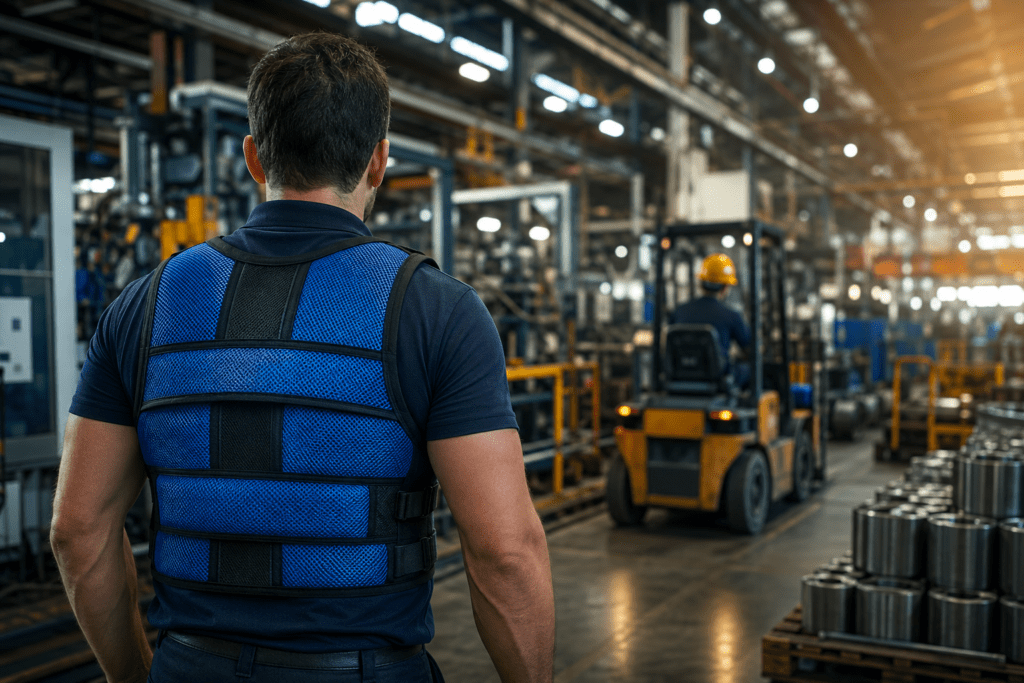
One often overlooked solution is the use of a cooling vest. By helping workers stay comfortable and productive in hot environments, cooling technology supports healthier employees, reduces operational disruptions, and contributes to more efficient resource management. Sustainability is not only about protecting the environment but also about building workplaces where people can perform safely and effectively over the long term.
Sustainability Starts with People
Industrial sustainability extends beyond reducing emissions. A truly sustainable operation considers environmental responsibility, economic performance, and employee welfare equally.
Heat stress has become an increasing concern as temperatures continue to rise worldwide. Workers in factories, warehouses, foundries, mining operations, food processing plants, and outdoor construction sites often face physically demanding tasks under challenging conditions. Excessive heat can reduce concentration, increase fatigue, and slow down production.
When workers become overheated, businesses often experience lower productivity, more frequent breaks, higher absenteeism, and an increased risk of workplace incidents. These challenges not only affect operational efficiency but also create unnecessary waste through production delays and equipment downtime.
Providing cooling solutions helps organizations create a healthier workforce while supporting long-term sustainability goals.
Reducing Energy Consumption Through Personal Cooling
Many industrial facilities rely heavily on air conditioning systems to cool entire buildings. While effective, cooling massive production halls or warehouses requires significant amounts of electricity.
In many situations, cooling the individual rather than the entire workspace can be a more energy-efficient approach. Personal cooling equipment allows employees to regulate body temperature without requiring facility-wide temperature reductions.
This targeted cooling strategy offers several advantages:
- Reduced dependence on large HVAC systems
- Lower electricity consumption
- Smaller carbon footprint
- Better comfort in areas where climate control is difficult
- Improved flexibility across multiple work environments
Instead of lowering the temperature throughout an entire building, companies can focus cooling resources where they deliver the greatest benefit.
Supporting Higher Productivity During Hot Conditions
Heat has a direct impact on physical and mental performance. Workers experiencing excessive heat often move more slowly, make more mistakes, and require longer recovery periods.
Maintaining a comfortable body temperature helps employees preserve energy throughout the workday. This translates into:
- More consistent productivity
- Improved concentration
- Better decision making
- Reduced physical fatigue
- Higher work quality
Even modest improvements in worker performance can significantly increase overall operational efficiency, especially in large industrial facilities employing hundreds or even thousands of people.
Less Downtime Means Less Waste
Production interruptions are expensive from both financial and environmental perspectives.
When heat stress causes workers to slow down or stop operations, equipment may sit idle while still consuming energy. Delayed production schedules can also lead to additional transportation costs, overtime hours, and increased resource consumption.
Cooling solutions help maintain smoother workflows by allowing employees to work more comfortably throughout their shifts.
A more stable production process often results in:
- Fewer interruptions
- Lower operational waste
- Improved production planning
- More efficient equipment utilization
- Better resource allocation
Sustainability often comes from eliminating inefficiencies rather than making dramatic operational changes.
Improving Workplace Safety
Heat-related illnesses remain a serious concern in industrial environments. Heat exhaustion and heat stress can impair judgment, reduce reaction times, and increase the likelihood of accidents.
A safer workplace is also a more sustainable workplace.
Accidents frequently result in:
- Medical treatment
- Lost workdays
- Damaged equipment
- Production delays
- Additional administrative costs
Reducing heat exposure helps lower these risks while creating a healthier working environment for employees.
Organizations that invest in worker safety often experience stronger employee retention, lower insurance costs, and improved operational stability over time.
Extending Workforce Resilience
Climate experts continue to predict longer and more frequent heat waves across many regions. Industries that prepare for these changing conditions will be better positioned for future challenges.
Cooling technology enables businesses to continue operating effectively even during periods of extreme heat.
Employees who remain physically comfortable are generally better able to maintain consistent performance across long shifts and demanding projects.
This resilience becomes increasingly valuable in sectors such as:
- Construction
- Manufacturing
- Logistics
- Mining
- Utilities
- Oil and gas
- Agriculture
- Transportation
Preparing workers for warmer environments supports both operational continuity and long-term business sustainability.
Supporting Employee Well-being
Sustainability increasingly includes social responsibility alongside environmental performance.
Organizations are placing greater emphasis on employee health, comfort, and job satisfaction. Workers who feel supported are often more engaged and more likely to remain with their employer.
Providing high-quality personal cooling equipment demonstrates a commitment to employee well-being rather than simply meeting minimum safety requirements.
This investment may contribute to:
- Higher employee satisfaction
- Lower turnover
- Reduced recruitment costs
- Improved morale
- Stronger company reputation
A healthier workforce creates long-term value that extends well beyond immediate productivity gains.
A Practical Addition to ESG Strategies
Environmental, Social, and Governance (ESG) initiatives have become increasingly important for industrial organizations.
Cooling solutions align with several ESG objectives.
From an environmental perspective, targeted personal cooling may reduce overall energy consumption by limiting the need for large-scale climate control.
From a social perspective, cooling equipment improves employee comfort, health, and workplace safety.
From a governance perspective, implementing proactive heat management demonstrates responsible operational planning and risk management.
Companies looking to strengthen ESG performance often benefit from combining multiple smaller improvements that together create measurable long-term impact.
Choosing Reliable Cooling Solutions
Not every industrial environment has the same cooling requirements. Some workplaces require lightweight solutions for highly mobile workers, while others need advanced cooling systems designed for prolonged exposure to high temperatures.
Selecting proven products from experienced manufacturers helps organizations maximize both worker comfort and operational efficiency.
Companies seeking innovative personal cooling technologies can explore the solutions offered by Inuteq, a specialist in advanced cooling products designed for demanding industrial, professional, and outdoor environments.
Choosing the right cooling solution should take into account working conditions, duration of use, mobility requirements, maintenance needs, and environmental factors.
The Future of Sustainable Industrial Operations
Industrial sustainability is built on continuous improvement. While renewable energy, efficient equipment, and circular manufacturing remain essential, protecting the workforce is equally important.
Cooling vests represent a practical investment that supports environmental goals, operational efficiency, and employee well-being at the same time. By reducing the effects of heat stress, businesses can improve productivity, lower energy consumption, minimize operational waste, and create safer working environments.
As global temperatures continue to rise, organizations that embrace personal cooling technologies will be better prepared for future challenges. Sustainable industrial operations are not achieved through a single innovation but through many thoughtful improvements that work together. Helping employees stay cool, healthy, and productive is one of those improvements, delivering benefits for businesses, workers, and the environment alike.