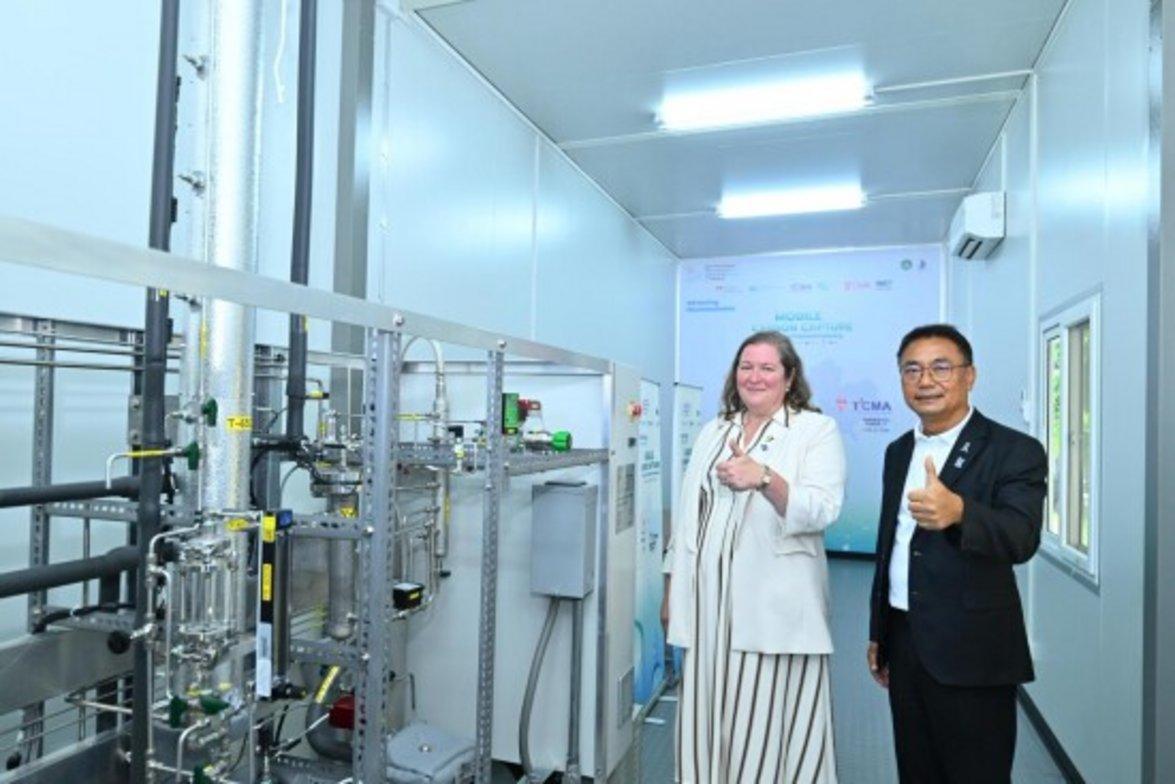
The Thai Cement Manufacturers Association (TCMA) has deployed a Mobile Carbon Capture Unit in Thailand for the first time, marking a new phase in a Thailand-Canada partnership aimed at decarbonising one of the country’s hardest-to-abate industrial sectors. The pilot, run under the project “Decarbonization of the Cement and Concrete Sectors in Thailand,” designates Saraburi province as a low-carbon technology testbed known as the “Saraburi Sandbox.” The scheme brings together industry, government, academia and international partners, and is funded by the Government of Canada through Environment and Climate Change Canada, with the United Nations Industrial Development Organization (UNIDO) acting as implementing agency. It supports Thailand’s 2050 Net Zero Cement and Concrete Roadmap and is designed to test carbon capture performance under real industrial conditions.
From Thailand-Canada Collaboration to Industrial-Scale Deployment
The arrival of the Mobile Carbon Capture Unit (MCCU) in Thailand is being positioned as a significant step in building technological readiness for carbon capture, one of the principal routes available to high-emission industries such as cement. TCMA describes the deployment as central to strengthening the sector’s response to the government’s 2050 Net Zero Cement and Concrete Roadmap, with the association acting as a bridge between industry, government, academia and global organisations.
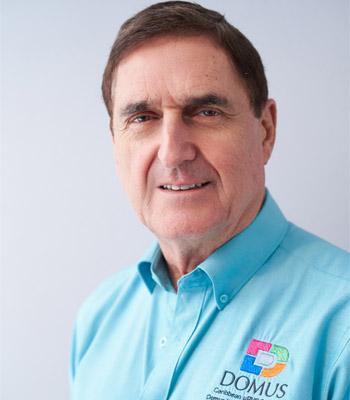
Dr. Chana Poomee, Honourary Chairman of TCMA and President of the ASEAN Federation of Cement Manufacturers (AFCM), said:
“The transition to Net Zero for hard-to-abate sectors such as cement cannot be achieved in isolation. It requires policy support from the government, as well as international collaboration in technology, finance, and knowledge transfer to accelerate real-world implementation.”
Connecting Technology and Investment Through Global Collaboration
The project’s funding structure links Canadian government support with UNIDO’s implementation role, aiming to build a technology and innovation ecosystem for decarbonising Thailand’s cement and concrete industries. The MCCU itself was developed by the Clean Energy Technologies Research Institute (CETRI) at the University of Regina, and is now being tested against Thai industrial conditions to assess its performance and wider applicability.
Ms. Richelle Bourgouin, Deputy Minister of Trade and Export Development, Saskatchewan, Canada, said:
“This partnership also opens opportunities to connect expertise in clean technology, research, and innovation between the two countries, enabling the development of practical solutions and fostering future trade and investment cooperation in Thailand and across ASEAN.”
Saraburi Sandbox: A PPP Model For Low-Carbon Industry
TCMA is working with Chulalongkorn University to study and transfer knowledge on carbon capture technology while building human capacity within the sector. The MCCU will be rotated across cement plants operated by TCMA member companies in Saraburi province, collecting technical data and testing performance to help assess future investment pathways.
The Saraburi Sandbox is structured as a Public-Private Partnership platform that draws together government, industry, academia and international partners to pilot and scale carbon reduction technologies. The area is being developed as a prototype low-carbon city, integrating technology, infrastructure, standards and investment frameworks intended to support Thailand’s longer-term industrial transition.
Accelerating Readiness For A Low-Carbon Future
Dr. Chana has framed the MCCU deployment as an important step in building both technological and knowledge readiness, particularly for carbon capture technologies that will be essential to industries facing steep decarbonisation challenges. Preparation, the association argues, must start now, given the time needed for technology development, workforce readiness and infrastructure buildout, especially as global carbon measures such as carbon pricing and emissions trading systems become increasingly stringent.
Dr. Chana Poomee, Honourary Chairman of TCMA and President of the ASEAN Federation of Cement Manufacturers (AFCM), said:
“The success of decarbonizing the cement industry depends on collaboration across all sectors to create an enabling ecosystem for investment and to accelerate the adoption of technologies at scale.”
TCMA’s work reflects the Thai cement industry’s effort to move decarbonisation plans from strategy into practice, while reinforcing the value of Thailand-Canada cooperation on clean technology, knowledge transfer and future investment partnerships. The collaboration is intended to help the country’s cement industry remain competitive within a low-carbon economy, accelerating progress toward Net Zero 2050 and positioning Thailand as a regional model for low-carbon industrial development across ASEAN.