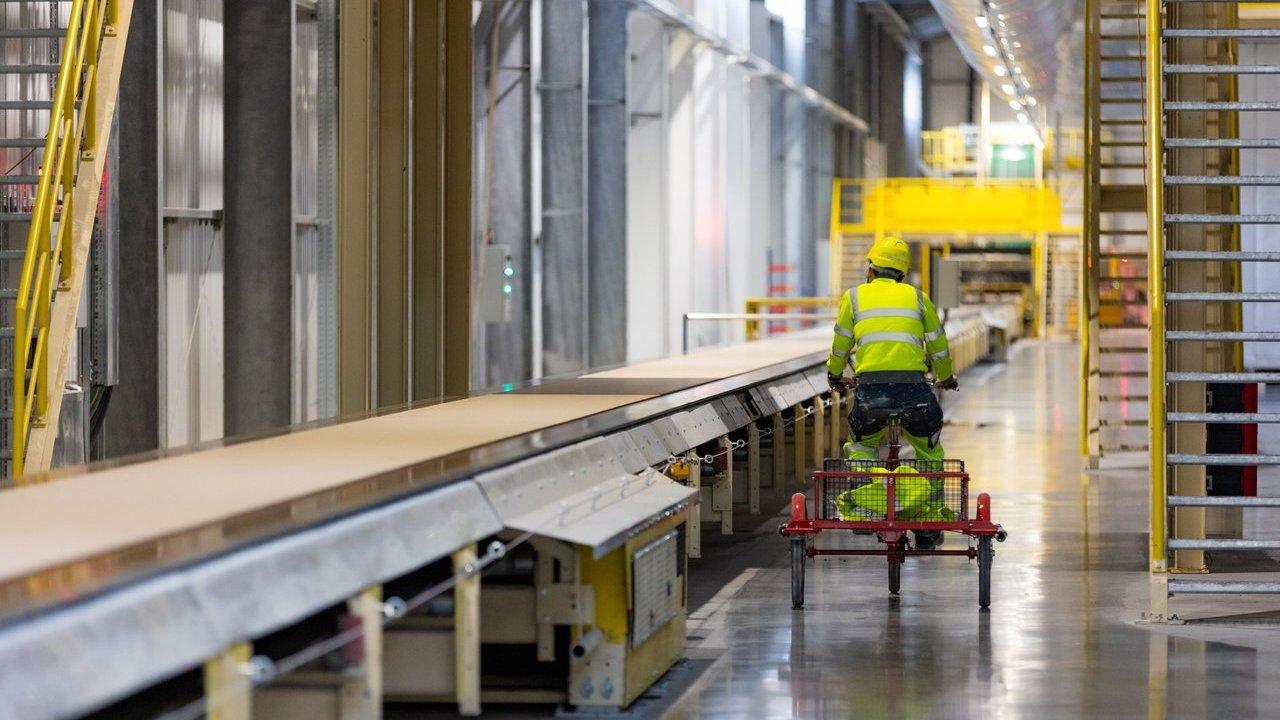
Siniat has reported a 5% reduction in carbon intensity across its UK sites, following investment in more efficient plasterboard production and lean manufacturing processes. The result follows the opening of a £170m production line at the drywall manufacturer’s Bristol headquarters last March, alongside improved systems at its Ferrybridge facility. The company says the investment has reduced the energy intensity of production per tonne of product and allowed older equipment to be retired. As part of Etex Building Performance, Siniat’s progress contributes towards parent company Etex’s target to cut Scope 1 and 2 carbon intensity per unit of output by 35%.
Investment Supports Lower Carbon Production
The Bristol facility represents a substantial commitment to more efficient manufacturing within the construction products sector. Designed with more sustainable operations in mind, the new line has enabled Siniat to introduce newer technology while improving thermal performance and lowering the carbon generated through its operations compared with 2024.
For plasterboard manufacturers, operational emissions and energy use are material considerations, particularly as construction teams seek clearer information on the environmental profile of building materials. Siniat’s reported reduction places production efficiency at the centre of its approach, combining technology investment with leaner processes across its UK operations.
The company is also pursuing lower carbon intensity through increased use of recycled materials and a zero waste to landfill pledge. Together, these measures link operational improvements with resource management, offering a practical route to reducing emissions associated with manufacturing activity.
Carbon Data For Building Projects
A major part of Siniat’s sustainability update is the availability of verified Environmental Product Declarations, or EPDs, which provide embodied carbon data for more than 86% of its products. This coverage gives specifiers, contractors and architects a stronger evidence base when evaluating materials for projects with environmental reporting requirements.
Embodied carbon data is increasingly relevant to decisions made during design, procurement and delivery. By making product-level information available through EPDs, Siniat is seeking to help project teams compare options while accounting for both technical performance and environmental objectives.
Oliver Cripps, Head of Sustainability at Siniat, said:
“We are continuously evaluating our targets and are committed to decarbonisation.
Oliver Cripps, Head of Sustainability at Siniat, shared:
“Sharing information on our progress is also really important to us to ensure our customers can make transparent product evaluations and select the materials that achieve both performance and environmental targets across a wide range of building projects.
Expanding EPD Coverage
Siniat now plans to review the EPDs covering 86% of its product range to reflect the latest carbon intensity improvement. That work is intended to ensure customers can use updated information when compiling project-level carbon assessments and meeting their own reporting obligations.
The effort highlights the value of independently verified product information in the built environment. Clear declarations can support more informed purchasing decisions, particularly where clients and delivery teams are balancing material performance, cost and carbon targets across a wide range of construction projects.
Oliver Cripps, Head of Sustainability at Siniat, stated:
“EPDs help to identify low carbon options and give confidence to our customers in their purchasing decisions. We are now looking to review the EPDs we have covering 86 per cent of Siniat products to show the carbon intensity improvement. This enables our customers to own their reporting obligations and meet targets at a project level.”
Supporting Sector Carbon Targets
Siniat manufactures internal and external drywalling systems, making its production footprint relevant to a broad range of building projects. The combination of manufacturing upgrades, recycled content, waste commitments and product disclosures indicates how construction product suppliers can address emissions both within their own operations and through the information they provide to customers.
The company’s reported progress also aligns with wider industry work on lower carbon construction, including the UK Net Zero Carbon Building Standard. As project teams seek consistent ways to measure and reduce emissions, product data and production efficiency will remain important elements of the sector’s response.
Oliver Cripps, Head of Sustainability at Siniat, reflected:
“Working towards our environmental targets translates into better products and drives innovation. These improvements have a positive impact along the supply chain supporting initiatives such as the UK Net Zero Carbon Building Standard.”
A Measurable Manufacturing Step
The 5% reduction in carbon intensity gives Siniat an early measurable outcome from its Bristol investment, while its Ferrybridge improvements show that progress can also come from upgrades to established operations. With verified EPDs already covering most of its products, the manufacturer is pairing operational change with the transparency that construction professionals need for carbon reporting.
For the wider building materials market, the update offers a focused example of how capital investment in modern production assets can improve energy efficiency, reduce operational carbon intensity and strengthen the sustainability information available at project level.