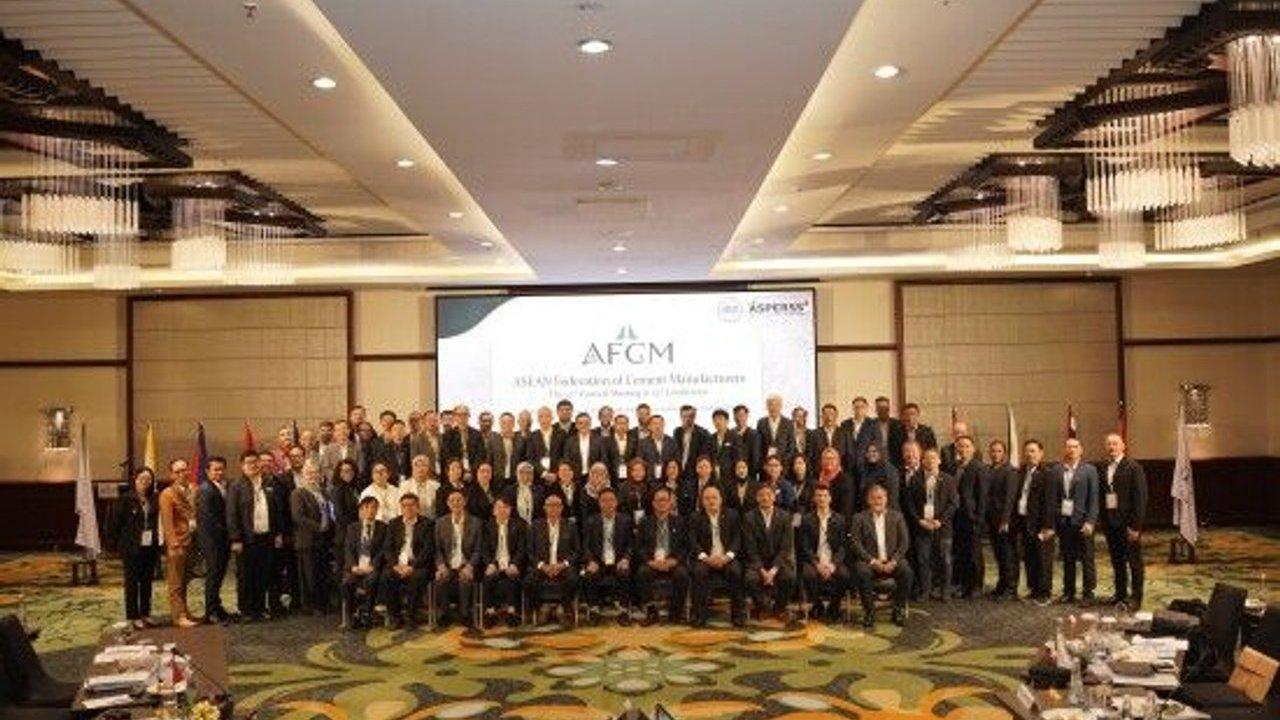
Thai Cement Manufacturers Association has reported that the ASEAN cement industry reduced cumulative CO₂ emissions by more than 14 million tonnes in 2025 under the 2035 AFCM Decarbonization Roadmap. The reported 14.4 million tonnes of reductions represent a 6.0% decrease against the 2020 baseline across all eight ASEAN Federation of Cement Manufacturers member countries. The result places regional cooperation, lower-carbon materials and cleaner energy at the centre of ASEAN cement’s industrial transition. TCMA is also preparing to host the 27th AFCM Technical Symposium & Exhibition in Bangkok from 3 to 5 November 2027.
Regional Progress Takes Shape
The reductions follow the joint announcement of the roadmap by eight AFCM member countries in October 2025. The framework gives countries a shared direction while allowing national strategies to reflect differing circumstances and levels of readiness.
Reported progress has come through broader use of low-carbon cement, increased alternative fuel substitution and renewable electricity. Together, these measures point to changes in both the materials used to make cement and the energy supporting production.
Dr. Chana Poomee, Honorary Chairman at TCMA and outgoing AFCM President, said:
“A shared regional roadmap gives all eight member countries a common direction and clear targets, while allowing each country to move forward according to its own national circumstances and readiness. The emission reductions achieved demonstrate that when the industry shares a vision and takes collective action, measurable results are possible. The transition to low-carbon cement is not simply an environmental imperative; it is also an opportunity to advance technology, create added value and strengthen the long-term competitiveness of the ASEAN cement industry,”
Targets To 2035
The 2025 outcome provides an early benchmark for the roadmap’s longer-term objectives. ASEAN cement manufacturers are targeting cumulative CO₂ reductions of approximately 35.2 million tonnes by 2030 and 42.9 million tonnes by 2035, both measured against the 2020 baseline.
For a sector central to construction across the region, the roadmap links emissions reduction with technical capability and competitiveness. It also creates a common basis for members to compare progress, share experience and develop practical routes towards lower-carbon cement and concrete.
National plans are beginning to give the regional ambition more local definition. The Philippines has developed its Philippine Cement and Concrete Decarbonization Roadmap, Indonesia has established the Decarbonization Roadmap of Indonesia Cement Industry, and Thailand is progressing its Thailand 2050 Net Zero Cement and Concrete Roadmap.
Mr. Montri Nithikul, Vice Chairman at TCMA and outgoing Secretary General of AFCM, said:
“Translating shared regional ambitions into national roadmaps demonstrates the growing strength of our collaboration. It also creates opportunities for countries to learn from one another and exchange experience in technology, innovation, standards and implementation approaches. This knowledge-sharing will help accelerate the industry’s transition and support the region’s long-term decarbonization ambitions,”
Thailand Builds Practical Connections
TCMA’s role will continue beyond its outgoing AFCM presidency. The association intends to connect Thai cement manufacturers with AFCM members, government agencies, academia and international partners, bringing technical knowledge and promising technologies into practical application in Thailand.
This work is aligned with Thailand’s 2050 Net Zero Cement and Concrete Roadmap and the Saraburi Sandbox. TCMA describes the sandbox as a platform for bringing together partnerships, testing innovative solutions and demonstrating routes towards a low-carbon industrial ecosystem.
Mr. Surachai Nimla-or, Chairman at TCMA and Head of the Thai Delegation, said:
“TCMA is committed to ensuring that regional and global cooperation delivers practical benefits for our members and the Thai cement industry. We aim to translate knowledge, technologies and experience from international networks into solutions suited to Thailand’s context. The Saraburi Sandbox provides an important opportunity to develop collaborative initiatives and innovation pilots that can be scaled up across the industry, both nationally and regionally,”
Bangkok Symposium Sets Next Stage
The AFCM Meetings also completed the handover of the AFCM presidency from Dr. Chana Poomee to the Philippines. The transition maintains momentum behind the association’s “One Team, One Community” spirit as members pursue decarbonisation alongside industrial development.
Thailand’s next major contribution will be the 27th AFCM Technical Symposium & Exhibition, organised by TCMA in Bangkok in 2027. Under the theme “CEMENT NEXUS – Bridging Innovation & Partnership for Cement Decarbonization,” the event will convene manufacturers, industry experts, technology providers and international partners from ASEAN and beyond.
The symposium is intended to provide a venue for technical exchange, technology showcases and partnership-building. With the 2025 reductions now establishing a measurable starting point, TCMA’s programme connects the region’s long-range emissions goals with the technologies, collaboration and implementation required to advance them.