Even ten years ago, conversations about the environmental friendliness of freight transportation rarely went further than beautiful slides in reports for investors. Today, everything has changed radically. And the matter is not only about care for the environment, but also about practical usefulness for business. Owners of enterprises and top management are thinking more and more about how much fuel a tractor burns per mile, whether a warehouse can receive electric semis, where to find drivers who know how not to run the engine idle, and what to do with a fleet that still has years of service left.
Decarbonizing commercial transportation has stopped being a slogan about a faraway future. It is a rebuilding of the market, where the winner is not the loudest brand, but the one that is not afraid to use non-standard approaches, builds environmental questions into its business model, and counts emissions as carefully as costs.
How to Adjust to New Realities
American freight transport for a long time was based on diesel engines. And it must be admitted: diesel turned out to be a damned tenacious technology. It is understandable to mechanics, with proper maintenance it can drive more than a million miles, it refuels quickly, is unpretentious and can handle heavy work. But this strength has its own price – CO₂ emissions, nitrogen oxides, and soot near ports, terminals, and distribution centers.
However, this does not mean that diesel trucks cannot be part of eco-friendly freight transport. Yes, it will not be possible to fully exclude their negative influence on the environment. But it is possible to reduce the harm to a minimum, if the question is approached thoughtfully.
The First Front – Routes and Loading
Empty mileage in logistics is like a refrigerator with an open door: it seems the equipment works, but the use is leaking into nowhere. If a carrier reduces extra miles, plans return trips better, and removes waiting time in yards, even with an old tractor, he will be able to lower emissions. For small fleet operators, this is often the most realistic start.
The Second Front – Equipment
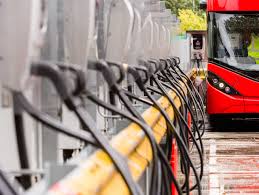
Electric trucks already perform well on predictable routes: port transportation, last-mile delivery, and regional round trips. Where the vehicle can charge at night in the depot, the battery stops being a burden and becomes a good working instrument. But for long-haul on I-80 or I-10, the picture is still not so optimistic. Battery weight, a lack of fast charging, and difficult weather conditions can break the economics of the trip.
Therefore, the market is not going by one wide road, but by a network of detours. Somewhere, they put battery-electric trucks. Somewhere they move to renewable diesel, because it can be used in existing infrastructure. Someone tests renewable natural gas, hybrid schemes, aerodynamic packages, and tires with low rolling resistance. Usually, any large-scale industry develops like this: not by a jump over a canyon, but by a series of short, checked steps.
The Third Front – Fleet Transparency
When a small beginning company buys a used Freightliner, very often the only criterion of choice is the price. This is not always right. After all, it is no less important to know the history of the specific vehicle. Year of manufacture, service records, possible accidents, real mileage – all this helps to understand whether the truck will be a normal asset or a smoking devourer of budget. If you are sourcing local vehicles, running a South Carolina plate lookup free of charge is a great starting point. It is not a magic button, but quite a useful instrument that will help to make the right decision when buying.
What Comes Next
Regulation also changes market behavior, although in the USA, it has now become nervous and sometimes questionable. Federal rules, California initiatives, court disputes, requirements of ports and big shippers – all this presses on carriers from different sides. Walmart, Amazon, UPS, and food distribution companies need not just miles, but cleaner miles, confirmed by data.
Against this background, a new type of competition has begun to appear. Earlier, a carrier sold the rate, reliability, and availability of the vehicle. Now to this are added carbon reporting, fuel efficiency, readiness for low-emission zones, and the ability to work with clients whose ESG indicators are tied to contracts.
Conclusion
Commercial transportation will not become green in one model year. This is a heavy, dusty, and in places irritating process. But it is already going. And the freight transport market is changing not because someone wrote a beautiful climate manifesto, but because fuel, emissions, downtime, reputation, and access to large contracts are now tied into one knot. Whoever learns to untie it carefully will go further.