The global environmental disclosure non-profit CDP has launched an artificial intelligence platform designed to help cities, states and regions make sense of mounting climate risk and convert it into fundable, on-the-ground action. Unveiled in London on 8 June 2026, the CDP Adaptation & Action Explorer pulls together climate hazard data and local government disclosures into a single, open-source tool aimed at decision-makers who have long struggled with fragmented and highly technical resilience information.
Developed with support from Google.org through its Fellowship programme, the platform is built on CDP disclosure data from more than 1,000 subnational governments across over 80 countries — a footprint representing roughly 16% of the global population. The tool is freely accessible online, and CDP is positioning it as infrastructure for the growing field of locally led adaptation.
Closing a widening data gap
Cities and regions sit on the front line of a warming climate, exposed to flooding, extreme heat, drought and wildfires. CDP reports that over 94% of disclosing governments said they were impacted by climate hazards in 2025. The stakes are rising in step with urbanisation: more than 55% of the world’s population already lives in cities, a share the UN projects will approach 70% by 2050. As populations concentrate, the resilience of local government becomes a question of national consequence.
Yet the data needed to plan for that future has remained scattered, dense and largely inaccessible without specialist expertise. Subnational governments have also lacked a consistent language for communicating their priorities and investment needs to potential funders — a mismatch that has slowed collaboration and left viable projects unfunded. The Explorer attempts to bridge both gaps by combining CDP’s Cities and States & Regions disclosures with high-quality hazard data drawn from Google Earth Engine, layered with AI-driven analysis running on Google Cloud.
From understanding risk to enabling action
The platform is organised around four core functions. Users can assess climate risk by location, examining reported hazards, at-risk sectors and populations, and barriers to adaptation across specific cities and regions, supported by map-based data covering eight major climate hazards. They can study adaptation plans and pipelines — the goals governments have set, the measures already underway, and the projects earmarked for financing. The tool also surfaces peer best practice, allowing a city facing a particular hazard to see how comparable governments elsewhere have responded. An integrated AI assistant lets users interrogate complex datasets directly, drawing out location-specific insights to inform evidence-based prioritisation.
That emphasis on action over mere disclosure reflects a broader shift in the sector. CDP, which marked its 25th anniversary this year, has increasingly argued that transparency is only valuable when it drives decisions. The Explorer is a clear expression of that philosophy, designed to move users past risk identification toward concrete intervention.
The finance question
The platform lands at a moment of acute pressure on adaptation finance. The UN Environment Programme’s 2025 Adaptation Gap Report found that developing countries need an estimated US$310 billion a year by 2035, against international public adaptation flows of just US$26 billion in 2023 — leaving needs running at roughly 12 to 14 times current funding. For local governments specifically, access to capital is repeatedly cited as the single greatest obstacle to building resilience.
CDP’s own disclosure data underscores the scale of unmet demand. In 2025, cities, states and regions reporting through the organisation identified 2,871 projects requiring a combined $114.3 billion in investment. By rendering that pipeline visible and analysable, the Explorer aims to help governments make the case for funding and connect with the investors and development finance institutions able to deliver it.
“Cities and regions don’t just need data – they need clarity on what to do next,” said Sherry Madera, CEO of CDP. “This is a transformational tool that harnesses CDP’s powerful data to accelerate real-world action. It brings together risk, action, and opportunity in one place, helping subnational governments prioritize, plan, and communicate with confidence. By making data usable and actionable, we are supporting earth-positive decisions that translate into real-world resilience.”
Katie Walsh, Global Director of Cities, States & Regions at CDP, added: “Access to finance remains one of the most significant barriers to climate adaptation for subnational governments. In 2025, cities, states and regions reporting through CDP identified 2871 projects requiring a total of $114.3 billion in investment. The CDP Adaptation & Action Explorer brings this pipeline into focus – making it easier to surface investable projects, understand what peer governments are doing, identify funding needs, and connect opportunities with partners required to deliver them. This is about turning ambition into funded, on-the-ground-action.”
A pro-bono partnership
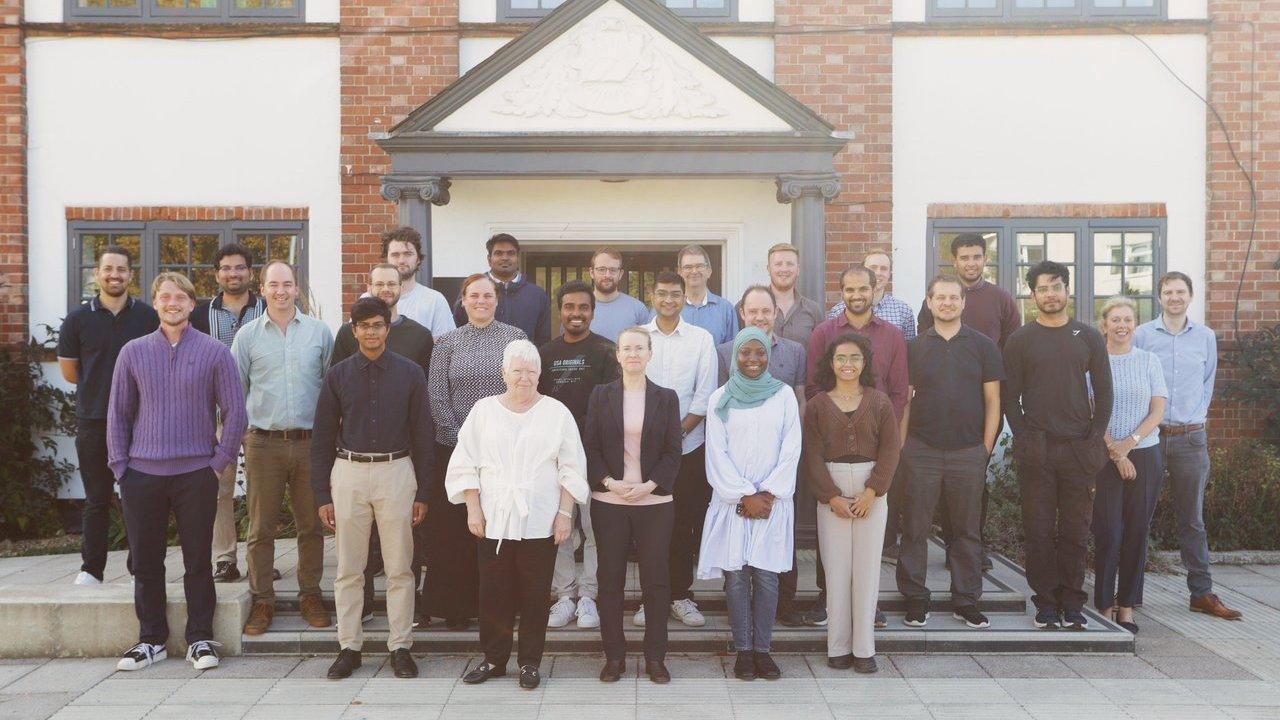
The tool grew out of a six-month Google.org Fellowship that placed a dedicated team of Google AI specialists, UX designers and software engineers alongside CDP on a pro-bono basis. The goal was to marry Google’s AI and Cloud technology with CDP’s environmental dataset to produce a freely available, open-source resource.
“When we assisted CDP with this Fellowship, our goal was to show how AI can fundamentally transform complex data into actionable insights,” said Maggie Johnson, Global Head at Google.org. “By applying Google’s AI and Cloud technology to CDP’s unparalleled environmental dataset, we’ve helped to develop an open-source platform that empowers subnational leaders to move decisively from climate risk to resilience.”
As national governments prepare to fold subnational priorities into the next round of climate commitments, tools that translate local risk into investable propositions are likely to gain traction. Whether the Explorer can meaningfully shift capital toward the cities and regions that need it most will be the measure worth watching in the months ahead.