Free returns built ecommerce. The promise of “buy it, try it, send it back” removed the friction that kept shoppers buying locally. But that promise carries a cost that rarely appears on sustainability reports: the carbon output, packaging waste, and landfill contribution generated by the reverse logistics chain that processes billions of returned parcels every year.
For ecommerce brands working to build genuinely responsible businesses, returns are where environmental intention meets operational reality.
The numbers are difficult to look away from
Around 30% of all online purchases are returned, compared to roughly 9% for in-store retail — more than three times the rate, at a fraction of the oversight.
In absolute terms, that gap represents billions of individual shipments moving backwards through supply chains, each one generating its own carbon footprint, typically larger than the original delivery due to inefficient consolidation in reverse logistics networks.
According to research from Optoro, US consumers return approximately 5 billion pounds of goods to landfill each year. Items returned in unsellable condition, or products for which reprocessing costs exceed resale value, frequently end up there — often without the customer knowing. That “keep it” offer from a major retailer isn’t purely generous: it sometimes means the item has no viable path back to the shelf.
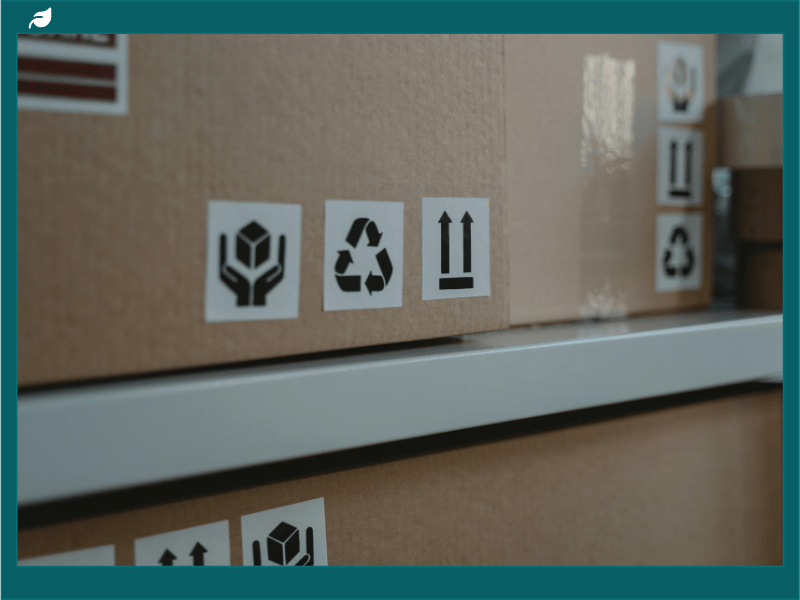
The packaging compounds the problem. A returned item may be handled two or three times — original packaging, return packaging, possibly new packaging before resale — each layer adding waste that buyers never see.
Research suggests only around 48% of returned goods can be sold at full price. The remainder is liquidated, donated, or discarded — each path carrying its own downstream environmental cost.
What actually causes returns
Not all returns are the same environmental event. A customer returning a product that genuinely didn’t fit represents a fundamentally different situation from one returning an item they believed was never delivered, or one initiating a return out of frustration with a brand’s communication.
A significant share of ecommerce returns are information-driven, not product-driven:
- Incorrect product descriptions or photography lead customers to receive something that doesn’t match what they expected
- Post-purchase anxiety — particularly for high-value purchases — drives returns that wouldn’t happen if the customer had timely reassurance during delivery
- Bracketing (ordering multiple sizes or variants to find the right one, then returning the rest) is reinforced when returns are frictionless but upfront guidance is poor
The distinction matters because information-driven returns are preventable. They don’t require new packaging design or lower-emission shipping partners. They require better communication before, during, and immediately after delivery.
The most underinvested stage of ecommerce
Between the moment a customer places an order and the moment they decide to keep or return it lies an interval most ecommerce brands manage poorly. Tracking notifications go out, then customers are left largely alone until delivery, unless something goes wrong.
When something does go wrong, or seems to, customers contact support. They ask where their order is. They report packages as lost when they’re still in transit. They initiate returns for items they might keep if someone addressed their concern promptly. “Where is my order?” (WISMO) queries account for 30–40% of ecommerce support volume in a typical operation.
The environmental cost of this gap is real: unnecessary replacement shipments sent for items that weren’t actually lost, returns initiated over frustration that a resolved support contact could have prevented, and re-shipments of wrong-size items that better upfront guidance would have avoided.
Brands that improve post-purchase communication proactive shipping updates, accurate tracking, and responsive support consistently see lower return rates. The mechanism is straightforward: a customer who is informed and reassured at every delivery stage is less likely to initiate a return out of uncertainty.
Where operations and sustainability connect
This is where support infrastructure becomes an environmental issue. Better post-purchase operations don’t just reduce cost; they reduce the volume of return-related emissions.
For Shopify merchants, AI-powered customer support for ecommerce can resolve the bulk of post-purchase inquiries — order status, tracking, returns policy — in real time, with access to live order data. A customer who learns immediately that their package is at a regional hub and arriving tomorrow is far less likely to initiate a return than one who waits 24 hours for a reply that arrives after their frustration has already peaked.
The effect compounds during high-volume periods. During peak seasons — Black Friday through Christmas, when return rates spike and support teams are under maximum pressure — AI resolution of routine post-purchase questions reduces the volume of contacts that escalate to replacement requests and unnecessary re-ships.
A documented ecommerce support case study illustrates the operational impact of resolving post-purchase queries faster and more consistently, including the downstream reduction in replacement shipments triggered by unresolved customer anxiety. For brands managing thousands of monthly orders, that reduction represents both a cost saving and a measurable contribution to emissions reduction.
Practical steps brands can take now
Reducing the environmental footprint of ecommerce returns doesn’t require a new logistics strategy. Several operational changes make a measurable difference:
Invest in post-purchase communication. Proactive shipping and delivery notifications reduce inbound “where is my order?” contacts by 30–40%. Each contact that doesn’t happen is a potential unnecessary return or replacement shipment that doesn’t happen.
Resolve support contacts faster. The longer a customer waits for a response, the more likely they are to escalate — requesting replacements or initiating returns out of frustration rather than genuine product dissatisfaction.
Make sizing and product information accurate and specific. Bracketing is rational when customers can’t trust product descriptions. Better photography, detailed sizing guides, and customer reviews with fit details reduce speculative purchasing.
Track return reasons and act on patterns. A high return rate on a specific product is usually a signal about information quality or product fit — patterns that, once identified, can be addressed at the source before they generate more reverse logistics.
Closing
Returns aren’t a problem ecommerce can eliminate. But the industry has spent a decade making returns frictionless without investing equally in reducing the conditions that make them necessary. The environmental cost of that imbalance is now measurable in carbon output, packaging waste, and landfill contribution.
For brands that take responsible business seriously, the post-purchase experience is the next operational frontier — not a customer service afterthought, but a genuine lever for reducing the environmental footprint of every order. The tools to improve it exist. The question is whether sustainability goals extend to operations, or stop at the warehouse door.
Author bio: CoSupport AI builds AI-powered customer support automation for ecommerce brands and B2B SaaS teams, with a focus on reducing ticket volume through smarter post-purchase communication.