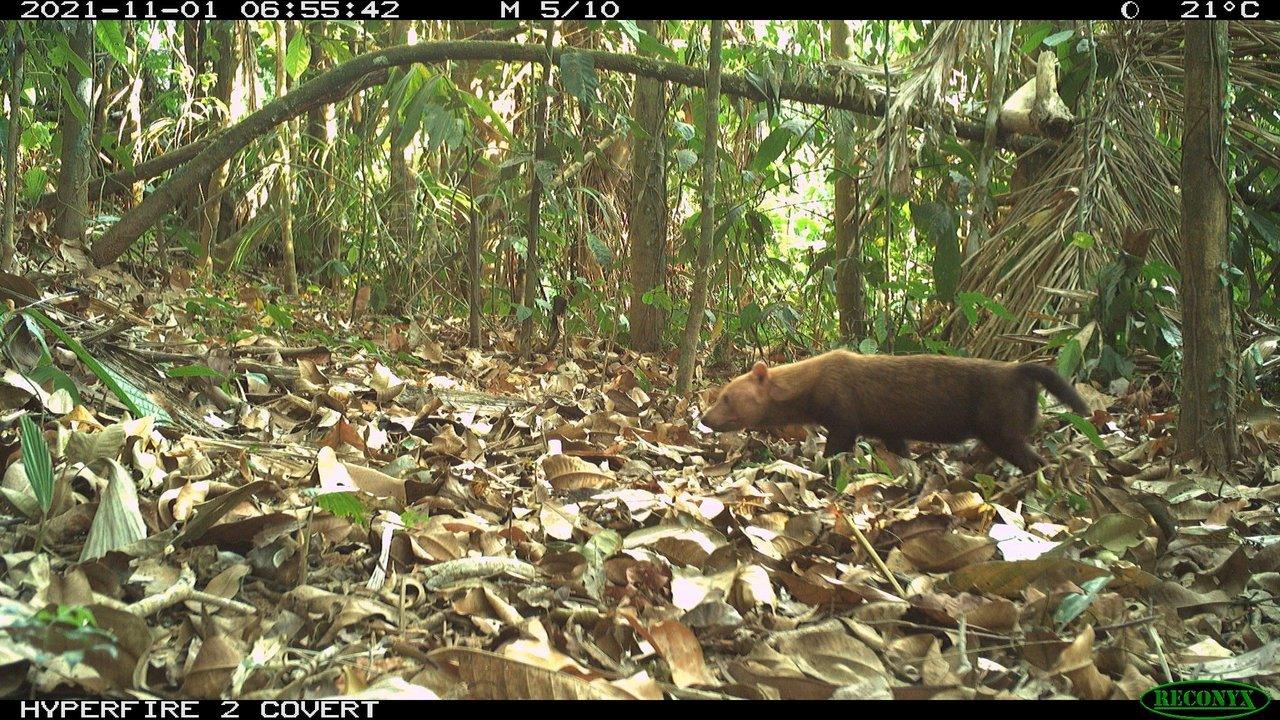
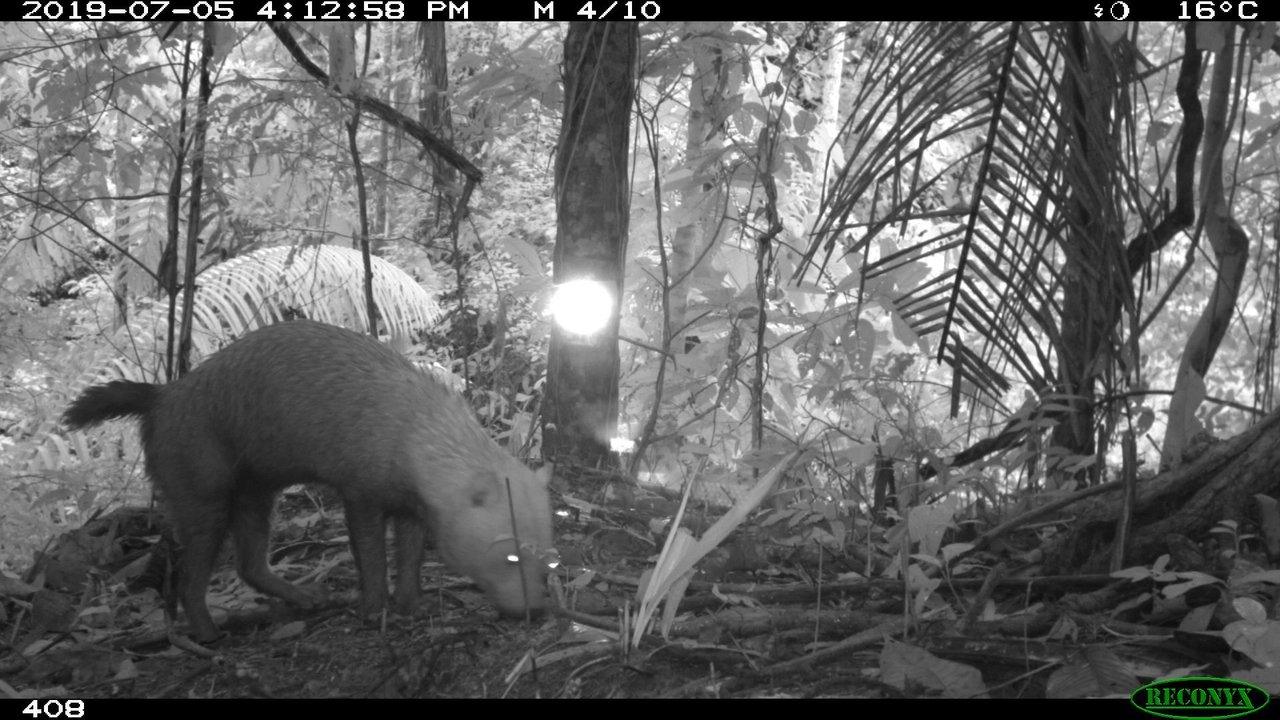
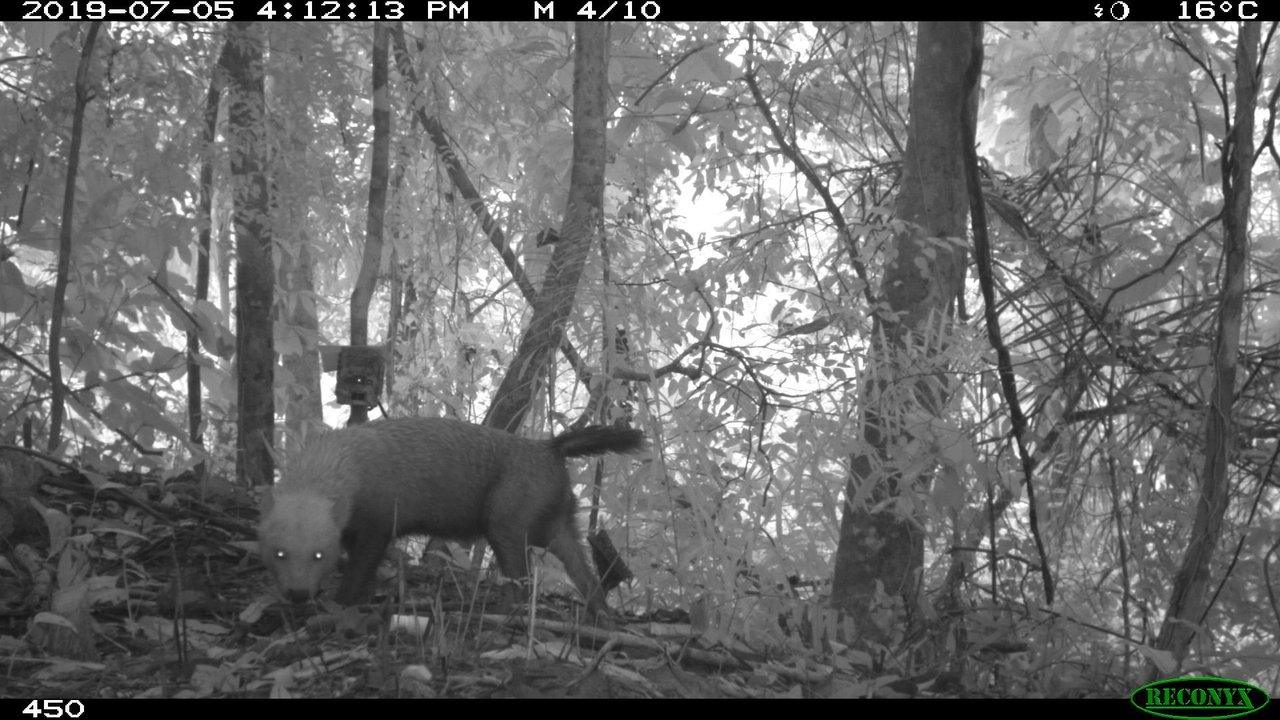
Wildlife Conservation Society scientists have found that bush dogs were recorded only 12 times during 25 years of camera-trap surveys across South America. The research, published in Canid Biology & Conservation, assessed 611,159 camera-trap nights at 6,756 stations in seven countries between 2001 and 2025. The 12 records represented 14 individual animals, offering substantial new evidence about one of the continent’s least-known carnivores. The findings could inform a reassessment of the species, which is currently listed as Near Threatened on the IUCN Red List.
An Exceptional Lack Of Records
The survey covered sites in Bolivia, Brazil, Colombia, Ecuador, Paraguay, Peru and Venezuela, with much of the sampling taking place in the western Amazon. Bush dogs were detected in just four countries: Bolivia, Brazil, Colombia and Ecuador. No records were made in Paraguay, Peru or Venezuela, despite more than 80,000 camera-trap nights across those three countries.
The study offers an unusually broad view of the species’ occurrence in tropical South America. Bush dogs are small, social canids that can weigh up to around seven kilograms, live in groups of as many as 12 animals and hunt cooperatively. Their geographic range is broad, but direct information about their populations remains limited.
Robert Wallace, Senior Conservation Scientist at WCS, said:
“Scientists who work in these forests have long known that seeing a bush dog is an extraordinary event. What these data show is just how extraordinary. After 25 years, more than 600,000 camera-trap nights, and thousands of cameras deployed across South America, we recorded bush dogs on only 12 occasions. That gives us compelling evidence that this isn’t simply an elusive animal—it exists at extraordinarily low densities.”
Putting Rarity In Context
Researchers were able to compare bush dog observations with other South American carnivores photographed by the same cameras in the same landscapes. Bush dogs were detected around 50 times less often than short-eared dogs, 100 times less often than jaguars and nearly 280 times less often than ocelots.
This comparison is especially valuable because it places the scarce records alongside animals widely regarded as difficult to encounter in the wild. It also points to the need for conservation assessments that account for the practical challenge of observing a species with such low reported encounter rates.
Diego Lizcano, wildlife biologist at WCS, said:
“One of the strengths of this study is that we can compare bush dogs with other carnivores recorded by the same cameras, in the same landscapes. Jaguars and ocelots are animals we think of as difficult to see, yet our cameras detected them roughly 100 and 280 times more often than bush dogs. Even the short-eared dog, sometimes called the ‘ghost dog,’ was detected about 50 times more often.”
Testing Camera Trap Detection
The researchers considered whether the animal’s modest size and low stature could make it harder for camera traps to record than larger carnivores. The same devices, however, frequently photographed pacas, mammals with broadly comparable size and shape. The bush dog’s social behaviour might also be expected to increase the likelihood of detection rather than reduce it.
Based on the available records, the authors conclude that bush dogs are likely to occur at densities well below one animal per 100 square kilometres across much of their range. In Amazonian forests, which form the core of the species’ range, the study suggests densities could be lower than one animal per 350 square kilometres, while stressing that these estimates remain uncertain.
María Estela Viscarra, Bolivia biologist at WCS, said:
“When you work with camera traps, you become accustomed to waiting a long time for rare species to appear. But the bush dog is in a category of its own. Thousands of cameras photographed an enormous diversity of wildlife over 25 years, while bush dogs appeared only a handful of times. That rarity makes every record important, but it also tells us how vulnerable these populations may be when their habitat is fragmented or disturbed.”
A Case For Further Research
The study identifies several pressures that may affect bush dog populations, including habitat destruction and fragmentation, climate change, fires, road development and direct persecution. Disease is also a concern, particularly pathogens transmitted by domestic dogs, such as canine distemper virus, parvovirus and rabies.
The authors note that the WCS dataset is weighted towards continuous rainforest in the western Amazon and does not cover the bush dog’s entire distribution. They call for further analysis of camera-trap data from other ecosystems to establish whether the exceptionally low encounter rates extend across the species’ broader range.
The research provides a strong empirical foundation for that work. As camera-trap programmes continue to document wildlife across South America, each bush dog record can add valuable evidence to conservation planning for a species that remains remarkably difficult to find.