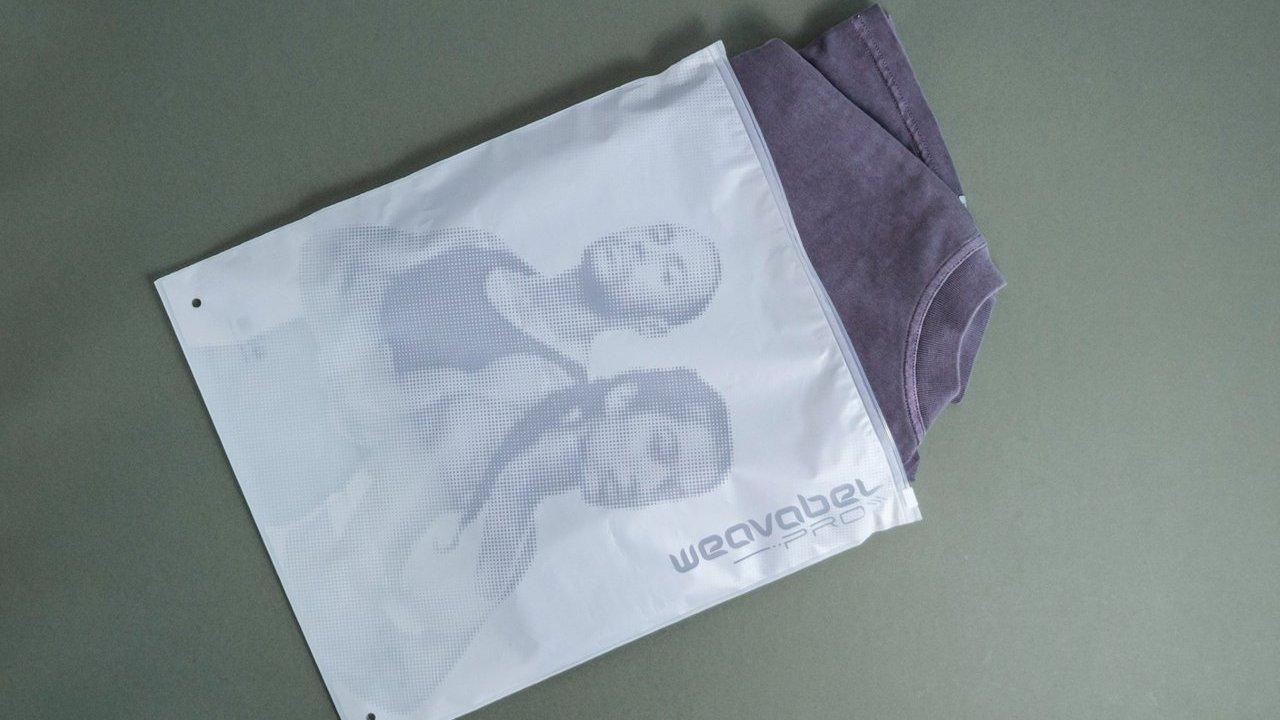
Weavabel has launched a closed-loop poly bag recycling system for fashion and lifestyle supply chains, creating an end-to-end route for garment packaging to be recovered, reprocessed and made into new poly bags. The Yorkshire-based trims, packaging and labelling specialist supports more than 950 fashion and lifestyle brands, and its new service is designed to work through existing warehouses, garment factories and distribution centres. The system covers collection across the UK and EU, followed by sorting, polymer processing, blending and pelletisation for film blowing at Weavabel’s production plant. It offers a practical response to the persistent challenge of keeping essential apparel packaging out of landfill and fragmented waste streams.
A Circular Route For Poly Bags
Poly bags remain a familiar part of apparel logistics, protecting garments as they travel from factories to stores and distribution hubs. Yet the material’s protective role has commonly been followed by a short service life, with collection and recycling arrangements varying widely across supply chains.
Weavabel’s new system brings those stages into one managed loop. Rather than requiring brands to establish separate recycling infrastructure, it integrates recovery activity with established supply chain movements and collection points. The approach is intended to help brands retain packaging materials in circulation for longer while reducing reliance on virgin plastic.
The launch is particularly relevant for fashion and lifestyle businesses balancing presentation, product protection and material responsibility. By focusing on poly bags already moving through factories, warehouses and distribution centres, the programme places circularity within everyday operational processes.
From Warehouse To New Film
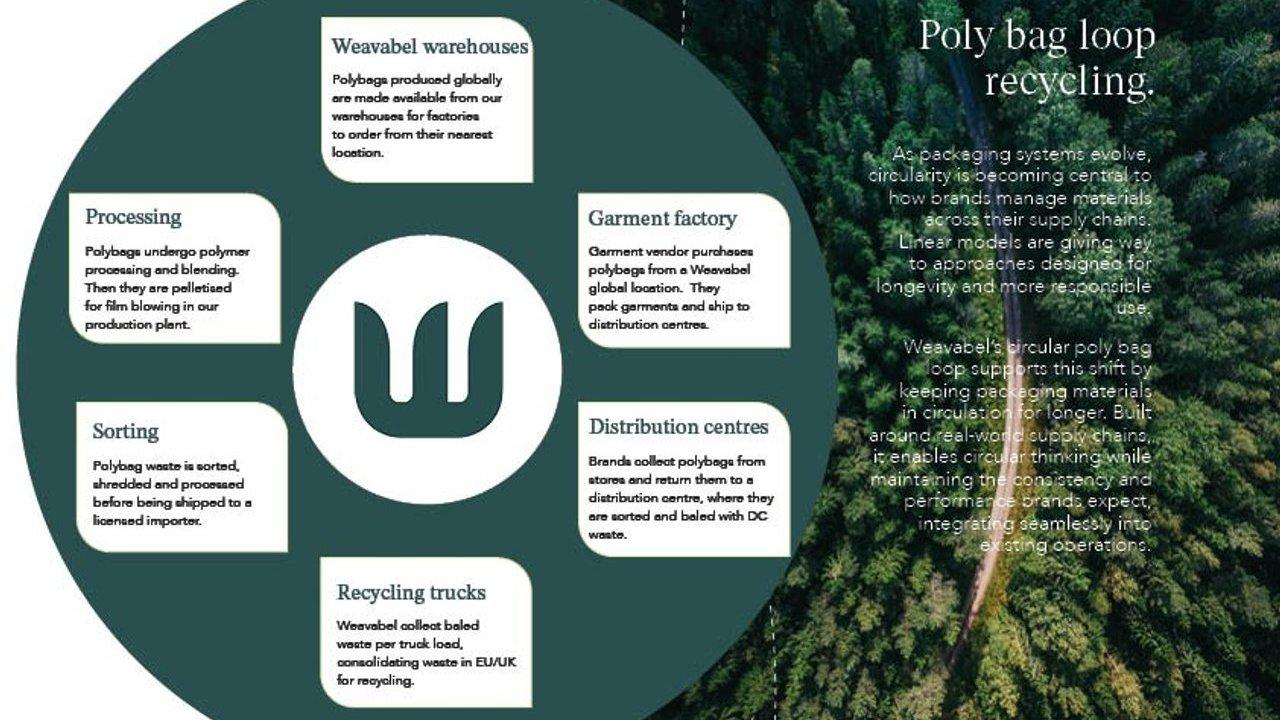
The loop begins with poly bags produced globally and made available through Weavabel warehouses, enabling garment factories to order from their nearest location. Garment vendors use the bags to pack products before shipments move to distribution centres.
From there, brands collect poly bags from stores and return them to a distribution centre, where they are sorted and baled with other distribution centre waste. Weavabel then collects the baled material by truckload and consolidates it across the UK and EU for recycling.
At the recycling stage, poly bag waste is sorted, shredded and processed before it is sent to a licensed importer. The recovered material then undergoes polymer processing and blending, followed by pelletisation for film blowing at Weavabel’s production plant. The resulting material is prepared for use in new poly bags, completing the closed loop.
This structured route addresses a common weakness in packaging recovery: material can be technically recyclable but still fail to reach a suitable recycling stream. Connecting collection, transport, processing and remanufacture in one programme offers brands clearer operational continuity for their packaging waste.
Designed Around Existing Supply Chains
Unlike isolated collection schemes, the system is built around the points where poly bags are already ordered, used, handled and returned. That integration could make participation more accessible for brands seeking to improve packaging circularity without rebuilding their logistics arrangements.
Saqib Ihsan, Lead, CSR, Sustainability and Regulatory Compliance at Weavabel, said:
“Poly bags have always been treated as disposable, but that thinking doesn’t hold up anymore. Regulation is moving fast, and most brands are being asked to prove circularity, not just claim it — so we built this loop to give them a real, traceable answer. It works with the way poly bags already move through warehouses, factories and distribution centres, so nothing has to change on the brand’s side except where the waste ends up. We’re not asking brands to recycle better. We’re closing the loop for them.”
Weavabel’s wider offering spans woven and printed labels, hangtags, packaging, RFID, care labels and digital product passports. Its new recycling system complements that work by concentrating on a high-volume packaging format that has long been difficult to manage consistently after use.
Regulation Raises The Bar
The launch arrives as packaging rules place closer attention on material use, waste and circularity. The European Union’s Packaging and Packaging Waste Regulation and Ecodesign for Sustainable Products Regulation are among the measures increasing expectations for brands to demonstrate how materials are managed in practice.
For apparel businesses, the distinction between a recyclable package and a package that is actually recovered is increasingly material. A closed-loop model provides a defined path for used poly bags, from distribution centre collection through to new packaging production, rather than relying solely on the availability of local recycling options.
Traceability and consistency are central to the proposition. The system aims to preserve the performance expected of garment packaging while creating a route to extend the useful life of the underlying material.
Keeping Packaging In Circulation
Weavabel’s closed-loop poly bag recycling system gives fashion and lifestyle brands a tangible way to treat garment packaging as a recoverable resource rather than a disposable necessity. The initiative aligns collection and processing with the supply chain infrastructure already used to move garments at scale.
As scrutiny of packaging materials intensifies, systems that connect use, recovery and remanufacture will be increasingly valuable. By bringing these stages together, Weavabel has created a focused circular packaging option for an often-overlooked part of the apparel journey.