For an island nation, an airport is far more than a transport hub. It is a lifeline for trade, tourism and economic development. At Grantley Adams International Airport, that responsibility is increasingly being matched by investments in renewable energy, water security and infrastructure designed to strengthen Barbados’ resilience for decades to come.
Written by Issy Joslin
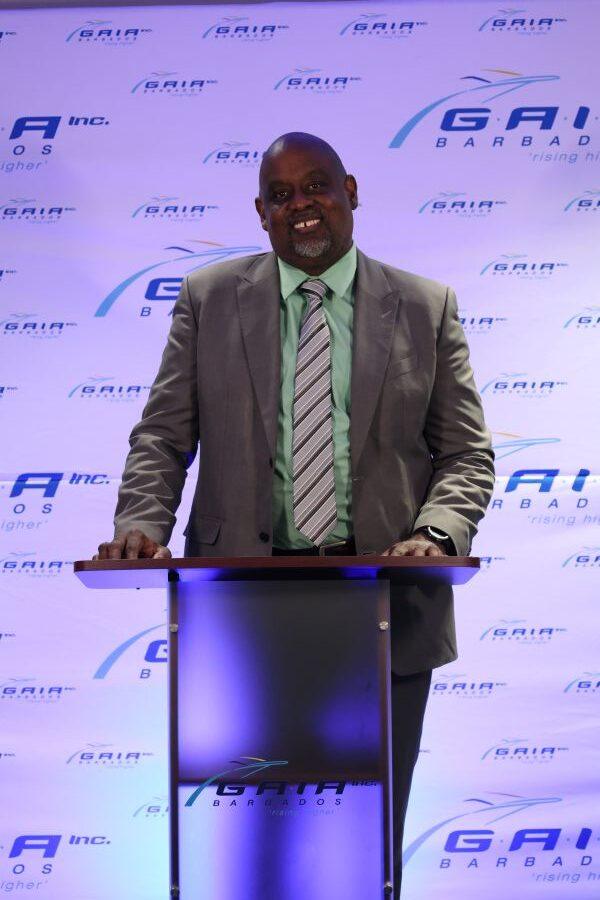
As Chief Executive Officer Hadley Bourne enters his seventh year leading the airport, a series of ambitious projects from expanded cargo facilities and electric vehicle fleets to solar power and water storage are reshaping how Barbados’ gateway to the world prepares for an uncertain future.
“We’re looking to do a lot of self-sustaining initiatives and activities,” Bourne explained. “When our Prime Minister is speaking about global warming and climate change, we also set the mandate and goal for us to follow.”
The airport is undergoing one of the most ambitious periods of investment in its history. From a planned 5MW solar-and-battery project and the electrification of its vehicle fleet to expanded water storage, modernised wastewater systems and new cargo facilities, sustainability is becoming inseparable from resilience.
As Barbados pursues its vision of becoming carbon neutral, Grantley Adams is demonstrating that airports can be more than transport hubs. They can become energy producers, water managers, community partners and engines of economic development..
Twenty Years of Growth
Celebrating its twentieth anniversary as an operating corporation this year, Grantley Adams Airport has evolved dramatically over the past two decades. Bourne himself has spent nearly thirty years around airports, beginning his career as an air traffic controller before rising through regulatory and operational roles to become CEO.
“I’m starting my seventh year as CEO,” he said. “Operationally, we’ve gone from strength to strength.”
When Bourne first joined the organisation, the airport had just sixteen aircraft parking positions. Two major expansions later, that number has increased to twenty-three, including facilities capable of accommodating the world’s largest aircraft.
Yet another major expansion is now underway.
Within the next two years, Grantley Adams will add three new Category E aircraft stands, four additional jet bridges and approximately 85,000 square feet of new terminal space. Passenger screening and baggage systems will also be comprehensively modernised.
“The next 18 to 24 months are going to be busy,” Bourne laughs. “Literally seven or eight projects are happening simultaneously.”
Building an Energy Island
For Bourne, renewable energy is not simply an environmental initiative. It is a commercial decision, a regulatory necessity and a question of Barbadian resilience.
With one of the longest runways in the Caribbean and thousands of feet of lighting systems operating around the clock, electricity represents a major cost for the airport.
“The electrical component was a significant cost in our balance sheet,” Bourne explained.
Grantley Adams already operates a 400kW solar farm, but plans are now advancing for a far larger 5MW solar photovoltaic installation. Initially designed to feed excess power into the national grid, the project has evolved.
“We’ve changed our plans now and we’re looking to add battery capacity so that we can even be more self-sufficient,” he said.
In many ways, the project reflects a broader philosophy. “Airports are expected to be small, self-sufficient cities that do not necessarily depend on the grid as the source of power,” Bourne explained. “The grid really should be the backup.”
Remarkably, these ambitions predate Barbados’ national carbon neutrality targets. “These plans were conceptualised even before our Prime Minister put that 2030 carbon initiative in place,” Bourne noted. “We were already in that vein.”
Although he acknowledges that the 2030 target presents challenges, he believes Barbados is firmly moving in the right direction. “Even if we don’t meet the 2030 target, we are well on the way. By 2035 we’ll be even more sustainable.”
From Diesel to Electric
The transition extends far beyond solar panels. Four fully electric apron buses have recently entered service, with another three expected later this year. Executive vehicles are also being replaced with electric alternatives, supported by new fast-charging infrastructure. “We’re not purchasing diesel apron buses anymore,” Bourne said. “Going electric is the way to go.”
Barbados itself is experiencing rapid growth in renewable energy and electric vehicle adoption. “I think one of the problems we are having is that our build-out in solar PV is so much that the infrastructure can’t even handle it,” Bourne observed.
In some respects, the country has become a victim of its own success, with renewable deployment outpacing grid capacity.
Water Security in a Water-Scarce Nation
Climate resilience in Barbados extends beyond energy. “We are a very water-scarce nation,” Bourne said. “Even as we speak right now, we’re in an extensive drought.”
Recognising this challenge, the airport is investing heavily in water infrastructure. Working alongside the Barbados Water Authority, Grantley Adams is adding 600,000 gallons of additional storage capacity and implementing rainwater harvesting systems.
These systems will provide non-potable water for airport operations during dry periods, reducing pressure on national resources.
At the same time, both the airport’s ageing wastewater treatment plant and its incinerator, each more than twenty-five years old, are being completely replaced.
The decision was driven not only by efficiency, but by responsibility to surrounding communities. “There are communities west of the airport,” Bourne explained. “Taking all of our communities and social stakeholders around us into consideration, those were some of the guiding principles of us modernising.”
Opening New Export Opportunities
Tourism remains the backbone of Barbados’ economy, but Bourne sees significant opportunities in air cargo and manufacturing.
“We don’t export as much as we ought to as a nation,” he admitted.
Plans to develop a major cargo hub were interrupted by the pandemic, but momentum is returning. Around thirty acres of land have already been earmarked for future facilities. “We’re a perfect transition point for cargo within the region,” Bourne said.
The airport’s location between North America, Europe, Central America and South America positions Barbados as a natural logistics centre. The recently commissioned World Food Programme logistics hub has further strengthened that role.
Beyond imports, Bourne hopes improved cold storage facilities and cargo capacity can help local industries reach global markets. “I’m working with a lot of agencies to build back capacity in our manufacturing industry,” he explained.
One example surprises many visitors. “People don’t know that Barbados Horticulture society competes at the Chelsea flower show annually,” Bourne laughed. “We export flowers and we always come away with prizes.”
For Bourne, strengthening exports represents an opportunity to diversify Barbados’ economy and reduce dependence on tourism alone.
Investing in Communities
Despite overseeing one of the Caribbean’s most complex transport hubs, Bourne remains equally passionate about community engagement.
Grantley Adams has adopted every primary and secondary school within a five-mile radius of the airport, supporting everything from computer laboratories and graduations to literacy programmes.
“We embraced and adopted all of those schools,” he said. The airport team regularly visits schools, while students are invited to experience the airport firsthand.
One particular attraction proves especially popular. “We do have a Concorde,” Bourne smiled. “When we open the Concorde facility and bring them through, they’re quite happy to see that.”
A Blueprint for Resilience
With eight major projects progressing simultaneously, Grantley Adams International Airport is becoming far more than a transport hub.
It is becoming an energy producer. A water manager. A community partner. A future cargo gateway. And perhaps most importantly, an example of how critical infrastructure can evolve to meet the realities facing small island nations.
“The future is going to be bright,” Bourne said.
For Barbados, sustainability is not simply about reducing emissions. It is about ensuring that the systems upon which an island depends; from power and water to trade and tourism are resilient enough to withstand whatever challenges lie ahead.
And in that respect, Grantley Adams International Airport is helping to chart a course not only for Barbados, but for island economies around the world.