Sustainable Business Magazine speaks to Anthony McKenzie and Gregory Bennet from Jamaica’s governmental National Environment and Planning Agency about its work on making the vulnerable Caribbean nation fit for the future.
Written by Glen Westall
The National Environment and Planning Agency (NEPA) of Jamaica operates at the critical intersection of conservation and development. It is a key government agency, mandated with environmental management and spatial planning. NEPA ensures the island’s growth is sustainable, equitable and resilient, and it is guided by the Natural Resources Conservation Authority Act (NCRA) and the Town and Country Planning Act.
Anthony McKenzie, Deputy CEO for Environmental Management and Sustainability, outlines the broad, legislative-driven scope of NEPA’s environmental mandate:
“Overall, we are responsible for six functional areas. One of the most important is air quality management. We have air quality monitoring stations that measure various parameters relating to air and then that’s logged in our database so we can come up with an air quality index. We also issue licenses as a sort of regulatory function to entities that emit harmful emissions into the atmosphere. They are regulated because they have to emit at a certain standard, so we are responsible for issuing their air quality discharge licenses.”
“Another area is our responsibilities for nine major protected areas in Jamaica. Those areas include both marine protected areas and terrestrial protected areas, where we have some of the key sensitive and ecologically important ecosystems and species. So we’re talking about the Blue and John Crow Mountains National Park, as well the Cockpit Country protected area and the Black River protected area.
“These protected areas were significantly impacted by Hurricane Melissa, because the eye of Melissa passed directly over these protected areas where we have a cluster of our major endemic species.”
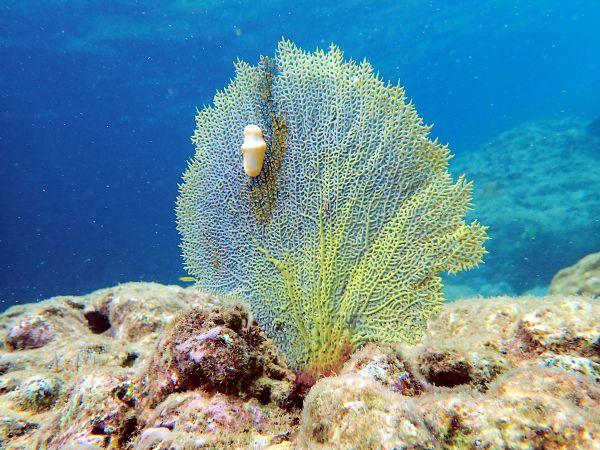
“We also work in the area of ecosystems management, and that’s looking at our various ecosystems, whether it’s a watershed, a beach, the marine environment, reefs, mangroves, seagrass beds, or coastal features. The idea is that we want to support ecosystem as a whole, to create ultimate ecosystem resilience, and building the natural resilience of the country.”
Community initiatives and international agreements
Gregory Bennett, Deputy CEO for Spatial Planning, explains how this develops intersects with spatial planning:
“From my department’s point of view, it is understood that the overall aim is for the protection and orderly development of our natural and built environment. In so doing, the ultimate objective is in the interest of sustainable development. And of course, is to ensure that the country in a spatial manner is developed efficiently, equitably and in line with the National Sustainable Development Plan, also called Vision 2030.”
The principal instrument for this guidance is the legally binding development order.
“The principal piece of planning instrument that is used to guide development in the country is what is called a Development Order. That contains all of the development planning, guidelines and standards that govern land use. Once that document is promulgated, it becomes a legal framework for planning decisions at the local level as well as the national level. It is also the basis for compliance and enforcement activities.
“So once there in law, as well as in accompanying policy documents, those collaborations are in statute. In other words, NEPA is required to collaborate in the preparation of Development Orders. It is required in law that the agency consults with the local planning authority as part of good practice, as part of international convention, and as part of good environmental governance. We also engage with the public at various levels on various matters.”
Mr. McKenzie goes on to highlight how international multilateral agreements translate into local action through such international partnerships:
“There are a number of treaties and international, multilateral environmental agreements that NEPA is part of. The key one is the Convention on Biological Diversity. In that context, we work with international partners a lot to support our progress in achieving those targets. Entities such as the United Nations Environment Program and United Nations Development Program. We have projects that they support us with through practical help and funding.
This alignment ensures local development decisions resonate with global environmental objectives, particularly those related to biodiversity and habitat protection. Mr. McKenzie elaborates on the tangible goals stemming from these international commitments and the structured partnerships that make them achievable:
“Part of the targets of the Montreal Kunming Declaration is for us to have 30% of our terrestrial land as protected, as well as 30% of our marine space protected. All of that work is in support of that internationally agreed commitment that Jamaica is a part of. And of course, we work with our partners, both internationally and locally to deliver such achievements.”
“As an example, right now we have what we call the Cockpit Country Project. That looks at areas of restoration within the region. It’s community-based because the project identified six community clusters that we’ll be targeting and community engagement will be crucial in executing the work. We’re looking at building awareness, creating community initiatives, supporting community livelihoods, and of course engage in restoration. Those restoration activities are actions such as looking at the watersheds and working to address issues relating to flooding, planting of vegetation, and so on.”
The model of co-management with local NGOs is a critical strategy for achieving these ambitious targets, decentralizing stewardship and embedding conservation within communities, as Mr. McKenzie explains:
“Similarly, we work with other NGOs as well. CCAM, for example, or the Caribbean Coastal Area Management Trust. That is an NGO that works in another large protected area and we work with them. There’s also a marine park up in the north coast, Montego Bay, which was impacted by a hurricane. The Montego Bay Marine Park Trust is the overseeing NGO which NEPA works with to deliver conservation work.
“These are all local community-based organizations that we work through. Of course, they are also in a better position to attract other types of funding, support and sponsorships to implement their activities.”
This ecosystem of collaboration, which spanning international bodies, national agencies, private sponsors and community trusts, exemplifies the integrated approach that NEPA champions. It ensures that the mission of building a resilient Jamaica is a shared responsibility, leveraging diverse resources and expertise to protect the island’s natural heritage as the cornerstone of its sustainable future.
Improving Resilience
This collaborative model extends to partnerships with non-governmental organizations and the private sector, creating a powerful network for conservation.
“At a local level, the agency is a model where we have established co-management agreements with some NGOs,” Mr. McKenzie continues. “So for the national park, the Blue and John Crow Mountains National Park, we have a co-management agreement with a local NGO called the Jamaica Conservation and Development Trust. That entity, on our behalf, works with farming communities and other local groups within the park to support management efforts, conservation efforts and protection measures in those areas.”
One of the most innovative frontiers is the promotion of nature-based solutions. Mr. McKenzie cites a flagship project that hybridizes natural and built infrastructure, funded through a novel public-private partnership:
“One area that I want to highlight relates to the broader theme of sustainable development that we’re discussing. This aspect of nature-based solutions that will contribute to improving our resilience and help to mitigate the consequences significant events such as hurricanes. So we have been piloting and testing and working on restoring particular mangrove species.
“If you go along one area that’s called the Palisadoes in Kingston, Jamaica, there are some plots that you’d see that are growing out. The idea is that they will work in concert with the rock revetment that was built to protect the Palisadoes and Kingston Harbour as well as Kingston itself. So it’s a hybrid nature-based approach that we’re supporting. The fact is that we’ve incorporated the private sector into this initiative so we have some big private sector companies who are supporting and sponsoring and paying for some of the work to have these mangroves grow out and be rehabilitated.”
Build Back Better
Looking ahead, the imperative to ‘build back better’ applies emphatically to Jamaica’s natural environment. The aftermath of Hurricane Melissa has set a clear, urgent agenda for NEPA’s future projects, focusing on the restoration of the natural habitats that form the foundation of the island’s sustainability.
“As I was discussing with my team just not too long ago, and again I’m discussing this in the context of the impact of Hurricane Melissa, we have to do a lot of assessments over the next couple of months,” Mr. McKenzie says. “There are a wide variety of key species that we need to assess and restore in their natural habitat.
“In terms of sustainability for the country as a whole, those habitats are what we’ll be focusing on over the next couple of months and even years to ensure that they’re built back and that they perform better going forward. On the one hand, you have government talking about the physical infrastructure building back better and so on, well our focus is on the natural environment. NEPA will ensure that it’s built back better going forward, and the projects that we’ll be focusing on will be centered around that.”