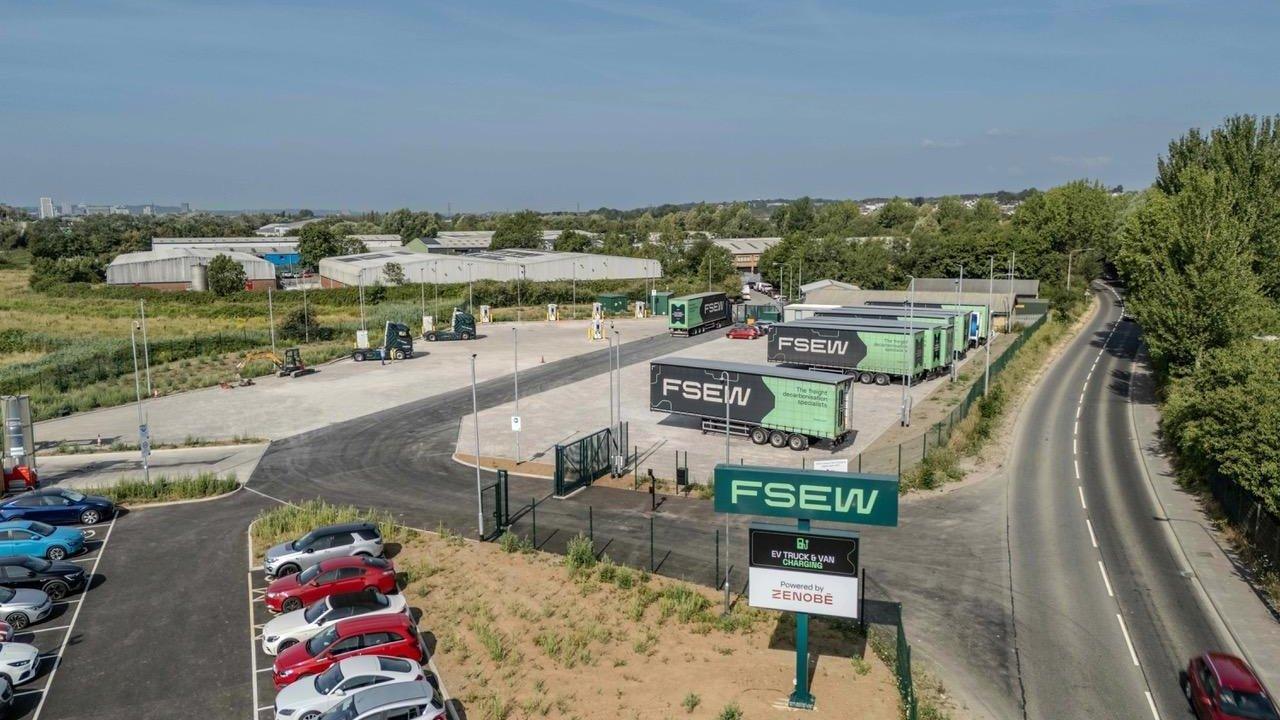
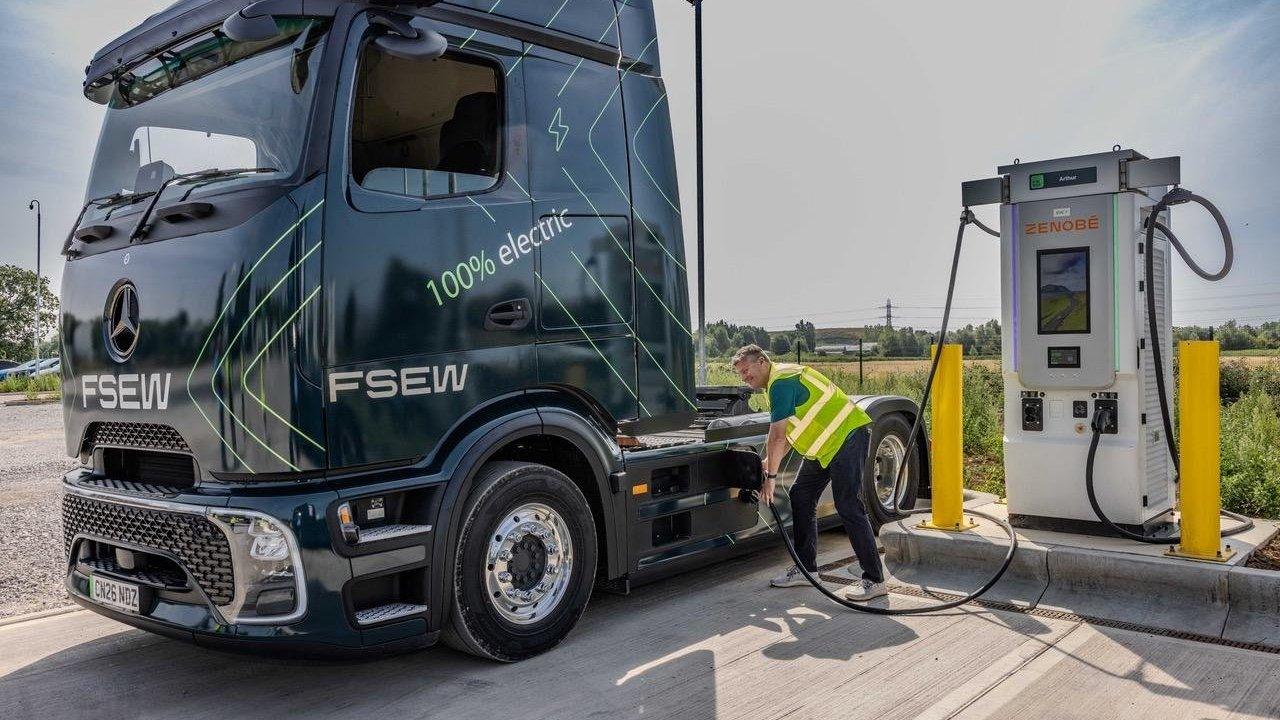
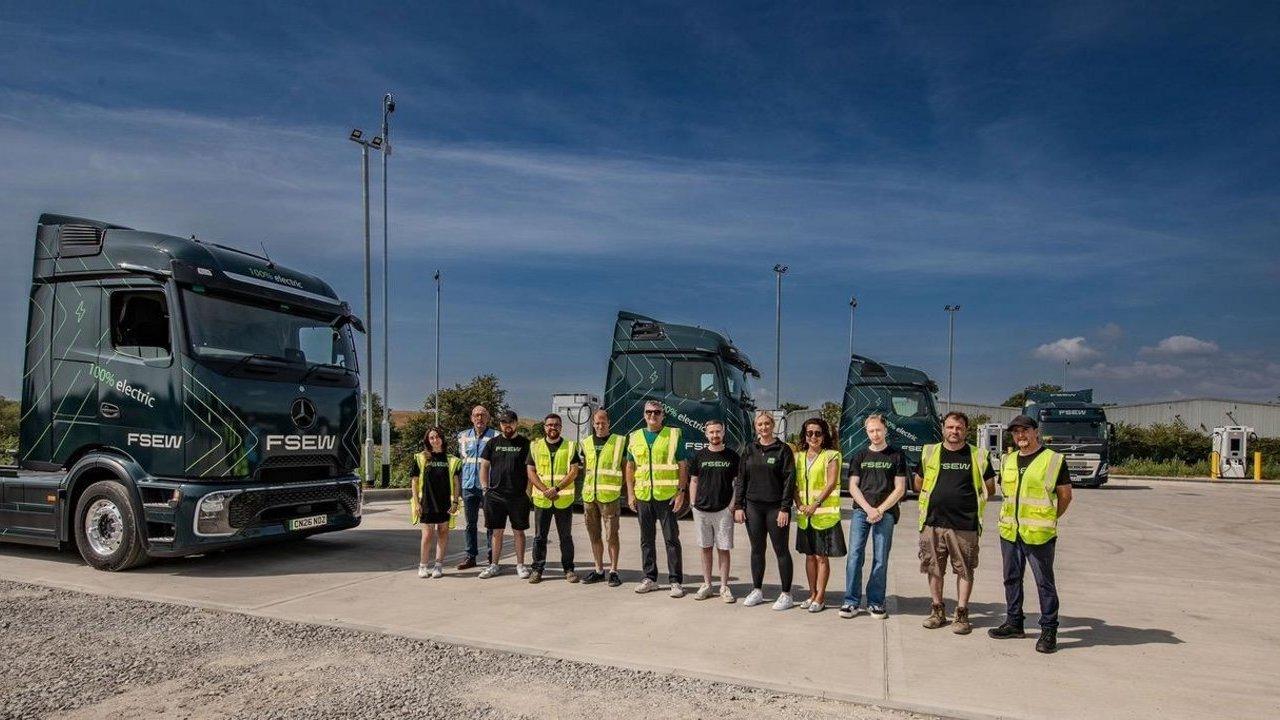
Cardiff-based FSEW has switched on Wales’ first dedicated HGV electric charging hub, a 2.5 acre eFreight site at the Old Ely Transport Yard on the Lamby Way Industrial Estate. The facility is now live and operational, hosting eight 480kW double-gun DC chargers capable of adding 190 miles of range to a heavy electric truck in an hour. The infrastructure, financed, designed and installed by EV fleet and battery storage specialist Zenobē, is expected to underpin a recruitment drive for up to 50 new driver roles as FSEW grows its electric fleet to 70 vehicles by 2027. The launch marks a significant milestone for heavy goods decarbonisation in the UK, backed in part by a grant from the Government’s Depot Charging Scheme.
A Physical Base For Freight Decarbonisation
The eFreight Hub is designed to remove one of the most persistent obstacles to electrifying heavy goods transport: charging capacity for the largest trucks on the road. The site will primarily serve FSEW’s own fleet, including its new Volvo FM and Mercedes-Benz eActros 600 vehicles, but will also be opened to third party charging for agreed external van and articulated truck operators running compatible vehicles. That dual role gives the sector a competitively priced, much-needed public charging option in South Wales, at a location previously without dedicated heavy vehicle charging infrastructure.
Tackling Range Anxiety Head On
FSEW describes the hub as proof that electrifying heavy freight has moved from possibility to commercial reality, addressing what has been one of the industry’s most cited concerns around switching from diesel.
Geoff Tomlinson, Managing Director at FSEW, said:
“The eFreight Hub is a personal and professional milestone. We are proving that the electrification of heavy freight is not just possible, but commercially viable. By providing accessible, high-power charging, we are removing one of the biggest barriers facing operators today: ‘range and charging anxiety.’ This hub isn’t just about trucks; it’s about better air quality for our communities and a complete shift in how the industry thinks about energy. Up until this point everything we have done has been self-funded, but we have now secured a grant from the Government’s Depot Charging Scheme which is accelerating our plans.”
Extending The GreenFlow Framework
The Cardiff hub builds on the earlier launch of FSEW’s GreenFlow service, an industry-first framework allowing clients to achieve international net-zero shipping across road, rail, air and sea. Maesteg-based firm Siderise has already used GreenFlow to export containers from Wales to Dubai with a zero-carbon footprint. The new site is set to become the physical heart of that service, connecting the charging infrastructure directly to FSEW’s wider net-zero freight offering.
Supporting National Infrastructure Goals
The eFreight Hub’s development has been supported by a grant from the UK Government’s Depot Charging Scheme, a signal of how the project fits into broader national ambitions for decarbonising road freight. With job creation attached to the expansion, up to 50 new specialist driver roles, alongside a fleet expansion target of 70 electric vehicles by 2027, the hub is positioned as both an environmental and an economic undertaking for the region.
A Marker For Welsh Logistics
FSEW became diesel free in December 2024 and was the first company to launch commercial use electric HGVs in the UK, in partnership with Tesco in 2021. The new hub extends that record, giving Wales dedicated heavy vehicle charging capacity while offering other operators in the region a route to electrify their own fleets without building their own infrastructure from scratch.