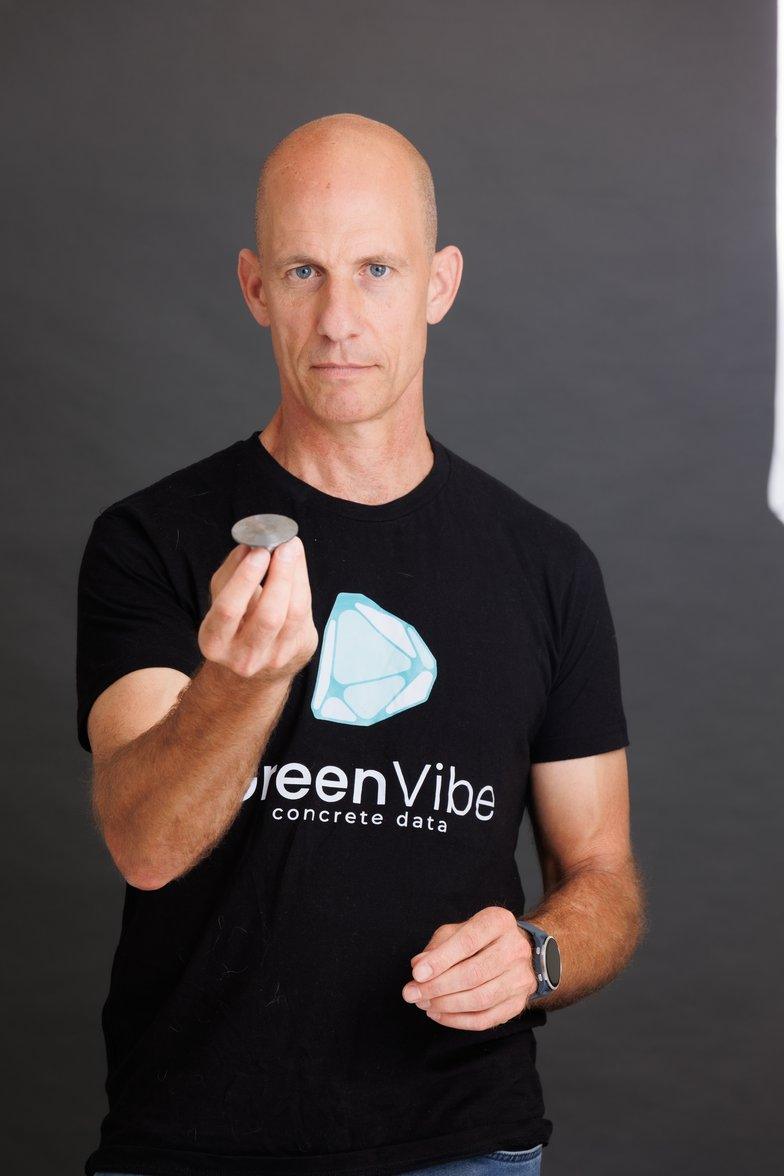
GreenVibe has raised $12 million to date, bringing wireless sensing technology to the pour itself so that contractors no longer have to guess whether hardened concrete matches the specification on paper. The Israeli company has already embedded more than 10,000 sensors across more than 20 projects and labs, achieving 95% in-element accuracy against poured concrete, and its funding arrives as the industry reckons with the aftermath of Venezuela’s 24 June 2026 doublet earthquake, which killed roughly 3,000 people and prompted a $200 million reconstruction fund. Expert consensus has pointed not to weak building codes but to failures of verification and enforcement as the core problem. GreenVibe was built precisely to close that gap, delivering strength and status readings every 30 minutes from before the pour through the life of the structure.
The Verification Gap Construction Has Never Solved
The industry’s default method for checking concrete strength, the cylinder test, is more than a century old and carries an inherent error of 10 to 50 percent. That means a column specified at 60 megapascals can, in practice, measure just 30, a margin that persists even when a code has been followed to the letter. GreenVibe’s answer is to move verification into the concrete itself, embedding sensors before the pour rather than relying on samples tested away from the structure.
The Venezuela earthquake has sharpened attention on that blind spot internationally, shifting debate away from the adequacy of codes on paper toward whether what gets poured actually matches what was specified. GreenVibe’s founders argue that no amount of code refinement solves a problem rooted in verification.
Sensing Technology Built To Replace The Cylinder
GreenVibe’s device combines five sensing technologies, including ultrasound, in a single embedded unit that monitors structural health from the pour through the life of the structure. The company has described its approach as the ultrasound of construction, with an AI-powered platform delivering strength and status readings on mobile or desktop every 30 minutes. In more than 10 documented cases where GreenVibe’s readings conflicted with lab results, the company’s data was later proven correct, and projects that did not act on the discrepancy, including super-tall building projects, suffered damage as a result.
Roee Reshef, CEO and Co-Founder of GreenVibe, said:
“Data driven construction is the only way to be sure that what is poured is what was specified. GreenVibe supports mega projects by delivering data-driven solutions that improve efficiency, accelerate delivery, and enhance construction quality. Don’t compromise on quality.”
A Track Record Across Landmark Projects
GreenVibe’s sensors are already embedded in concrete on more than 20 projects and labs. In Israel, that includes Beyond by Tidhar, the country’s tallest building, alongside The Spiral at Azrieli, Toha 2 by Amot, Rothschild10 by Tidhar, Midtown Jerusalem, Lexus Tower, Vertical City, the Discount Bank Campus, and the Herling Bridge. Internationally, the company worked with Ferrovial, the Nasdaq-listed infrastructure group, on the Malpartida bridge in Spain, and has completed a successful pilot with US contractor Clark Construction.
The measurable results include ROI exceeding 10x in most projects and reductions in waste and inefficiency of up to 50 percent, driven by saved time, fewer quality issues, and optimised concrete mix design. On one live bridge project, the cure-wait cycle fell roughly 60 percent, from five or six days down to two, a change with direct implications for schedule and cost on large infrastructure works.
Setting A New Verification Baseline
The $12 million raised to date across GreenVibe’s seed rounds comes from a backer group including Insight Partners, Tidhar Construction, Israel-Canada, and Shikun and Binui. With that capital, the company is entering the standards process for both ASTM and Eurocode frameworks, a step it frames as part of a longer path toward replacing lab testing as the global baseline for concrete verification rather than supplementing it.
GreenVibe points to the same underlying need across the large US infrastructure-renewal pipeline, where ageing structures and new builds alike face the same century-old testing limitations exposed by Venezuela’s earthquake. As reconstruction efforts there get under way and the industry examines what verification failures contributed to the damage, GreenVibe’s pitch is straightforward: real-time, in-element data rather than periodic sampling is what closes the gap between specification and reality, on projects ranging from Israeli skyscrapers to Spanish bridges and the next phase of American infrastructure renewal.