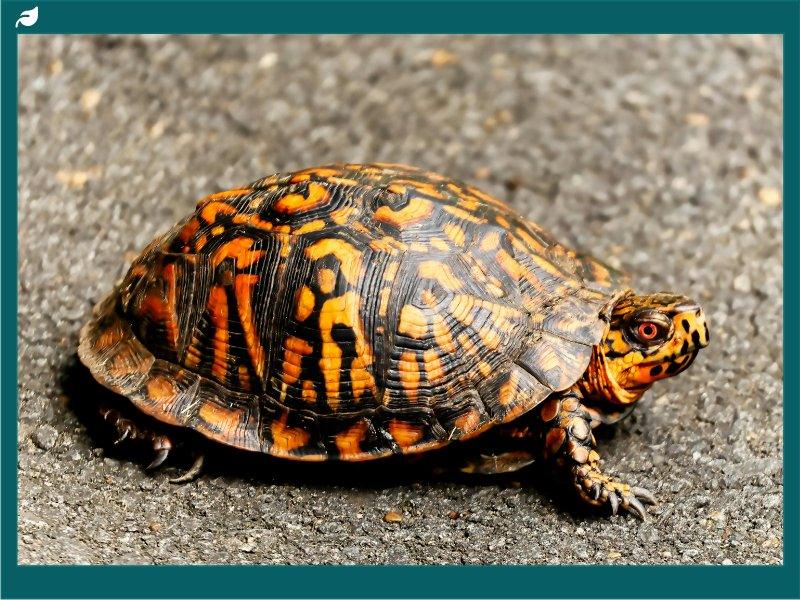
Some of these turtles were alive before your grandparents were born. An eastern box turtle hatched the year the Titanic sank could, in theory, still be plodding through a Connecticut woodlot today. That’s not a legend. Herpetologists have documented individuals living close to a century in the wild, and that single fact tells you almost everything you need to know about why this small, secretive reptile deserves your attention. Research summarized by the Virginia Herpetological Society notes that populations stay demographically vulnerable because turtles combine high mortality at both the juvenile and adult stages with a long wait, roughly 5 to 10 years, before reaching reproductive age.
Here’s the thing about the eastern box turtle: it’s simultaneously one of the most familiar reptiles in North America and one of the least understood. You’ve probably seen one crossing a trail or a quiet road, shell gleaming with that unmistakable pattern of black and yellow. But few people know what’s actually going on under that dome, or why this creature’s slow decline should worry all of us.
Overview of the Species
- The eastern box turtle turns up in an astonishing range of North American habitats, from shaded forest floors to sunny meadows and even the edges of suburban yards.
- Terrapene carolina wears a colourful, dome shaped shell that does double duty: armour and camouflage rolled into one.
- These turtles eat like true omnivores, and a healthy diet means a mix of plants and animal matter, not just one or the other.
- Habitat destruction and illegal collection for the pet trade have hit box turtles hard, and their populations show it.
- Real conservation support means habitat restoration, honest public awareness, and a few responsible choices from ordinary people.
Key Characteristics of Terrapene Carolina
Scientists and backyard naturalists alike keep coming back to this animal for good reason. The eastern box turtle is arguably the most recognisable turtle in North America, and that reputation rests almost entirely on its shell. Bold patterns of brown, yellow and black cover a high, rounded carapace that looks almost hand painted, no two quite alike. This turtle belongs to the species Terrapene carolina, and within that single species sit six extant subspecies, each shaped by the particular corner of the continent it calls home.
What actually sets Terrapene carolina apart from other turtle species isn’t just the artwork on its back, though. It’s the hinge. A flexible joint on the plastron, the flat underside of the shell, lets this turtle pull its head, legs and tail fully inside and then seal the door shut. Most turtles can retreat into their shells; box turtles can lock them.
That single adaptation is where the name “box turtle” comes from, and it’s a genuinely effective defence against everything from raccoons to dogs. Watch one do it up close and you’ll understand instantly why so few predators bother trying twice. The plastron hinge takes years to fully develop in juveniles, so young turtles rely far more on speed and hiding than on that famous seal, another reason the earliest years of a box turtle’s life are the most dangerous.
Habitat and Distribution
Terrapene carolina belongs to a wider group of turtle species that’s remarkably diverse, and the eastern box turtle sits among the most widespread of the bunch across the eastern United States. Its shell runs in shades of brown flecked with yellow and black, and that dome shape isn’t just decoration. It lets the turtle retract completely, turning its own body into a locked box that predators struggle to crack.
Size wise, don’t expect anything dramatic. An adult typically measures 4.5 to 6 inches long, though bigger individuals do turn up. What’s more impressive than the size is the range of places this animal calls home: deciduous forests, open meadows, brushy field edges, even the fringes of suburban developments. Eastern box turtles are land dwellers first and foremost, spending the overwhelming majority of their lives on solid ground, though you’ll occasionally catch one wading into a shallow creek or puddle to cool off.
And then there’s that lifespan. Decades in the wild is standard; some individuals reportedly reach close to a hundred years old under the right conditions. Few animals in North America can make that claim. Their diet mirrors that longevity in its variety, insects, worms, berries, mushrooms, whatever the season offers.
Box turtles aren’t picky, and that flexibility is part of why they’ve survived so long as a species. Ecologically, they earn their keep too, dispersing seeds as they forage and helping keep insect populations in check. Protecting their habitat isn’t just about saving a pretty shell. It’s about preserving a working piece of the ecosystem, one that took millions of years of evolution to get right and that we could unravel in a single generation of careless development.
Native Regions of the Eastern Box Turtle
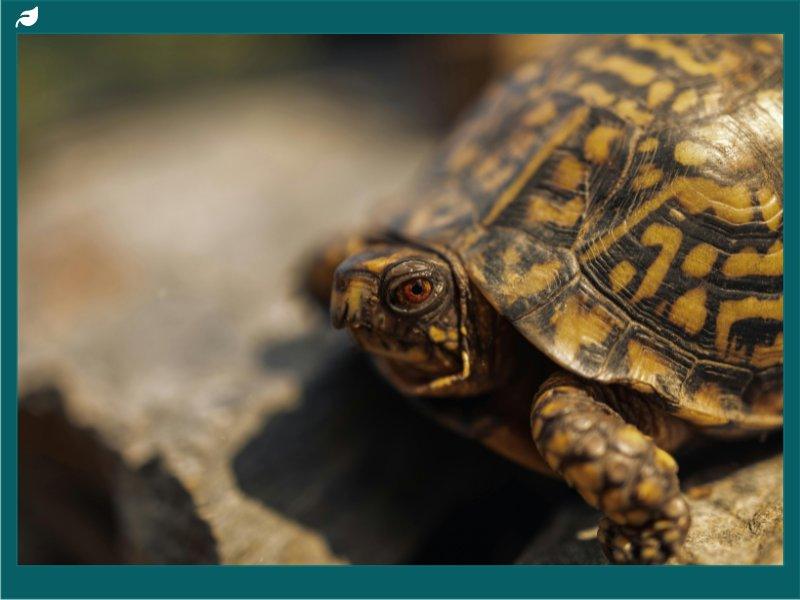
Look closely at that shell and you’ll notice the coloration isn’t random. Patterns of black and yellow vary from one individual to the next and from one subspecies to another, and researchers believe this variation helps each turtle blend into its particular patch of forest floor. It’s camouflage tuned by geography, almost like each population has its own local dialect written in pigment.
The hinge mechanism deserves another mention here, because it really is the turtle’s signature move. When threatened, an eastern box turtle withdraws head, limbs and tail, then closes the plastron like a door swinging shut. Predators that would happily flip and pry at an ordinary turtle shell find themselves facing a sealed box instead.
Behaviourally, these turtles keep a fairly predictable schedule. They’re diurnal, most active in the cool of morning or right after a rain shower, and they go quiet during the hottest stretch of the afternoon, burrowing into leaf litter or ducking into shade to keep cool. They’re also creatures of habit in a geographic sense: a single eastern box turtle will often spend its entire life within a home range of just a few acres, returning to the same hollow logs and the same patches of soft earth year after year. Socially they keep to themselves, coming together mainly to breed, yet their solitary lifestyle doesn’t stop them from shaping the ecosystems around them through seed dispersal and pest control.
A turtle that has lived seventy years in the same patch of woods has, in its own small way, become part of that woodland’s architecture, as familiar to the place as the oldest oak.
Environmental Preferences and Adaptations
Native to North America, the eastern box turtle inhabits a genuinely broad sweep of landscapes, from dense forest to open meadow, and that adaptability is central to its story. Terrapene carolina isn’t a specialist clinging to one narrow niche. It’s a generalist that has figured out how to make a living in dozens of different settings, which is exactly why understanding its habitat needs matters so much for conservation planning. A species this flexible can survive quite a lot, but flexibility has limits, and once roads and rooftops replace enough forest floor, even a generalist runs out of room to generalise in.
Eastern Box Turtle Care Tips
Geographically, the eastern box turtle’s native range stretches from Connecticut’s woodlands down through the humid landscapes of the southeastern states. Across that entire span, forests and open woodlands provide the two things this turtle needs most: cover from predators and a steady supply of food. Despite covering so much ground, box turtles tend to concentrate wherever shelter and foraging opportunities overlap, which explains why they show up in deciduous forests and grasslands alike rather than sticking to just one habitat type.
In Connecticut specifically, the species has settled into landscapes with soft, moist soil, ideal for burrowing and for escaping extreme heat or cold. Shrubby understory vegetation in these regions also supports their varied diet of insects, berries and other plant matter. None of this is trivial detail. Preserving these specific conditions is what keeps the common box turtle on the landscape at all, and it’s what allows the species to keep performing its quiet ecological jobs, spreading seeds, thinning insect populations, holding food webs together in ways that are easy to overlook until they’re gone.
Lose the moist soil and the leaf litter, and you don’t just lose turtles, you lose an entire quiet machine that’s been running underfoot for longer than anyone alive can remember.
Proper Diet and Feeding Guidelines
Environmentally, the eastern box turtle gravitates toward moist forests, open fields and anywhere with dense underbrush to hide in. That colourful dome shaped shell, black and yellow patterned, does exactly what you’d expect: it breaks up the turtle’s outline against the forest floor while doubling as armour plating against anything that tries to make a meal of it. Combine the camouflage with that shell-closing trick, and you’ve got an animal remarkably well equipped for a world full of predators.
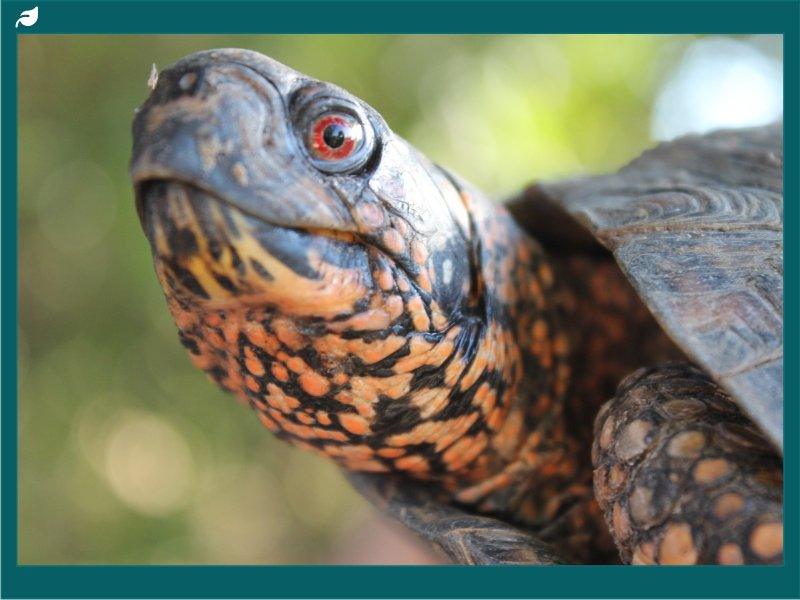
These turtles stay mostly on land but rarely stray far from water, since staying hydrated and regulating body temperature both depend on having a water source nearby. Thick leaf litter is a favourite habitat feature too, useful for hiding and equally useful as a pantry, since it’s crawling with the insects and vegetation that make up much of their diet. Burrowing into soft earth is another trick in their toolkit, letting them dodge both freezing nights and blistering afternoons. Add in their fiercely defined home ranges, and you get a picture of an animal whose survival depends on knowing its own patch of ground intimately.
Conservationists trying to build sanctuaries or protected reserves need to replicate exactly these conditions, or the effort falls flat, no matter how well intentioned the project is on paper.
Creating the Ideal Living Environment
Caring for an eastern box turtle properly means paying attention to three things at once: diet, habitat and enrichment. Get those right and a common box turtle in captivity will stay active, alert and genuinely healthy for decades. Get them wrong, even slightly, and problems creep in slowly, which is part of why so many owners underestimate what these animals actually need. A turtle can look perfectly fine for months while a poor diet or the wrong humidity quietly does damage that only shows up years later, which is exactly why patience and attentiveness matter more here than with almost any other pet.
Conservation Status and Efforts
Feeding an eastern box turtle well means thinking like an omnivore, because that’s exactly what it is. A proper diet blends plant and animal matter in roughly the same proportions the species would find in the wild. Leafy greens like dandelion and collard greens should form a steady base, packed with vitamins and minerals. Berries and other fruit make a welcome addition too, tapping into the same foraging instincts a wild turtle would rely on.
Protein matters just as much. Mealworms, crickets and even the occasional cooked egg supply amino acids that are essential for healthy shell and muscle development, something owners sometimes overlook when they lean too heavily on greens alone. A calcium supplement, usually a powder dusted over food a couple of times a week, supports shell strength directly. Fresh water needs to be available daily, and moisture rich foods help top up hydration further.
No two turtles eat exactly alike, and paying attention to your individual animal’s preferences pays off. Sticking to these dietary basics helps prevent the nutritional deficiencies that quietly undermine so many captive turtles’ health, and watching how your turtle responds to different foods lets you adjust as it ages. A well fed eastern box turtle is an active, visibly healthy one, and the difference shows in the alertness of its eyes, the firmness of its shell, and how eagerly it forages when you offer something new.
Challenges Facing Box Turtle Populations
Building the right living space starts with recreating the conditions your turtle would find at home in Connecticut’s woods or wherever its subspecies naturally occurs. That means balancing air, light, moisture and space so the enclosure feels like a genuine slice of forest floor rather than a sterile box.
Substrate choice matters more than people expect. Peat moss, coconut coir or a leaf litter blend all hold moisture well and let the turtle burrow, encouraging exactly the natural digging and foraging behaviours it would show in the wild. Temperature gradients are just as important: basking spots should sit around 85 to 90 degrees Fahrenheit, while cooler zones shouldn’t drop below 70. Indoors, UVB lighting becomes essential, since it drives the vitamin D3 synthesis that keeps shell and bone strong.
Beyond the basics, hiding spots and enrichment features, logs, rocks, low plant cover, give a captive turtle the mental stimulation and exercise it would naturally seek out. A shallow water dish for soaking rounds out the setup. And don’t skip routine maintenance: keeping the enclosure clean and watching for shell deformities or respiratory issues catches problems early, before they become serious. Do all this well and you’re not just meeting a checklist, you’re respecting the instincts of an animal built for a very specific kind of life, one that evolved over millions of years and doesn’t simply switch off because it happens to live in a glass tank instead of a Connecticut forest.