The Wonders of Petrified Wood
Pick up a piece of petrified wood and you’re holding a tree that died before the dinosaurs ruled the Earth. Not a rock that looks like wood. An actual tree, atom by atom replaced by mineral, frozen mid-grain in geological time. According to research published in PMC by the National Institutes of Health, recent microanalytical studies have confirmed that while most silicified wood is predominantly silica, detectable remnants of the original organic carbon-based structure persist, proving petrification is a gradual simultaneous replacement process rather than an instantaneous conversion of organic mass to silica.
That distinction matters. Petrified wood is one of the few fossils you can hold in your hand and trace with your finger, feeling the growth rings left by a living thing that predates almost everything we think of as ancient history. The colors run from deep arterial red to cloudy gray to a blue so pale it looks like morning fog. Each piece is unrepeatable.
And once you understand how they form, you’ll never look at one the same way again.
This is the story of fossilized wood: how it’s made, where to find it, why cultures across thousands of years couldn’t stop using it, and how to bring it into your home without treating it like a museum exhibit.
How Petrified Wood is Formed
Here’s the thing about petrification: it’s not dramatic. No lightning strike, no volcanic flash. It’s slow, quiet, and almost absurdly patient.
The process starts with a fallen tree. Maybe a flood took it down. Maybe a volcanic ashfall buried it where it lay. Either way, the tree ends up under sediment, and that’s when something unusual begins.
With no oxygen reaching the wood, the usual bacterial decay stalls. The tree doesn’t rot away to nothing. It waits.
Groundwater, moving through those sediment layers, carries dissolved minerals including silica, one of the most abundant compounds in the Earth’s crust. That mineral-rich water saturates the buried wood over thousands, sometimes millions, of years. And here’s where wood petrified over geological time becomes something genuinely strange: the silica doesn’t coat the wood. It replaces it.
Molecule by molecule, silica displaces the original organic cells, filling every cavity and duct with mineral while leaving the physical structure intact. Growth rings survive. Bark texture survives. The pattern of vessels that once carried water up through the living tree survives.
The process, called silicification, converts something biological into something geological without erasing the biography. According to experimental data published in ScienceDirect, research from hot spring environments demonstrates that silicified wood can form in as little as tens to hundreds of years under suitable conditions, a timeframe drastically shorter than the millions of years traditionally assumed in standard petrification models.
What you get is petrified wood: a stone that remembers being alive.
The colors come from impurities hitching a ride in the groundwater during mineralization. Iron oxides burn the wood red, orange, and yellow. Manganese pushes it toward purple and black. Carbon darkens it to deep brown and near-black.
Sometimes a single specimen runs through five or six colors across its cross-section, each band marking a shift in the mineral composition of the water that passed through during a different geological moment. Polished Triassic specimens from the American Southwest are some of the most striking examples, their cross-sections looking less like stone and more like stained glass designed by a geologist with excellent taste.
Not all petrified wood looks the same, and the differences trace back to the original tree. Petrified palmwood, for instance, shows a dotted or speckled pattern across its face. That texture comes directly from the fibrous, vascular structure of the original palm, which held its cells in tight bundles rather than the concentric rings of a conifer or hardwood. The mineral replacement preserved that structure so faithfully that paleobotanists can often identify the genus of the original tree from a cross-section alone.
That’s not just beautiful. That’s extraordinary scientific preservation compressed into a piece of rock you can set on a shelf.
Petrified logs, meanwhile, can reach lengths and girths that remind you these were once genuine forest giants. The scale of some specimens makes the concept of geological time suddenly very physical. You’re not reading about millions of years. You’re standing next to them.
Discover the Intricate Patterns in Petrified Wood
Every piece of petrified wood carries a completely individual visual record. No two are alike, because no two trees mineralized in identical conditions with identical mineral concentrations over identical timeframes. The pattern you see on a polished slice is the product of chemistry, biology, time, and pure geological chance working together for longer than the human species has existed.
The colors aren’t surface staining. They run all the way through. Cut a log in half, polish both faces, and the color gradients mirror each other like a Rorschach test printed by the planet itself. Iron oxides deliver the warm spectrum: red, orange, rust, amber, yellow.
Manganese produces the cooler and darker tones, purples and blacks that can make a specimen look like it was painted by someone who favored a moody palette. Other minerals introduce greens and occasional blues. And the way these minerals moved through the wood, following the grain, pooling in cavities, bleeding along growth rings, creates patterns that range from almost geometric to wildly organic.
Some specimens show wavy parallel lines that follow the wood’s growth rings, giving a painterly, almost brushstroke quality to the surface. Others display a more chaotic branching pattern where mineral-laden water pushed through cracks in the cellular structure, leaving mineral veins that look almost like lightning frozen mid-strike. Petrified palm specimens have that distinctive spotted or stippled face, a direct echo of the vascular bundles in the original plant’s stem. Each pattern is, in a very literal sense, a portrait of the original organism rendered in stone by the Earth itself.
Beyond aesthetics, these patterns carry real scientific weight. The width of preserved growth rings in fossil wood tells researchers about seasonal rainfall patterns in ecosystems that no longer exist. The presence of specific cell types identifies the species. The chemical signature of the replacing minerals maps the hydrology of ancient landscapes, where water flowed, what it carried, and how conditions shifted over time.
Scientists studying petrified wood aren’t just admiring the view. They’re reading a detailed environmental record that no other fossil type preserves quite as completely.
Petrified wood is a fossil, yes. But it’s also a document. And it’s one of the few documents from the Triassic period that’s genuinely beautiful to look at while you’re reading it.
Exploring Petrified Forests
A petrified forest sounds like a metaphor. The kind of phrase a novelist uses to describe a place where nothing changes, where time has stopped and left everyone frozen in amber. But actual petrified forests are the opposite of static. They’re where you feel geological time moving beneath your feet, where every log you step around was once a canopy tree in an ecosystem that hasn’t existed for 200 million years.
And there are more of them than most people realize.
The Unique Ecosystems of Petrified Forests
What makes a fossil forest different from any other landscape covered in interesting rocks? Plenty.
The minerals that replaced the original wood don’t vanish after petrification. They weather out of the logs over time, becoming part of the surrounding soil. That means the ground in and around a fossil forest carries an unusual mineral composition, different from the surrounding geology, and that difference influences what grows there today. Some plant species thrive in soils with elevated silica content or the trace elements left by ancient mineralization.
Specific fauna follow those plants. The result is a modern ecosystem shaped, in part, by trees that died before the first dinosaurs appeared. Biology layered on geology layered on even older biology. It’s recursive in a way that rewards attention.
The petrified wood found within these forests preserves its cellular structure with remarkable fidelity, and that means the logs function as direct windows into ancient biodiversity. Growth rings record seasonal climate variation. Cell wall thickness reflects atmospheric carbon dioxide levels. Isotope ratios in the replacing minerals hint at the temperature and chemistry of ancient groundwater.
Researchers working in petrified forests aren’t just cataloging fossils. They’re reconstructing whole climates, whole ecological communities, whole moments in the planet’s deep past.
Many of these forests were created by the same kinds of catastrophic events: volcanic eruptions that buried entire stands of trees under ash and debris, floods that transported logs into sediment-rich basins, or coastal inundations that sealed organic material under marine sediment. The violence of the original event is precisely what guaranteed the preservation. Without rapid burial, the wood would have simply decayed. The disaster was the salvation.
There’s something almost philosophically satisfying about that, if you’re willing to think across geological timeframes.
These unique ecosystems also provide habitat for species endemic to mineral-rich, semi-arid environments. The fauna and flora adapted to these landscapes are often specialists, found nowhere else nearby, making petrified forests genuine biodiversity hotspots embedded within otherwise uniform terrain. That ecological significance adds to the scientific argument for protecting them.
Top Locations to Visit Petrified Forests
You don’t have to be a geologist to feel the pull of these places. You just have to show up and pay attention.
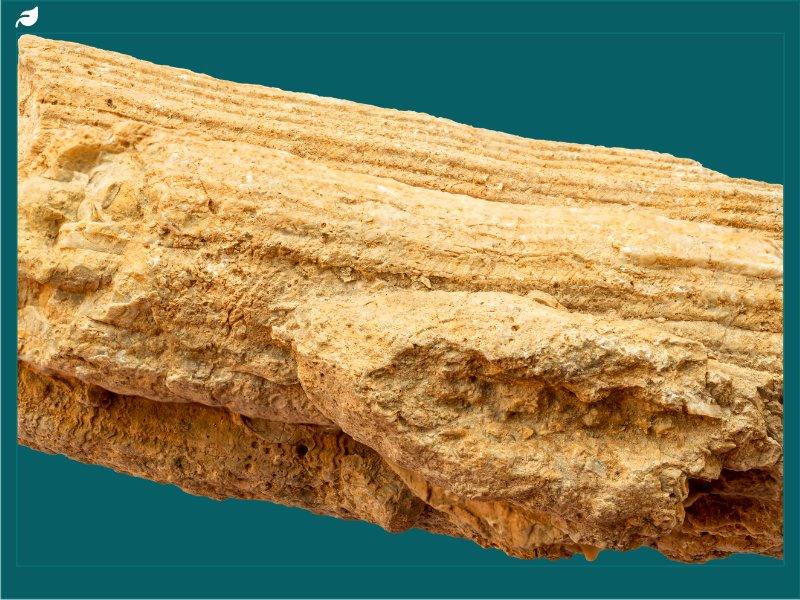
Petrified Forest National Park in Arizona is the obvious starting point, and it earns its reputation completely. The park sits in the Painted Desert of northeastern Arizona and contains one of the largest and most colorful concentrations of petrified wood on the planet. The logs date to the Late Triassic period, roughly 225 million years ago, when this region was a tropical lowland crossed by rivers and thick with conifers. The trees that became these logs were enormous, some reaching 9 feet in diameter, and the mineralization process infused them with iron and manganese that produced an almost hallucinatory range of color.
Walking the Blue Mesa Trail or the Giant Logs Trail puts you within arm’s reach of specimens that weigh several tons and display colors across an entire warm spectrum within a single cross-section. The park is a national protected area, which means collecting is illegal and strictly enforced, but photography is unrestricted and the specimens are accessible in a way that larger museum exhibits simply aren’t. This is petrified wood at human scale, lying on the ground, unchanged since the Triassic.
Utah offers a different but equally compelling experience at Escalante Petrified Forest State Park. Smaller, quieter, and less visited than its Arizona counterpart, Escalante rewards the extra effort required to reach it. The park sits near the town of Escalante in the canyon country of southern Utah, and the petrified logs here appear against a backdrop of Utah’s red sandstone formations that creates a visual contrast almost too dramatic to photograph convincingly. The wood itself tends toward purples and deep reds, and the hiking trails that lead to the best specimens are short enough for most visitors but remote enough to feel genuinely exploratory.
Oregon’s John Day Fossil Beds National Monument brings a different geological story. The monument covers three separate units across central Oregon and preserves an extraordinary record of plant and animal life from the Eocene through the Miocene, roughly 54 to 5 million years ago. The fossil forests here represent ancient coniferous ecosystems, and the petrified wood carries a different mineral signature than the desert Southwest specimens, reflecting the distinct hydrology and soil chemistry of the Pacific Northwest. The Painted Hills unit, with its banded clay hills in rust, gold, and black, is one of the most photographed landscapes in Oregon and sits within the same national monument as significant fossil wood assemblages.
Together, they make a compelling case for why these sites deserve the national protections they carry.
Cultural Significance and Uses of Petrified Wood
People have been picking up petrified wood for as long as people have existed near it. That’s not an accident. There’s something about the combination of organic pattern and mineral hardness that humans respond to immediately, an object that looks alive but feels like stone, that carries both warmth and permanence in the same piece. Cultures separated by thousands of miles and thousands of years independently recognized that petrified wood was worth keeping.
Historical Uses and Modern Applications
Ancient civilizations across North America, Asia, and Africa used petrified wood practically and ceremonially. Its hardness, which matches or exceeds many conventional stones, made it suitable for cutting tools, grinding implements, and mortars. Its visual complexity made it valuable as ornamentation. Archaeological sites in the American Southwest contain worked petrified wood artifacts alongside more conventional stone tools, and the material was sometimes transported considerable distances from its source, suggesting it was actively traded rather than simply collected opportunistically.
That kind of deliberate acquisition and transport implies recognized value, cultural or practical or both.
In ceremonial contexts, petrified wood carried symbolic weight across multiple cultures. An object that was once alive and had become stone without dying, that had endured for longer than any human institution could comprehend, naturally acquired associations with permanence, continuity, and transformation. Some indigenous traditions treated petrified wood as a protective material or as evidence of the land’s deep memory. The specific meanings varied by culture, but the underlying fascination was consistent: this was something outside the normal categories of material and time.
Modern applications lean harder into the aesthetic. Petrified wood is now a staple of high-end interior design, used for tabletops, countertops, bookends, coasters, and decorative objects that range from the subtle to the genuinely spectacular. Jewelry makers cut and polish small specimens into cabochons, pendants, and ring stones, where the mineral patterns display at a scale that rewards close examination. Sculptors work with larger pieces, finding forms within the stone that extend or contrast with the original wood grain.
The material’s density and hardness make it durable in ways that softer decorative stones simply aren’t, and its low porosity means it resists moisture and staining in practical applications.
There’s also a growing connection between the appeal of petrified wood and contemporary interest in sustainable and natural materials. An object that formed naturally over millions of years without any industrial process carries a different cultural weight than manufactured stone. And while collecting from protected sites is rightly illegal, commercial petrified wood comes from private land and legal excavations in multiple countries, including the United States, Madagascar, and Indonesia. Madagascar produces some of the most spectacularly colorful petrified wood currently on the market, with specimens showing turquoise, deep red, and black in tight, swirling patterns that look almost impossible.
The range of applications, from Neolithic cutting tool to contemporary coffee table centerpiece, tells you something important about this material. Its appeal isn’t fashionable. It’s fundamental.
Incorporating Petrified Wood in Home Decor
The temptation, when you first encounter petrified wood as a design material, is to treat it reverently: set it on a pedestal, light it carefully, surround it with space. That approach works. But so does the opposite.
Petrified wood is durable enough to use as a working surface. A slab of petrified wood used as a coffee table top isn’t being disrespected. It’s being engaged with, touched, lived with daily. And that daily contact actually works in the material’s favor, because the patterns in a good piece of petrified wood reveal themselves slowly.
You notice different things about it in morning light versus evening light. You find details in the grain you missed the first dozen times you looked. A tabletop you sit in front of every day gives you thousands of opportunities to appreciate something that took millions of years to form.
For furniture applications, the most common approach uses a thick cross-section slab, typically 2 to 4 inches, mounted on a metal or wood base. The slab surface shows the complete pattern of the original tree’s cross-section: growth rings, mineral color zones, preserved bark edge if the piece was cut close to the outside of the log. Dining tables made this way become immediate conversation pieces, not because the owner has to explain them, but because guests lean forward automatically to look at what they’re eating off. Coffee tables, side tables, and console surfaces work on the same principle at a smaller scale.
Petrified logs and stumps, left in their rounded original form rather than sliced, work as side tables, decorative columns, or garden elements. A substantial stump section placed in a corner reads as sculpture. The same piece placed in a garden or on a patio reads as landscape architecture. The material weathers slowly outdoors, and its density means it doesn’t absorb water the way organic wood does.
It simply sits there, getting rained on, unchanged.
Smaller pieces find their way into bookends, paperweights, and coasters, where the pattern displays in a palm-sized format. These pieces introduce petrified wood to a space without dominating it, a good entry point for anyone uncertain about committing to a larger statement piece. Picture frames, lamp bases, and decorative bowls made from petrified material carry the same organic-mineral tension as larger pieces, just at a more domestic scale.
There’s an educational dimension to living with petrified wood that’s easy to underestimate. A piece in your home becomes a reference point for explaining geological time, fossil formation, and mineral chemistry to anyone who asks. Which they will. People cannot resist asking about it.
And the answers, once you know them, are genuinely interesting enough to keep the conversation going. It’s not just decor. It’s a standing invitation to talk about the deep history of the planet using something you can touch.
Understanding the Value and Preservation of Petrified Artifacts
Here’s a question worth sitting with: what makes a piece of petrified wood valuable? Not in the market sense, though that’s real too, but in the broader sense of why people across centuries and cultures have treated these fossils as something worth protecting, studying, and handing down.
The answer has layers.
How Petrified Artifacts are Made and Preserved
The physical value of petrified wood traces back to the same process that formed it: mineralization so complete that the resulting object is genuinely stone, with all the hardness and permanence that implies. A well-mineralized piece of petrified wood rates between 6.5 and 7 on the Mohs hardness scale, comparable to quartz. It won’t scratch easily. It won’t crack under ordinary pressure.
It resists moisture. It doesn’t rot, obviously, because it already went through the only transformation that could threaten its organic structure, millions of years ago.
That physical durability is partly why petrified wood has survived in archaeological contexts where organic wood has long since vanished. An ancient carved tool made from petrified wood survives in the soil indefinitely. The same tool made from conventional wood is gone within decades. So the archaeological record of petrified wood use is probably more complete than the record of any other wood-based artifact, not because people used it more, but because it’s the only form of worked wood that preserves reliably over geological time.
The preservation of petrified artifacts in the modern sense involves a different kind of care. National parks and conservation areas that contain significant petrified wood, including the Petrified Forest National Park in Arizona, maintain strict regulations on collection. The park estimates that visitors remove approximately 12 tons of petrified wood per year despite the prohibition, which gives you a sense of both the demand and the enforcement challenge. What’s removed is gone from its scientific context permanently.
A log in its original location, still partially embedded in the matrix sediment that buried it, carries information that the same log on someone’s shelf has lost: its orientation, its association with other fossils nearby, its relationship to the surrounding geology. Collection doesn’t just remove an object. It erases a data point.
Beyond the parks, the scientific community’s interest in petrified wood is ongoing and expanding. Mineral analysis of replacing silica can now be done with enough precision to identify the specific water source that carried the mineralizing fluid, essentially tracing the ancient hydrology of a landscape that no longer exists. Isotope ratios in the mineral structure reflect atmospheric conditions at the time of mineralization. Carbon preserved in cell walls can sometimes be dated directly, providing age estimates independent of the surrounding sedimentary context.
Each of these analytical techniques extracts more information from the same piece of fossil wood, meaning the scientific value of well-documented specimens increases as methods improve.
The cultural value runs alongside the scientific one without competing with it. A piece of petrified wood displayed in a home carries a different kind of meaning than one analyzed in a laboratory, but both forms of engagement are legitimate and both reflect a genuine human response to an extraordinary natural object. The person who puts a polished petrified wood slab on their coffee table and the researcher who analyzes its isotope ratios in a laboratory are responding to the same thing: the recognition that this object connects the present moment to a past so deep that the imagination struggles to hold it.
Preservation, in both the conservation and the personal sense, comes down to awareness. Knowing what petrified wood is, how it formed, what information it carries, and why that information matters makes you a different kind of observer. You stop seeing a pretty rock and start seeing a record. And records, once you understand what they contain, are much harder to treat casually.
The minerals locked inside each piece of petrified wood aren’t decoration. They’re data. The stone isn’t just stone. It’s a tree that decided, over several million years, to become something that would last.
That’s a reasonable ambition, and one worth understanding.