Last-mile delivery is often the most expensive and waste-heavy part of the fulfillment process. It involves short trips, frequent stops, failed delivery attempts, packaging handling, fuel use, labor time, and customer communication.
For businesses trying to operate more sustainably, last-mile waste should be reviewed closely. Waste does not only mean cardboard, plastic, or damaged goods. It also includes wasted miles, idle time, repeated trips, poor routing, unnecessary packaging, inaccurate inventory, and preventable returns.
Reducing waste in last-mile delivery requires better planning, cleaner data, and tighter coordination between dispatch, warehouse, drivers, and customers.
Map Where Waste Happens
Before changing the delivery process, businesses should identify where waste is created. This starts with a review of delivery data, driver feedback, failed deliveries, packaging use, fuel costs, route timing, and customer complaints.
Common waste points include repeated delivery attempts, poorly grouped orders, oversized packaging, unnecessary warehouse handling, long driver wait times, and unclear customer instructions.
The goal is to separate visible waste from hidden waste.
A pile of discarded packaging is easy to see.
A driver spending 40 minutes on avoidable backtracking is just as costly, but harder to notice without tracking.
Improve Route Planning
Poor routing creates excess mileage, higher fuel use, driver fatigue, late deliveries, and more vehicle wear. It can also increase failed deliveries when timing estimates are inaccurate.
Businesses can reduce these issues by using route optimization to group stops more efficiently, account for delivery windows, reduce backtracking, and improve dispatch visibility.
Better routing helps drivers complete more stops with fewer miles.
It also reduces unnecessary emissions because vehicles spend less time idling, circling, or returning to missed locations.
Route planning should not rely only on distance.
It should consider traffic patterns, customer availability, vehicle capacity, stop priority, delivery density, and driver workload.
Reduce Failed Delivery Attempts
A failed delivery wastes labor, fuel, packaging condition, customer service time, and vehicle capacity. It may also create customer frustration and additional emissions from redelivery.
Businesses should reduce failed attempts by improving customer communication before the driver arrives.
Send delivery windows, tracking links, reminder messages, and clear instructions for access points.
For apartments, offices, campuses, and gated properties, collect delivery notes before dispatch.
Information to Confirm Before Delivery
Helpful details include:
- Correct address
- Gate or building access
- Preferred delivery time
- Safe drop-off location
- Contact number
- Loading dock instructions
- Signature requirements
- Delivery restrictions
- Customer availability
The fewer unknowns a driver faces, the lower the chance of a wasted trip.
Right-Size Packaging
Packaging waste is one of the most visible problems in delivery. Oversized boxes, excess void fill, single-use plastic, and weak packaging that leads to damage all create unnecessary waste.
Right-sizing packaging reduces material use and can improve vehicle capacity.
Smaller, stronger packaging allows more orders to fit into one route.
Businesses should review package dimensions by product type and order size.
If small items regularly ship in oversized boxes, the packaging process needs adjustment.
The best packaging protects the item without adding unnecessary weight or volume.
Improve Load Planning
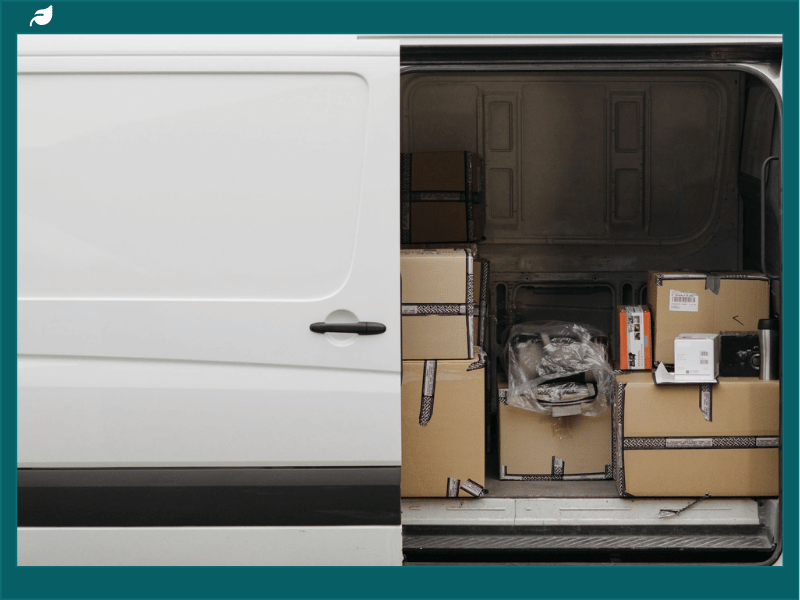
Load planning affects delivery speed, driver safety, product condition, and fuel efficiency. Poorly loaded vehicles can cause delays, damaged goods, and unnecessary unloading.
Items should be loaded based on route sequence, weight, fragility, temperature needs, and handling requirements.
Drivers should not need to search through the vehicle at every stop.
This wastes time and increases the risk of damage.
A clear loading process also helps reduce missed items and incorrect deliveries.
For high-volume operations, scanning tools and stop-based staging can improve accuracy.
Use Delivery Data to Find Patterns
Delivery waste often repeats. The same route may have frequent delays. The same address type may create failed deliveries. The same product may be damaged more often. The same packaging size may create excess material use.
Businesses should review delivery data weekly or monthly.
Metrics Worth Tracking
Useful metrics include:
- Miles per delivery
- Failed delivery rate
- Average stop time
- Fuel use per route
- Packaging cost per order
- Damage rate
- Return rate
- On-time delivery rate
- Redelivery volume
These numbers help managers identify where waste is increasing and where process changes are working.
Data also helps justify investment in better tools, training, or packaging.
Train Drivers on Waste Reduction
Drivers see practical problems that office teams may miss. They know where routes slow down, which delivery instructions are unclear, and which packaging fails during transport.
Training should include more than safety and customer service.
It should also cover fuel-efficient driving, idling reduction, delivery documentation, damage prevention, vehicle organization, and reporting process problems.
Driver feedback should be part of route improvement.
If drivers report the same issue repeatedly, managers should treat it as an operational signal.
Consolidate Deliveries When Possible
Delivery consolidation reduces the number of trips needed to serve customers. This can be done by grouping nearby orders, setting delivery days by zone, or encouraging customers to choose flexible delivery windows.
Flexible delivery windows allow dispatchers to build denser routes.
Dense routes usually mean fewer miles per stop and better vehicle utilization.
This approach works especially well for local retailers, food distributors, office supply companies, medical suppliers, furniture sellers, and service-based deliveries.
Consolidation should be balanced with customer expectations.
The goal is to reduce waste without creating poor service.
Reduce Returns Through Better Accuracy
Returns create reverse logistics waste. They add extra mileage, handling, packaging, labor, and inventory processing.
Some returns are unavoidable, but many can be reduced through better product information, order accuracy, quality control, and delivery confirmation.
Before dispatch, verify that the correct item, quantity, address, and delivery notes are attached to the order.
For products that are frequently returned, review whether the issue is product description, sizing, quality, damage, or customer expectation.
Reducing returns is one of the most effective ways to reduce waste across the full delivery cycle.
Final Thoughts
Businesses can reduce waste in last-mile delivery by improving route planning, lowering failed delivery attempts, right-sizing packaging, using delivery data, training drivers, consolidating routes, and preventing avoidable returns.
The most effective changes are practical and measurable.
Every wasted mile, repeated trip, damaged package, and failed delivery adds cost and environmental impact.
When businesses manage the last mile with better data and clearer workflows, they can improve sustainability while also reducing operating costs.