Commercial property owners face constant pressure to manage utility spending and structural upkeep. Managing exterior building materials forms a big part of that financial equation. Upgrading facade components creates immediate performance benefits for structural insulation and weather defense.
Modern siding solutions offer long-term stability and protection against rot, wind, and heat transfer. Building managers who prioritize sustainable exteriors secure lower operational budgets over long ownership cycles.
Evaluating Modern Siding Upgrades
Commercial exterior choices shape property performance and yearly utility demands. Choosing durable materials reduces frequent maintenance cycles for building managers. Proper exterior planning protects indoor assets from water penetration and mold growth.
Business properties need exterior materials that withstand tough climate conditions. Smart property managers analyze vinyl and fiber cement siding options when planning major exterior renovation projects. Selecting high-quality cladding materials protects structural integrity for decades.
Different commercial builds require distinct material characteristics. Fire resistance, moisture shielding, and labor needs dictate final choices. Fiber cement provides robust fire protection. Vinyl offers quick installation speeds and budget efficiency. Selecting the correct outer material aligns property preservation with financial planning goals.
Understanding Total Envelope Costs
Building envelope construction represents a substantial portion of initial capital outlay. Studies from the Whole Building Design Guide indicate multi-story envelope costs exceed 20% of total building construction costs. Managing these upfront expenses requires clear foresight regarding long-term material performance.
Wall assemblies make up a massive share of those facade investments. Selecting sustainable options protects that capital investment against rapid decay. Cheap materials degrade fast, forcing premature replacement projects that drain company reserves.
High-performance cladding protects foundational layers against water intrusion and wind exposure. Shielding inner walls lowers long-term capital risks for commercial real estate portfolios. Property owners protect asset equity by choosing resilient wall coverings.
Stopping Unwanted Heat Loss
Unprotected walls create massive energy waste throughout heating and cooling seasons. Controlling air movement through outer walls remains a top priority for facilities teams. Poor wall insulation forces HVAC equipment to work continuously during weather extremes.
Research by the Pacific Northwest National Laboratory shows poorly insulated residential walls waste over 1 quadrillion BTUs annually. Commercial facilities experience similar thermal leakage when aging siding fails. Stopping this energy drain protects mechanical infrastructure from early failure.
Stopping heat transfer through exterior walls cuts demands placed on heating equipment. Commercial HVAC systems operate more smoothly and last longer with proper outer insulation barriers. Building occupants stay comfortable, and energy bills drop.
Eliminating Continuous Thermal Bridges
Standard wall studs conduct heat straight through exterior surfaces without proper barrier coverage. Direct thermal conduction drives energy bills up rapidly every single month. Frame studs act as heat highways when exterior insulation layers remain thin or absent.
Energy Department records show insulated siding reduces thermal bridging through continuous insulation coverage. Continuous outer layers seal structural framing studs away from extreme outdoor temperatures. Adding continuous insulation creates a complete thermal barrier across entire outer surfaces.
Eliminating thermal gaps lowers indoor temperature fluctuations. Office tenants enjoy steady indoor comfort without constant thermostat adjustments. Stable climate control reduces tenant complaints and extends tenant retention rates.
Lowering Long-Term Operational Expenses
Investing in resilient siding materials limits routine maintenance demands. Facility managers save thousands of dollars on exterior repainting and structural sealing each year. Durable surfaces resist cracking, warping, and pest damage.
Sustainable exteriors lower operating costs across several key operational categories:
- Lower HVAC energy consumption through superior thermal containment
- Reduced structural decay caused by trapped wall moisture
- Fewer repair calls for exterior painting contractors
- Lower insurance risks through fire-resistant cladding materials
Eliminating recurring maintenance tasks frees up internal building management resources. Maintenance crews focus on interior tenant needs rather than constantly fixing exterior wall defects. Operations run much smoother when exterior facades stay intact.
Improving Commercial Property Value
Clean structural exteriors project professional credibility to prospective commercial tenants. Quality siding installations increase immediate property appraisal metrics and curb appeal. Commercial real estate markets reward properties that present clean, modern exteriors.
Energy-efficient updates attract high-value tenants seeking lower operational overhead. Green commercial spaces command higher lease rates across competitive real estate markets. Business tenants want modern facilities that lower monthly utility responsibilities.
Property owners capture higher selling prices when offloading modernized buildings. Quality siding signals proper maintenance history to potential buyer groups. Strong curb appeal reduces vacancy periods between lease agreements.
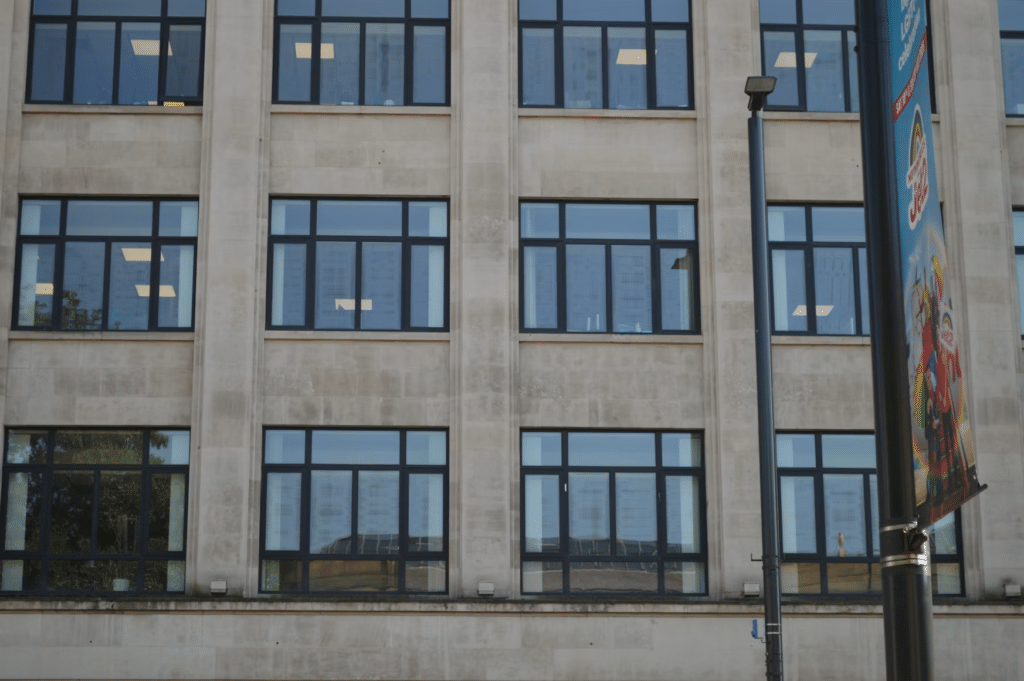
Image source:https://unsplash.com/photos/a-concrete-building-facade-with-many-windows-and-a-lamppost-iRQVGUqyHlQ
Reducing Lifecycle Environmental Impacts
Commercial real estate developers face growing scrutiny over environmental performance metrics. Selecting recycled or long-lasting siding components supports organizational sustainability goals. Reduced raw material extraction lowers carbon footprints associated with building construction.
Sustainable manufacturing practices reduce landfill waste during demolition and construction phases. Durable products stay attached to structures for decades without requiring replacement. Long lifespans keep construction debris out of regional waste processing facilities.
Corporate tenants prefer leasing spaces within eco-friendly buildings. Meeting modern sustainability criteria strengthens marketing efforts for commercial leasing agents. Sustainable siding choices demonstrate genuine environmental responsibility to surrounding communities.
Upgrading commercial siding provides clear economic and structural benefits for property owners. Sealing the building envelope reduces energy waste and protects physical assets against harsh weather elements. Smart investment choices in outer wall cladding deliver lasting financial returns.