
The UK’s Blue Planet Fund has announced a £2.2 million funding commitment to scale six innovative ocean finance and insurance projects across the Global South, channelled through the Ocean Risk and Resilience Action Alliance (ORRAA). Announced at the Our Ocean Conference in Mombasa on 17 June 2026, the funding will take proven pilot projects, ranging from fisher impact bonds to blue carbon credits and parametric insurance, and push them toward wider replication across vulnerable coastal regions.
Moving From Pilot to Scale
What distinguishes this funding round from earlier ORRAA grants is its focus on graduation rather than experimentation. Each of the six selected initiatives has already demonstrated proof of concept through an established pilot; the new capital is specifically earmarked to help them expand into new sites, new countries, or new product lines. That distinction matters in a sector where ocean finance innovation has often struggled to move past small-scale demonstration projects into investable, replicable models.
The funding forms part of ORRAA’s broader mission to activate at least US$500 million in investment through finance and insurance products by 2030, targeting resilience-building for 250 million climate-vulnerable coastal people across the Global South. This latest commitment brings the UK government’s total funding for ORRAA to £15.5 million, supporting 36 projects across 19 countries and already reaching more than 250,000 people directly.
Six Projects, Six Approaches to Risk
The selected initiatives span a deliberately broad range of financial instruments, reflecting ORRAA’s strategy of testing multiple mechanisms for channelling capital into coastal resilience rather than betting on a single model.
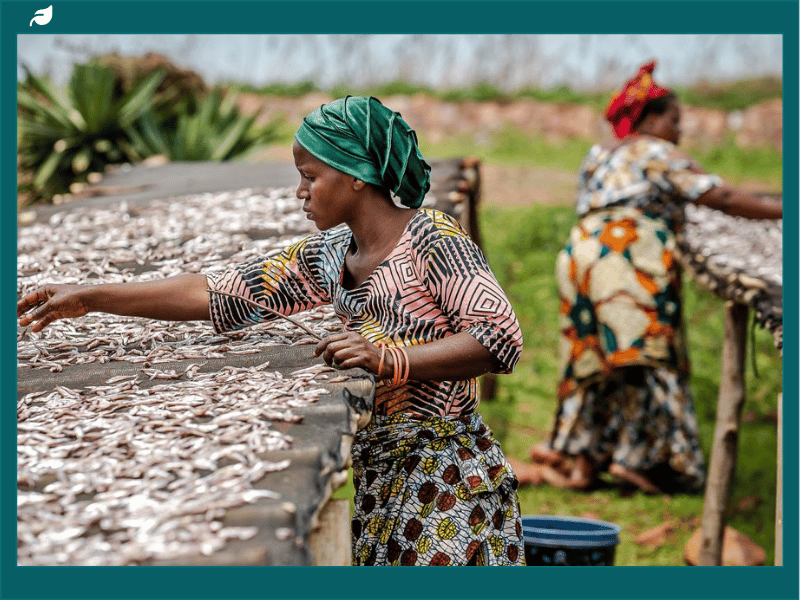
Rare is scaling the world’s first impact bond for small-scale fishers, extending a pilot programme to 15 additional sites across North Sulawesi, Maluku, and North Maluku in Indonesia. The same organisation is also developing a weather index-based parametric insurance product in Kenya, designed to cover climate-related income loss for small-scale fishers, building on a model already operating in the Philippines.
In Tanzania, Action For Ocean is advancing a scalable blue carbon credit initiative that will bring the country’s first fully community-led mangrove blue carbon project to credit-ready stage. In Colombia, MarViva is replicating a microinsurance model, deploying community-based financial tools for small-scale fishing communities.
Closer to the conference’s host country, the Association for Coastal Ecosystem Services (ACES) is advancing the Vanga Seagrass Project in Kenya, which is set to become the first seagrass programme certified under the Plan Vivo Nature standard, co-generating both carbon and biodiversity credits. Vanga Bay has already drawn attention as the site of one of the world’s first marine biodiversity credit schemes in the Global South, creating an income stream for coastal communities tied directly to seagrass restoration and protection. Meanwhile, in the Dominican Republic, CI-Atabey is advancing a blue carbon exchange, moving its mangrove carbon credits project toward full investability.
Why Coastal Finance Needs New Instruments
The rationale behind ORRAA’s work rests on a persistent gap in conventional finance: coastal communities most exposed to climate risk, rising seas, intensifying storms, and degrading marine ecosystems, have historically had the least access to insurance, credit, or investment capital to manage that exposure. Parametric insurance, impact bonds, and biodiversity credits are all attempts to translate ecological resilience into a financial asset that investors can actually back, rather than leaving conservation dependent solely on grant funding or government budgets.
Marine Minister Emma Hardy, at the UK’s Department for Environment, Food and Rural Affairs, frames the human stakes behind the financial mechanics: “Behind every statistic is a fishing community better protected from storms, a mangrove forest pulling carbon from the atmosphere, a family no longer at risk of losing their home to rising seas.” She adds that ORRAA’s work, including the development of marine biodiversity credits in Kenya, sits at the forefront of these efforts.
Karen Sack, Executive Director of ORRAA, points to the funding’s role in sustaining momentum: “The UK’s Blue Planet Fund has been instrumental in supporting ORRAA’s work in developing an investable finance and insurance product pipeline that supports the resilience of climate-vulnerable coastal communities in the Global South, and in building the Alliance. This latest wave of funding from DEFRA will be critical as we double down and scale up vital action for the health of the Ocean and the communities it supports.”
Part of a Larger UK Commitment
The ORRAA allocation is one strand of a wider £13.9 million package announced through the Blue Planet Fund, which marks its fifth anniversary this year. Alongside the ORRAA funding, £6.7 million is going to PROBLUE, the World Bank’s Blue Economy Multi-Donor Trust Fund, and £5 million to the Global Plastic Action Partnership. Combined, the UK’s total investment across these three programmes now exceeds £86 million since 2021.
What Success Looks Like
The real test for these six projects will not be the funding announcement itself, but whether instruments like parametric insurance and biodiversity credits can attract private capital at scale once the initial public funding has proven the concept. ORRAA’s model depends on exactly that handoff, using donor capital like the UK’s Blue Planet Fund to de-risk early-stage innovation, then drawing in commercial investment once a track record exists.
With ORRAA’s 2030 target still requiring a roughly twenty-fold increase from current activation levels to reach its US$500 million goal, the pace at which these pilots can be replicated across new geographies will be the clearest indicator of whether ocean finance innovation can move from boutique pilot projects to a genuine asset class.