Introduction to Peperomia Prostrata
Look closely at a single leaf on this plant and you’ll see something odd: a tiny mosaic, no two quite alike, laid over a leaf barely the size of a fingernail. That’s the string of turtles, and its real party trick isn’t the pattern. It’s how little the plant asks of you. Go on holiday for two weeks and forget to water it.
It won’t sulk.
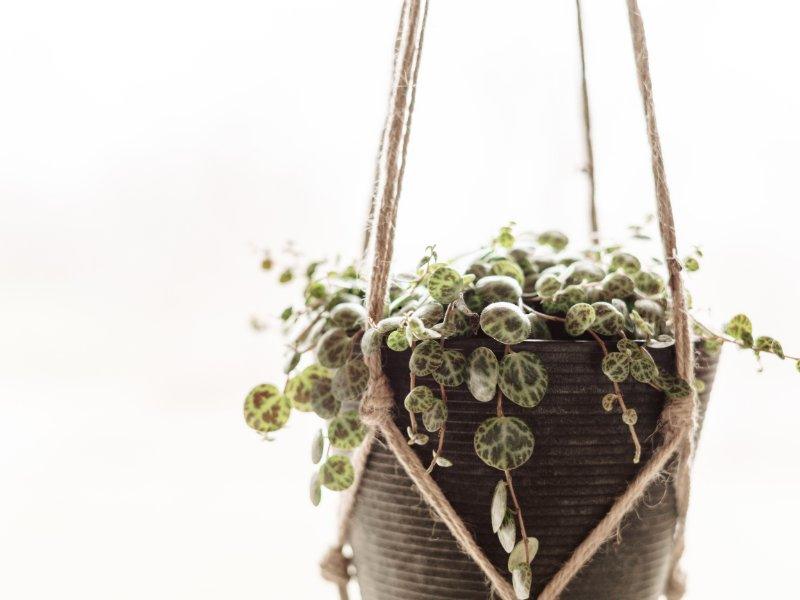
Peperomia prostrata, the plant behind that nickname, earns it honestly. The rounded, ridged leaves really do look like tiny turtle shells strung along thread thin stems, and the effect only gets better as those stems lengthen and trail. It suits a shelf, a hanging basket, a windowsill you walk past every day. Novice growers pick it up because it forgives mistakes.
Experienced growers keep it because the leaves reward a closer look every single time. This guide walks through what the plant needs to thrive: light, temperature, soil, water, the pests to watch for, and why it earns a permanent spot on your plant care shelf. Some plant-care guidance treats the species as a semi-succulent with a shallow, fine root system, which is why Love That Leaf advises saturating the mix thoroughly when you do water but letting the plant stay slightly on the dry side in between.
What Makes This Plant Unique?
- The turtle shell pattern on each leaf is the plant’s calling card: rounded, ridged foliage that genuinely resembles a small shell, not a marketing stretch.
- It handles a wide range of indoor light, doing best in bright, indirect light and never wanting direct sun on its leaves.
- A fast draining mix built from potting soil, perlite, and orchid bark keeps the roots healthy.
- Water sparingly. Let the soil dry out fully between waterings and you’ll dodge the single biggest killer of this plant: root rot.
- It comes from the rainforest floors of Brazil, so it wants steady warmth and a bit of humidity, but it copes with an ordinary living room far better than you’d expect from a rainforest native.
Discovering the String of Turtles
Peperomia prostrata built its following the honest way: people saw it, asked what it was, and went home to buy one. The tiny button leaves and the fine, wiry stems give it a texture unlike almost anything else on a plant shelf, and the trailing habit means it keeps working long after the pot itself is out of sight. It’s an easy plant to live with and a genuinely interesting one to look at, which is a rarer combination among houseplants than you’d think. Pick one up as a gift for a plant lover, or as your own first hanging plant, and you’ll see quickly why it holds onto a loyal following among indoor gardeners.
Part of that following comes from how differently the plant behaves compared to its bigger, leafier cousins. A monstera or a fiddle leaf fig demands a corner of its own and a fair bit of fuss. The string of turtles asks for a few inches of shelf space and a light hand with the watering can, and it still ends up being the plant visitors ask about first. That gap between effort and payoff is rare in the houseplant world, and it explains a lot of the plant’s growing following online, where photos of its cascading stems circulate constantly among people building out their own plant care routines.
It also travels well between owners, which matters more than people expect. A cutting wrapped in a damp paper towel survives a car ride or a short flight without complaint, so plant swaps and cuttings passed between friends spread the string of turtles far beyond where any single grower first bought one. Ask around a plant-loving office or a neighborhood plant group and there’s a fair chance someone’s willing to trade a cutting rather than sell you a full pot, which keeps the cost of building a collection refreshingly low.
Ideal Growing Conditions for Peperomia Prostrata
Here’s what sets the string of turtles apart from the rest of your plant collection: it doesn’t ask you to get everything right. Give it reasonably bright, indirect light and let its soil dry between drinks, and the plant does the rest. The rounded leaves, patterned in silvery green, carry more visual interest than plants three times their size, and that’s exactly why this one so often becomes the centerpiece of a shelf instead of a filler plant tucked in the corner.
Part of the appeal is how little drama it brings. This is a plant built for benign neglect. It doesn’t demand constant attention, it forgives a missed watering, and its growth stays slow and controlled so it never outgrows its welcome. You don’t need floor space either.
A small pot on a desk or a narrow shelf gives it everything it needs, which matters if your home or office runs short on room for anything bigger.
Then there are the stems. Fine, wiry, and surprisingly tough, they’re what let the plant trail properly, cascading out of a hanging basket or draping over the lip of a pot in a way that upright plants simply can’t manage. Set it near a sunny window or let it spill from a high shelf, and you get real movement in a room that would otherwise sit static.
Add in the fact that, like most houseplants, it does some quiet work filtering indoor air, and you’ve got a plant that earns its spot on looks and function both. As part of the wider peperomia family, it’s already built for life indoors, tolerant of the kind of indirect light most homes actually offer rather than the hard, unfiltered sun a garden gets. That flexibility, paired with looks that punch well above their size, is why the string of turtles keeps climbing in popularity among people who care about their plant care as much as their decor.
None of this happens by accident. Every trait that makes the plant easy to live with, the slow growth, the tolerance for dim corners, the resilience against a missed watering, traces back to where it actually grows in the wild. Peperomia prostrata evolved as an epiphyte and near ground creeper on rainforest floors, competing for scraps of filtered light under a dense canopy and grabbing moisture whenever it briefly appeared. A houseplant descended from those conditions is, almost by definition, built to survive neglect.
Light and Temperature Requirements
Peperomia prostrata comes from Brazil’s rainforest floor, and that detail explains almost everything about how to keep it happy indoors. In the wild it grows low, under a forest canopy, catching only filtered light. Recreate that indoors with bright, indirect light and the plant settles in fast. Every leaf unfurls with fine translucent veining and a genuine depth of color, proof that this plant was built by evolution to survive on very little, and that toughness is exactly what makes it forgiving indoors.
Temperature matters more than most owners expect. Keep the string of turtles between 65°F to 75°F (18°C to 24°C) and hold that range steady. Sudden swings, cold drafts by a winter window, or a blast of hot air from a heating vent will stress the plant faster than almost anything else on this list. Consistency, not warmth alone, is what it actually wants.
Humidity plays a smaller but real role. This isn’t as fussy as a fern or an orchid, but a little extra moisture in the air, somewhere around 40% to 50% humidity, helps it along. Group it with other houseplants, sit it on a humidity tray, or run a small humidifier nearby and you’ll see steadier, faster growth without much extra effort.
Seasonal shifts deserve a mention too. Winter changes the equation on two fronts at once: daylight gets weaker just as central heating dries the air out. If your string of turtles usually sits on a north facing sill through spring and summer, consider nudging it a little closer to an east facing window from November through February to compensate for the thinner light, while also keeping it further from any radiator that would otherwise bake the surrounding air dry. Small adjustments like that keep the plant looking full and colorful through the darker months instead of visibly stalling until spring.
Recommended Soil Types
Get the soil right and most of the rest of this plant’s care takes care of itself. Peperomia prostrata wants a fast draining mix, full stop. Combine equal parts potting soil, perlite, and orchid bark (or coarse sand if that’s what you’ve got) and you’ll build something close to the loose, airy substrate this plant would find clinging to a rainforest tree trunk in the wild. The potting soil supplies nutrients, the perlite keeps water moving instead of pooling, and the bark or sand adds texture that lets air actually reach the roots.
The pot matters just as much as what’s inside it. Choose pots with drainage holes, always, and lean toward clay or terracotta if you can, since both let extra moisture evaporate through the sides rather than sitting at the bottom. Repot roughly every two years, or sooner if you spot roots pushing out through the drainage holes looking for more room. When you do repot, resist the urge to size up dramatically.
A pot only slightly larger than the current one keeps the soil from staying wet for days after a watering, which for this particular plant is exactly the kind of slow, damp environment that invites trouble at the roots.
Caring for Your String of Turtles
Light, temperature, and soil set the stage, but the daily rhythm of care is what actually keeps a string of turtles thriving for years rather than months. None of it is complicated. Most of it comes down to restraint: less water than you think, steady conditions, and patience while it does its slow, deliberate growing.
Bright, indirect light stays the baseline. Direct sun will scorch those patterned leaves and fade the very markings that make the plant worth growing in the first place, so keep it back from a harsh south facing window, or filter the light with a curtain if that’s the only spot you’ve got. A north or east facing window usually does the job without any extra effort. Indoors, dappled light recreates what the plant would find under a rainforest canopy, and it noticeably prefers that over anything too intense.
Hold the temperature steady between 65°F to 75°F (18°C to 24°C) and keep the pot away from drafts, whether that’s a cold windowsill in January or a blast of dry heat from a radiator. Sudden change is the enemy here far more than any single extreme.
Humidity between 40% to 50% keeps growth even, and you don’t need special equipment to get there. A pebble tray under the pot, a cluster of other houseplants nearby, or an occasional pass with a humidifier during dry winter months will all do the trick. None of this needs to be precise. The plant tells you what it needs if you pay attention, and adjusting your plant care routine as the seasons shift keeps it consistently healthy rather than lurching between stress and recovery.
Beyond the basics, a little routine goes a long way. Rotate the pot a quarter turn every couple of weeks so the plant grows evenly rather than leaning hard toward whatever window it can find, and take thirty seconds every so often to look the leaves over for anything out of place. Catching a problem while it’s still small is always easier than fixing it once it’s spread across half the plant.
Watering and Humidity Needs
If there’s one rule that matters more than any other for this plant, it’s this: let the soil dry out fully before you water again. Peperomia prostrata would rather go too dry than sit in wet soil, and overwatering, not underwatering, is what kills most string of turtles that don’t make it. Root rot shows up as yellowing leaves and mushy stems, and by the time you see those signs the damage is already underway.
A practical schedule for most homes lands somewhere around watering every 10 to 14 days, though the honest answer is to test rather than guess. Push a finger about an inch into the soil. If it comes out dry, water thoroughly until it runs from the drainage holes. If there’s still moisture down there, leave it alone for a few more days.
Bottom watering is commonly recommended for this plant because its dense, low-growing foliage can make watering from above awkward. Love That Leaf suggests soaking the pot from below until the top of the soil turns moist, then draining thoroughly, noting that a shallow pot helps the roots take up that moisture more evenly.
Ambient temperature and humidity in your home will shift that schedule slightly through the year, so treat the 10 to 14 day window as a starting point, not a rule carved in stone.
Humidity rounds out the picture. It’s a nice-to-have here rather than a requirement, but the plant clearly grows faster and looks glossier with a bit of extra moisture in the air. Misting occasionally, running a tray of water and pebbles under the pot, or grouping it near other plants all raise the humidity a little without any real effort on your part.
Winter tends to catch people out on watering more than any other season. Central heating dries soil out faster on paper, but growth also slows right down in the cooler, dimmer months, which means the plant is drinking less even as the air around it feels drier. The finger test still wins here: trust what the soil tells you over what the calendar or the thermostat suggests, and you’ll avoid both the overwatering that rots roots and the underwatering that leaves leaves shriveled and thin.
Preventing Common Issues
Most problems with a string of turtles trace back to just a handful of causes, and once you know them, they’re easy to head off before they take hold. Overwatering sits at the top of that list every time. Give the roots a well-draining mix, a pot with proper drainage holes, and the patience to let soil dry between waterings, and you sidestep the single biggest threat to this plant’s health.
Pests show up occasionally but rarely take hold if you’re watching. Mealybugs, spider mites, and aphids are the usual suspects. Check the undersides of leaves and along the stems every so often for webbing or a sticky residue, and if you catch an infestation early, a damp cloth or a wipe of neem oil usually clears it up without reaching for anything harsher.
Light problems run in both directions. Too much direct sun scorches leaves and fades their pattern; too little light leaves the plant leggy, with long gaps between leaves as it stretches toward whatever brightness it can find. Bright, indirect light avoids both extremes and keeps the plant compact and full.
Feeding isn’t a big part of this plant’s care, but the occasional boost helps. A balanced, water-soluble fertilizer every couple of months through spring and summer supports steady growth without pushing the plant past what it can use. And through it all, keep the pot away from cold drafts and sudden heat, holding that 65°F to 75°F (18°C to 24°C) range as consistently as you can manage.
One issue worth flagging on its own: stretched, sparse growth with big gaps between leaves almost always points back to insufficient light, not a lack of water or fertilizer. Owners often reach for the watering can or a feed when what the plant actually needs is a brighter spot. Move it closer to a window before you change anything else, and you’ll usually see denser, more compact growth resume within a few weeks.
The Role of Peperomia Prostrata Among Indoor Plants
Once the basics of watering, light, and temperature are sorted, the string of turtles settles into being one of the lowest maintenance plants you can own, and one of the most distinctive. It holds its own next to structured succulents, drapes elegantly among softer ferns, and never quite disappears into the background the way some greenery does. That’s the real reason it keeps earning a spot in serious plant collections rather than staying a novelty.
Propagation is part of the fun, too. Snip a length of stem, let the cut end callus for a day, then set it in water or straight into soil, and new growth follows without much coaxing. It’s an easy way to multiply your own plants or hand cuttings off to friends, and it turns a single string of turtles into an entire shelf of them over time. Most cuttings root within a few weeks given enough warmth and consistent moisture, and once roots appear the transition from water to soil is straightforward: just keep the new plant’s soil lightly moist for the first week or two while it settles in.
Its size works in the plant’s favor as well. A trailing plant that stays compact suits an apartment windowsill or a crowded desk just as well as a spacious living room, which is exactly why renters and anyone short on room keep reaching for it. And for households with pets, it’s worth knowing the plant is non-toxic, which takes one worry off the table entirely.
Why Add This Plant to Your Collection?
The honest case for the string of turtles comes down to a simple trade: very little effort for a genuinely striking plant. Its pattern alone sets it apart from most of what you’ll find at a garden center, and its size means it fits nearly anywhere, from a sunny office cubicle to a shaded bedroom corner where fussier plants would struggle.
Adaptability is the other half of the argument. It tolerates a wider spread of light conditions than most houseplants, thriving in bright, indirect light but coping reasonably well in dimmer corners too, provided you’re patient with slower growth there. That flexibility means you’re not restricted to one perfect spot in your home. Move it, hang it, drape it across a shelf, and it adjusts.
Because it stays compact, it also suits people just getting started with indoor gardening. There’s very little that can go wrong if you follow the basics: don’t overwater, don’t blast it with direct sun, and give it a mix that drains well. Get those three right and the plant does the rest, which is exactly why it keeps showing up as a recommended first plant for people building their indoor plant collection from scratch.
There’s also the display question worth considering before you buy. A single trailing stem in a small pot barely hints at what the plant can do. Give it a hanging basket, a tall shelf, or a plant stand it can spill from, and within a year or two the same plant fills that space with cascading stems that look nothing like the small starter pot it began in. Choosing where it lives matters almost as much as how you water it.
Benefits of Keeping Peperomia Prostrata Indoors
Beyond how it looks, the string of turtles earns its keep in a few practical ways. Like most houseplants, it filters some toxins from the air around it, and more time indoors for most of us means that quiet contribution matters more than it used to. It’s not going to replace an air purifier, but every bit of cleaner air in a room adds up.
It also copes with conditions that would stress out fussier plants. Fluorescent office lighting, a spot with limited natural light, a home where temperatures swing with the seasons: the plant handles all of it without losing its color or its density, which is precisely why it turns up on desks and in offices as often as it does in living rooms.
There’s a real case for the mental benefit too. Trailing plants bring a sense of movement into a room that upright plants can’t quite match, and the small, textured leaves reward a closer look in a way that static decor never will. Spending time around plants, even briefly, tends to ease stress and sharpen focus, and a plant this easy to keep alive makes that a low effort habit rather than a chore.
Pet owners get an extra reason to like it: peperomia prostrata is non-toxic, so a curious cat or dog nosing around the pot isn’t cause for alarm. That single fact makes it a safer pick for family homes than a lot of popular houseplants.
And for anyone interested in where their plants actually come from, growing a species native to Brazil’s rainforest indoors offers a small, ongoing lesson in how adaptable nature can be. Watching new turtle-shaped leaves appear slowly over months gives you a front row seat to that resilience, plant by plant, leaf by leaf.
Cost is worth a mention as well. Because propagation is so simple and reliable, a single plant can turn into several more without spending another penny, which makes the string of turtles one of the more budget-friendly ways to fill out a growing plant collection. Trade cuttings with friends, start a few pots for gifts, or just let one plant slowly multiply across your own home over a couple of seasons.
Put it all together and you’ve got a plant that asks for very little and gives back a lot: distinctive looks, decent air filtering, a calming presence, and one of the easiest care routines in the entire houseplant world. Whether it’s your first plant or your fiftieth, the string of turtles holds up its end of the bargain every time, quietly earning its keep on a shelf, a desk, or a hanging basket for years on end.