Introduction to Muriatic Acid
Pour a capful of muriatic acid onto a brick stained with years of salt buildup, and within seconds the white crust fizzes away to nothing. That reaction tells you almost everything you need to know about why this chemical has been a go-to tool for builders, pool owners, and industrial chemists for centuries. It works fast, it works hard, and if you underestimate it, it will absolutely ruin your day. The U.S. Environmental Protection Agency reports that the established Reference Concentration (RfC) for hydrochloric acid is 0.02 mg/m3, based on hyperplasia observed in the nasal mucosa, larynx, and trachea of rats, underscoring how seriously regulators treat even low-level exposure.
Muriatic acid is the older, more common name for hydrochloric acid in its commercial form. You’ll find it on the shelves of hardware stores everywhere, usually in a yellow jug marked with a skull and crossbones, sitting right next to the pool chemicals and the masonry sealers. That placement is no accident. The acid belongs in both of those conversations, and a few others besides.
This guide covers what it is, what it does, how to handle it without hurting yourself, and why the distinction between muriatic and pure hydrochloric acid actually matters more than most people realize.
Understanding Muriatic Acid and Its Common Uses
Muriatic acid, the commercial name for hydrochloric acid in diluted form, has earned its place in workshops and job sites because of one simple quality: it dissolves things that almost nothing else will touch. Heavy mineral deposits, rust scale, efflorescence on brickwork, stubborn grout haze on freshly laid tile. The acid cuts through all of it with a speed that mechanical scrubbing or milder cleaners simply can’t match.
Home improvement projects are where most people first encounter it. Masonry cleaning is the classic example. When water moves through brick or concrete and then evaporates, it leaves behind dissolved salts that crystallize on the surface as a white, powdery crust called efflorescence. It looks bad, it signals moisture problems, and it is genuinely difficult to remove without the right chemistry.
Muriatic acid dissolves those salt deposits almost on contact. Diluted to the right concentration and applied carefully, it restores the original face of the brick without damaging the material underneath, provided you rinse thoroughly afterward.
Swimming pool maintenance is the other major home use. The water in a pool needs to stay within a narrow pH band to keep swimmers safe, protect the pool liner, and stop algae from taking hold. If the pH climbs too high, the water becomes cloudy, chlorine loses its effectiveness, and scale starts building up on surfaces. A measured dose of muriatic acid drives the pH back down into the safe range quickly and cheaply, which is why it’s been the standard pH-lowering tool for pool owners for decades.
Beyond the home, muriatic acid carries serious industrial weight. It plays a central role in producing chloride-based chemicals, in refining certain ores, in regulating acidity during textile production, and in preparing steel surfaces before coating or galvanizing. The acid’s versatility across all of these applications comes down to its chemistry, so that’s worth understanding properly before you open a bottle of the stuff.
The Chemical Composition of Muriatic Acid
At its core, muriatic acid is hydrogen chloride gas dissolved in water. The chemical formula is HCl: one hydrogen atom bonded to one chlorine atom. Simple on paper. Ferocious in practice.
What makes it a strong acid rather than a weak one is how completely it dissociates in water. Drop HCl into water and it doesn’t partially ionize the way a weak acid like acetic acid does. It splits almost entirely into hydrogen ions and chloride ions, flooding the solution with free H+ and driving the pH close to zero at high concentrations. That flood of hydrogen ions is what gives the acid its power to break chemical bonds in mineral deposits, rust, and organic residues.
Hydrochloric acid in its pure, concentrated industrial form is a fuming liquid that releases hydrogen chloride vapor at room temperature. That vapor is what makes your eyes water and your lungs burn when you get too close to an open container. The muriatic acid sold for home use is a diluted version, typically somewhere between 28 and 35 percent HCl by weight, which makes it slightly more manageable without stripping away the chemical punch you need it to deliver.
The same chloride chemistry that makes this acid so reactive in cleaning applications also makes it essential in manufacturing. The chloride ions produced when hydrochloric acid reacts with metals and metal oxides feed into the production of PVC plastics, various chloride compounds, and chemical intermediates used across dozens of industries. Even the food industry uses food-grade hydrochloric acid to adjust the acidity of certain products and to process corn syrup. This is one chemical that genuinely shows up everywhere, and understanding its composition is the first step toward using it safely and intelligently.
Applications of Muriatic Acid
The range of jobs muriatic acid handles is wider than most people expect. It moves comfortably between the enormous scale of steel mills and ore refineries and the much more modest scale of a homeowner scrubbing their patio. In both settings, the chemistry is the same. What changes is the concentration, the volume, and the level of infrastructure required to use it safely.
Understanding where and how it gets used in each context gives you a much clearer sense of what the acid is actually capable of and where the limits of safe application lie.
Industrial Applications of Muriatic Acid
Steel production depends on muriatic acid more than most people outside the industry would ever guess. Before steel coils can be coated with zinc, painted, or formed into finished products, they have to be clean at the surface level. Iron oxide, meaning rust and mill scale, forms on steel during the hot-rolling process and has to be removed completely before any downstream treatment can work properly. The solution is pickling: passing the steel through a bath of hydrochloric acid that dissolves the iron oxide layer and leaves behind a clean, reactive metal surface ready for galvanizing or coating.
It’s fast, it’s effective, and it produces a surface quality that mechanical methods alone cannot consistently achieve.
PVC plastic manufacturing is another major consumer of hydrochloric acid. The production of polyvinyl chloride involves chlorine chemistry at multiple stages, and hydrochloric acid appears as both a reactant and a byproduct in the process. The construction industry’s dependence on PVC for pipes, window frames, flooring, and cable insulation means that demand for hydrochloric acid in this sector alone runs into millions of tons per year globally.
Ore refining is a third significant application. Certain mineral ores contain the valuable metals or compounds you want to extract, but those metals are locked up with impurities that need to be dissolved away first. Hydrochloric acid handles that job by reacting preferentially with the impurities, freeing the target material in a process called leaching. Gold, nickel, and titanium refining all involve acid leaching at various stages.
The textile industry uses it too, though less visibly. Fabric processing involves multiple chemical baths, and the pH of those baths directly affects how dyes take to the fiber, how the fabric handles shrinkage, and whether the final product holds its color through repeated washing. Hydrochloric acid lets processors make precise adjustments to bath acidity, which translates directly into consistency in the finished garment. It also plays a role in producing the chloride-based compounds used as mordants, the chemicals that fix dyes permanently to fiber.
Printed circuit board manufacturing is another area where hydrochloric acid earns its keep. Circuit board fabrication requires etching copper layers with precision to create the fine conductive pathways that make electronics work. Acid solutions, including hydrochloric acid in combination with other reagents, allow manufacturers to remove copper from exactly the right areas of a board without disturbing the surrounding material. The control that the acid provides at this level of precision is something that purely mechanical methods cannot replicate, and the quality of every circuit board in the devices you use every day depends on getting that chemistry right.
Across all these applications, the acid works the same way: hydrogen ions attack chemical bonds in the target material, the material dissolves or breaks down, and the desired result follows. The scale is different from household use. The infrastructure around it is different. But the fundamental chemistry is identical to what’s happening when you clean a pool with a measured dose of the same compound.
Household Uses of Muriatic Acid
At home, muriatic acid shows up in a narrower range of jobs, but those jobs are ones where very little else gets the same results. Pool pH management sits at the top of the list for sheer frequency of use. Pool water is constantly being pushed toward higher alkalinity by swimmer activity, sunscreen residue, and the chlorine compounds used to sanitize it. When the pH climbs above the safe range, chlorine efficiency drops sharply, the water can start to irritate eyes and skin, and scale begins to deposit on pool surfaces and equipment.
Masonry cleaning is the other headline application for home improvement use. Efflorescence is a nearly universal problem on brick, block, and concrete surfaces, particularly in climates with wet winters and dry summers. Muriatic acid is the standard remedy, and for good reason: it reacts with the calcium carbonate and other salts in the crust, dissolving them without attacking the silica structure of the brick itself, provided the concentration is kept low enough and the surface is pre-wetted before application. The acid also gets used for removing grout haze from freshly tiled surfaces, stripping old paint from concrete floors before recoating, and etching concrete to improve adhesion when applying epoxy coatings or new concrete overlays.
Mixing protocol matters enormously here. You always add the acid to water, never the reverse. Pouring water into concentrated acid causes a violent exothermic reaction that can splash corrosive liquid straight back at you. Adding acid to water keeps the process controlled and the heat dissipated safely into the larger volume of water.
For most masonry cleaning tasks, a dilution of roughly one part acid to ten parts water is appropriate, though specific jobs may call for different ratios.
Ventilation is non-negotiable. Muriatic acid releases hydrogen chloride fumes that irritate the respiratory tract even at low concentrations. Work outdoors or in spaces with genuine airflow through open doors and windows. Standing upwind of the work area helps considerably.
Protective gear, meaning acid-resistant gloves, splash goggles, and a respirator rated for acid fumes, is not optional equipment. The balance between getting the cleaning job done and protecting yourself is not difficult to strike, but you have to actually commit to both sides of it.
Handling Muriatic Acid Safely
Here’s the thing about muriatic acid: the people who get into trouble with it almost always know it’s dangerous. They just underestimate how fast things can go wrong. Fumes build up in enclosed spaces in minutes. Skin contact causes burns that continue to worsen after the initial splash because the acid keeps reacting until it’s fully neutralized or diluted away.
Eyes are especially vulnerable. And because the vapor is heavier than air, it pools at floor level in basements and garages, accumulating in breathing zones without the obvious visual warning of a cloud or smoke.
Treating this acid with genuine respect, not paranoia but consistent, practiced respect, is what separates the people who use it for years without incident from the people who end up in the emergency room after their first encounter. The safety practices aren’t complicated. They’re just non-negotiable.
Best Practices for Using Muriatic Acid Safely
Start with your gear. Acid-resistant gloves, not regular latex gloves, are the baseline. Butyl rubber or neoprene gloves rated for strong acids will protect your hands from splashes and incidental contact. Add chemical splash goggles, not safety glasses with open sides, and you’ve protected your eyes.
A respirator with acid-gas cartridges handles the fume problem. If you’re working outdoors with good air movement, a high-quality N95 can provide some protection for brief exposure, but a proper half-face respirator with the right cartridges is the correct tool for any significant quantity of acid. Peer-reviewed research published via the National Institutes of Health reports that occupational exposure to hydrochloric acid even at low concentrations significantly increases the risk of respiratory tract damage and pulmonary function disorders, extending known hazards well beyond acute high-concentration incidents. This finding makes consistent use of proper respiratory protection essential, not just during heavy-duty industrial tasks but for routine household applications as well.
Work outdoors whenever possible. When indoor work is unavoidable, open every available window and door and position a fan to draw air away from you and out of the space. Take breaks and step outside regularly. Don’t let fumes accumulate around you while you’re focused on the task.
Prepare your dilution before you start. Fill a plastic bucket with the required volume of clean water, then add the acid slowly and carefully. Pouring acid into water, not the other way around, is the rule that matters most in this step. The exothermic reaction is much more manageable when the acid is being added to a large volume of water than when a small amount of water hits a pool of concentrated acid.
Use plastic or acid-resistant containers for mixing and application. Many metals react with hydrochloric acid and will corrode on contact.
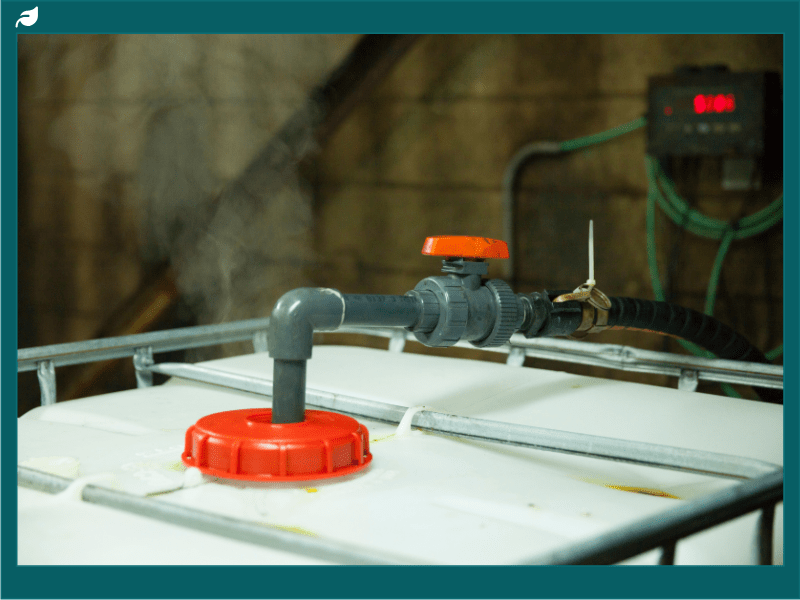
Storage requires a cool, dry location away from direct sunlight, well away from any metals, alkaline chemicals, or oxidizers. Keep the container tightly sealed and store it in a secondary containment vessel, essentially a plastic tray or bin that would catch the entire contents if the primary container leaked. Label the storage clearly and keep it locked away from children. Understanding the safety data sheet for the specific product you’re using is worth the ten minutes it takes to read it.
The add-acid-to-water rule applies in every mixing situation: whether you’re diluting a fresh batch for pool maintenance, preparing a masonry cleaning solution, or neutralizing waste before disposal. The principle never changes. And when in doubt about concentration or application, err on the side of more dilution. You can always apply a weaker solution more than once.
Understanding the pH and Its Impact
Muriatic acid’s pH, close to 0 at full concentration, is what gives it the ability to cut through materials that laugh at milder treatments. To put that in perspective: lemon juice sits around pH 2, vinegar around pH 3, and black coffee around pH 5. Each step down the pH scale represents a tenfold increase in hydrogen ion concentration. Concentrated hydrochloric acid isn’t just a bit more acidic than vinegar.
It’s roughly a hundred to a thousand times more acidic, depending on concentration. That difference in scale explains the dramatic difference in reactivity.
In practical terms, pH management is the reason muriatic acid is the standard tool for pool water balance. Pool water should sit between pH 7.2 and 7.8 for safe, effective operation. When the pH rises above that range, the added acid brings it back down by neutralizing the excess alkalinity in the water. Getting this balance right matters: too low and the water becomes corrosive to pool equipment and irritating to swimmers, too high and chlorine stops working properly and scale starts forming on the pool walls and in the filtration system.
The same pH logic drives the industrial applications. In chemical manufacturing, running a reaction at the correct pH often determines whether you get the product you want or an unwanted mixture of byproducts. Hydrochloric acid’s complete dissociation in water makes it a reliable, predictable tool for driving reactions to specific pH endpoints. In textile processing, precise pH control during dyeing determines color uptake, consistency across a production run, and the durability of the color in the finished fabric.
When used in metal processing, the pH of the acid bath directly controls the rate of scale removal and the risk of over-etching the base metal. Too concentrated and the acid attacks the steel itself rather than just the oxide layer. Too dilute and the cleaning process takes too long and becomes economically impractical. Getting the concentration, and therefore the pH, right is a process engineering decision that has real consequences for product quality and throughput.
Understanding pH isn’t just a chemistry lesson. It’s the core of understanding why muriatic acid works the way it does and how to control those properties to get the results you want without causing damage you didn’t intend.
Comparing Muriatic Acid to Hydrochloric Acid
The names get used interchangeably constantly, and that’s partly understandable because they refer to the same fundamental compound. But treating them as completely synonymous can lead to real mistakes in purchasing, application, and safety planning. The difference between muriatic acid and technical or reagent-grade hydrochloric acid is meaningful enough that it’s worth understanding clearly before you order supplies or plan a project.
Differences Between Muriatic and Hydrochloric Acid
Both muriatic acid and hydrochloric acid are solutions of hydrogen chloride in water. The formula is HCl in both cases, and the fundamental chemistry is identical. What differs is concentration, purity, and intended application.
Hydrochloric acid in its industrial or laboratory-grade form typically runs at concentrations of 36 to 38 percent HCl by weight. At those concentrations it fumes heavily at room temperature, releasing a visible mist of hydrogen chloride vapor over the open container. The purity standards for reagent-grade hydrochloric acid are tight, with very low tolerances for metal ion contamination, because many laboratory and pharmaceutical applications require that precision. Industrial grades are less pure but still highly concentrated, and they’re used in processes where the concentration drives the reaction rate and the purity of the product matters for different reasons than laboratory work.
Muriatic acid, as sold in hardware stores and pool supply shops, is a commercial-grade product that typically runs between 28 and 35 percent HCl. It may contain small amounts of impurities, often iron compounds that give it a faint yellow tint, which is perfectly acceptable for cleaning and pH adjustment tasks but would be problematic in a pharmaceutical or semiconductor manufacturing context. The concentration is still high enough to be genuinely dangerous, but the slightly lower starting point and the practical packaging it comes in make it the appropriate choice for home improvement and general maintenance use.
The safety requirements for both are serious, but they scale with concentration. Concentrated technical-grade hydrochloric acid at 37 percent produces more fumes at rest than a 31 percent muriatic acid solution does, meaning the industrial product demands more aggressive ventilation controls and more robust personal protective equipment for the same exposure time. When buying acid solutions for household tasks, the label matters: muriatic acid signals a product formulated for those applications, while a product labeled as hydrochloric acid is more likely to be a higher-purity or higher-concentration product with a different intended use profile.
Practically speaking, if you’re adjusting pool pH, cleaning brick, or etching concrete, muriatic acid from the hardware store is the correct choice. If you’re running a chemical process that requires a specific concentration with precise purity specifications, you’ll be ordering from a chemical supplier and working under a formal safety management framework. The acid difference isn’t just about chemistry. It shapes every decision from procurement to disposal.
Both forms are effective at neutralizing alkalinity and dissolving mineral deposits. But matching the right form to the right application isn’t just about efficacy. It’s about managing the hazards at a level appropriate to your setting and your safety infrastructure. A homeowner cleaning their driveway does not have the fume extraction systems, the emergency showers, or the chemical storage protocols of an industrial site, and the product formulation should reflect that reality.
Environmental and Safety Considerations
Using muriatic acid responsibly doesn’t end when the job is done. What you do with leftover acid, diluted rinse water, and used containers matters considerably for the environment and for the safety of anyone who might come into contact with the waste. Strong acids don’t stay where you put them. They move through soil, they affect water chemistry in drainage systems, and they can react dangerously with materials they encounter along the way.
Taking disposal seriously is part of using this chemical responsibly, and in most jurisdictions it’s also a legal requirement.
Proper Disposal Methods for Muriatic Acid
The first step in disposing of muriatic acid waste is neutralization, and it needs to be done carefully. Leftover acid solution should never go directly down a drain, into a storm sewer, or onto soil. At the concentrations typically used for cleaning or pH adjustment work, the acid is corrosive enough to damage pipes, kill beneficial microorganisms in septic systems, and harm aquatic life if it reaches a waterway.
To neutralize the acid, start by diluting the waste solution significantly with clean water, always adding the acid to the water, not the reverse, even with waste streams. Then add a neutralizing agent slowly. Baking soda, which is sodium bicarbonate, is the standard household option. Add it in small amounts and stir between additions.
The reaction produces carbon dioxide gas, which is why it fizzes, and the fizzing can be vigorous enough to splash if you add too much at once. Keep adding baking soda until the fizzing stops and a pH test shows the solution is close to neutral, ideally between pH 6 and 8. Wear your protective gear throughout this process, including gloves, goggles, and respiratory protection, because the acid is still reactive until fully neutralized.
Once the solution tests neutral, you can generally dispose of it via the municipal sewer system in small quantities, but check local regulations first because the rules vary by location and by the volume you’re disposing of. If you have significant quantities of waste acid, or acid that you cannot safely neutralize at home, the correct path is a licensed hazardous waste disposal facility. Most municipalities run household hazardous waste collection days where chemicals like this can be dropped off at no charge. Environmental agencies at the state or local level can provide specific guidance on the rules in your area, and following that guidance isn’t just good practice.
Empty acid containers need careful handling too. Rinse them thoroughly with water, neutralize the rinse water as described above, and then follow local guidance on whether rinsed plastic chemical containers can go in regular recycling or require special handling. Never reuse acid containers for any other purpose, and never leave them where a child or animal could reach them.
Wearing proper protective equipment throughout the disposal process is not optional, even though the acid is diluted at this stage. The fumes are less intense from a diluted solution, but they’re still present. The splashing risk from the neutralization reaction is real. And handling any acid waste with bare hands is simply unnecessary risk.
Protect yourself, neutralize the waste carefully, check your local rules, and dispose of the material through the appropriate channel. That’s the full loop of responsible use, from the hardware store shelf to final safe disposal, and every step of it reflects the same core principle: muriatic acid is a powerful tool that rewards careful handling and penalizes careless habits.
The environmental stakes are real. Hydrochloric acid that reaches a stream or pond can drop the pH dramatically, stressing or killing fish and aquatic invertebrates within hours. Acid that soaks into soil near a home can leach into groundwater and affect drinking water quality over time. The neutralization step before disposal exists for good reasons, and taking it seriously is part of being a responsible user of a chemical that has genuine value precisely because it’s so reactive.