Governments have agreed a series of new international protections for threatened shark species at the 15th Conference of the Parties to the Convention on the Conservation of Migratory Species of Wild Animals, held in Campo Grande, Brazil. The decisions include new listings under the CMS Appendices, extending the highest level of protection to several widely distributed and heavily exploited species.
The measures focus on thresher sharks and two species of hammerhead, alongside increased regional cooperation for the Patagonian narrownose smoothhound. These species are facing sharp population declines linked to fishing pressure, bycatch, and international trade, prompting coordinated action across national jurisdictions.
Under the agreement, all three species of thresher shark, pelagic, bigeye, and common, have been added to CMS Appendix I. This status requires countries that are party to the convention to prohibit the take of these species and take steps to reduce human caused mortality.
Thresher sharks are highly migratory and frequently move across national boundaries into international waters. Their slow reproductive rates and exposure to both targeted fishing and bycatch have contributed to steep global declines, making coordinated protections a central part of recovery efforts.
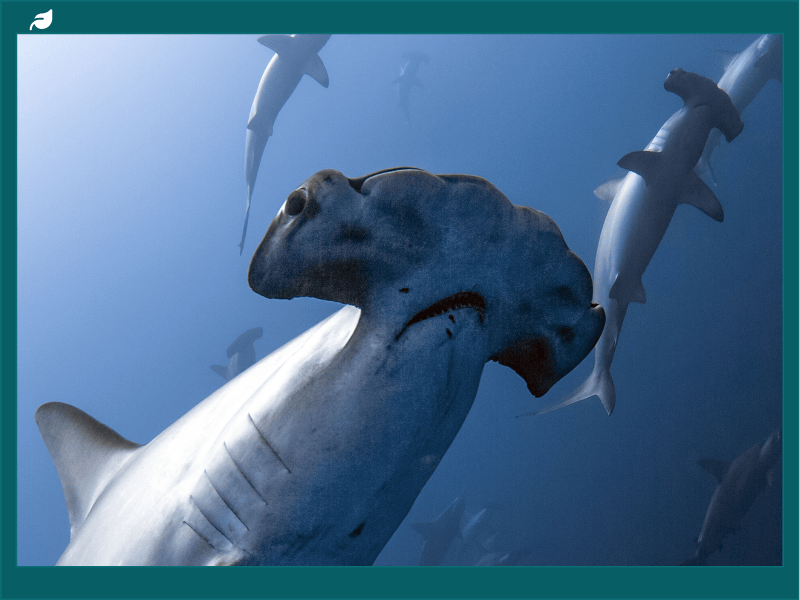
The scalloped hammerhead shark has also been listed on Appendix I, reflecting its classification as Critically Endangered. Its populations have been significantly reduced by overfishing and the global fin trade, with its life cycle spanning coastal and offshore habitats across multiple regions.
The great hammerhead shark has received the same level of protection, with governments recognising the need for urgent measures to address continued declines. As a highly mobile species, its conservation depends on consistent protections throughout its migratory range.
“Iconic ocean wanderers like large hammerheads and thresher sharks, that are already assessed by the IUCN as threatened with extinction should be fully protected – and these CMS Appendix I listings are an important recognition that this should happen now” said Dana Tricarico of the Wildlife Conservation Society’s Global Shark Conservation Team. “These listings recognize that slow growing Endangered shark species should be treated like other marine wildlife such as sea turtles or dolphins, and these listings should drive that action — but success will depend on how quickly and effectively countries implement these new obligations at a national level.”
Alongside these listings, governments agreed to include the Patagonian narrownose smoothhound on CMS Appendix II. This designation encourages international cooperation for species that require coordinated management across shared ranges rather than strict prohibition measures.
The smoothhound is a key species for coastal fisheries in the Southwest Atlantic, particularly in Argentina, Uruguay, and Brazil. Its populations have declined by more than 80 percent over three generations, largely due to sustained fishing pressure.
In South America, Wildlife Conservation Society teams are working with governments, fishers, and local communities to address pressures on coastal shark populations. Efforts include monitoring fisheries and supporting data collection to inform management decisions.
“This species supports small-scale coastal fisheries, where they are caught both intentionally and as bycatch. But their populations, and the communities that depend on them, are increasingly at risk without coordinated management.” Said Juan Martin Cuevas, Wildlife Conservation Society’s Shark and Ray coordinator in Argentina. “Since 2022, WCS teams have been working alongside local partners to monitor these fisheries, helping to identify trends and support science-based management in close collaboration with communities — and we will continue to do so to implement these new listings.”
Appendix I listings represent the strongest level of protection under the CMS framework. Countries are required to establish legal measures to prohibit take, conserve habitats, and address factors contributing to species decline.
Appendix II listings focus on cooperation between range states, encouraging agreements on shared management, data exchange, and conservation planning. This approach is often applied to species whose ranges span multiple national waters and the high seas.
Sharks play an important role in marine ecosystems as top predators, influencing the balance and health of ocean food webs. Declines in shark populations have been linked to wider ecological impacts, including changes in prey species and habitat dynamics.
The outcomes of CoP15 reflect growing international attention on marine biodiversity loss and the pressures facing migratory species. Fishing activity, both targeted and incidental, remains one of the primary drivers of decline for many shark populations.
Implementation at national level will determine the effectiveness of the new listings. Countries will need to translate CMS commitments into domestic regulation, enforcement, and monitoring, particularly in fisheries management.
The decisions also signal increasing alignment between international conservation agreements and scientific assessments. Several of the listed species have already been classified as threatened by the International Union for Conservation of Nature, reinforcing the urgency of coordinated action.
As migratory species cross multiple jurisdictions, conservation measures depend on cooperation between governments, regional fisheries bodies, and local stakeholders. The CMS framework provides a mechanism for this coordination, though outcomes rely on consistent application across regions.
The agreements reached in Brazil mark a step in expanding protections for vulnerable marine species, with a focus on those facing the most severe declines. Attention now shifts to how quickly and effectively these measures are adopted and enforced across national and regional contexts.