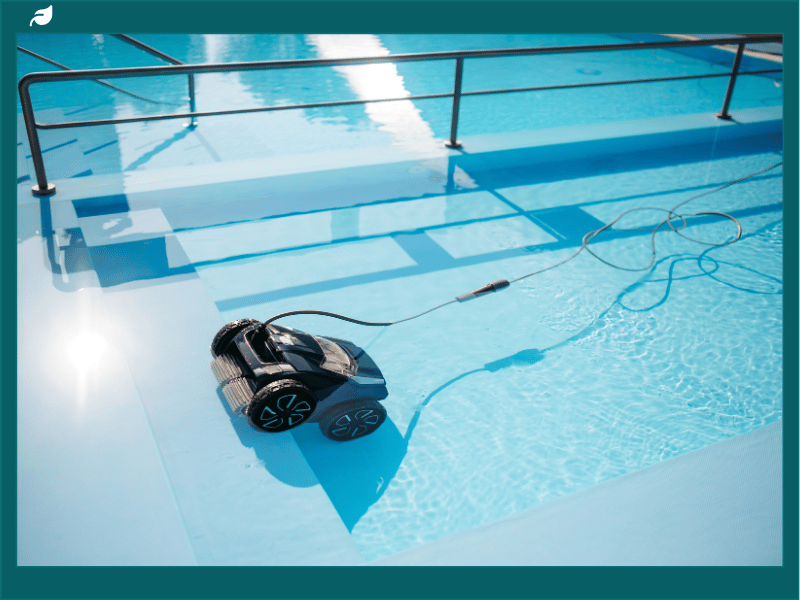
Cleaner pool water is not only a matter of appearance. A pool can look clear, calm, and inviting while still needing proper sanitizing. That is where many homeowners misunderstand the role of a pool robot.
A pool robot is a physical cleaning tool. Chlorine is a sanitizer. One removes visible debris. The other helps manage bacteria, algae, and invisible contaminants in the water. They work well together, but they cannot replace each other.
For more responsible pool ownership, the goal should not be to avoid chlorine or overuse chemicals. The better approach is to reduce waste, remove debris early, test the water regularly, and use each part of the maintenance system for the job it was designed to do.
Pool Cleaning and Pool Sanitizing Are Different Jobs
A robotic cleaner can collect leaves, pollen, sand, hair, insects, and fine dirt from the pool floor, walls, waterline, or surface, depending on the model. That improves the pool’s visible condition and reduces the amount of material sitting in the water.
Chlorine works differently. It is used to sanitize the water, helping control bacteria, algae, and organic contamination from swimmers, rain, wind, sunscreen, sweat, and body oils. A robot cannot kill germs, adjust pH, measure alkalinity, or treat combined chlorine.
This difference matters. If a pool owner sees a clean floor and assumes the water is safe, they may skip testing. If another owner sees cloudy water and adds more chemicals without removing debris, they may waste products without solving the cause. Sustainable maintenance begins with understanding the difference between physical cleaning and water sanitation.
What Chlorine Does That a Pool Robot Cannot Do
Chlorine helps protect pool water from biological contamination. It supports sanitation, algae control, and water safety. It also works alongside pH and alkalinity balance, which influence how comfortable and effective the water chemistry will be.
A pool robot cannot do any of that. It cannot tell whether free chlorine is too low. It cannot correct high pH. It cannot manage alkalinity, stabilizer, or combined chlorine. It cannot decide whether water needs shock treatment, professional testing, or filtration attention.
Saltwater pools are not an exception. A saltwater system is not chlorine free. It uses a salt chlorine generator to produce chlorine. A robotic cleaner can help remove debris from a saltwater pool, but it cannot replace the sanitizer process.
That is why pool owners should keep testing chlorine, pH, and alkalinity even when the pool looks clean. Testing is especially important after heavy swimming, storms, hot weather, or visible changes in water clarity.
What a Pool Robot Can Do Better Than Manual Cleaning
A robot is most useful for reducing repeated physical cleaning. It can help homeowners avoid constant manual vacuuming, brushing, and debris removal. Instead of waiting for dirt to build up, owners can run cleaning cycles as part of a regular routine.
This is where a swimming pool sweeper or robotic cleaner becomes useful. It does not sanitize the pool, but it can remove debris before that material breaks down, sinks deeper, stains surfaces, or adds pressure to the filtration system.
The practical value is consistency. When cleaning is easier to start, homeowners are more likely to do it early. That means fewer emergency cleanups, less guessing with chemicals, and a cleaner pool environment for chlorine and filtration to work properly.
How Debris Affects Water Balance and Chemical Waste
Leaves, pollen, insects, grass clippings, sunscreen residue, and body oils may seem like small problems at first. Over time, they can increase maintenance pressure. Organic debris can affect sanitizer demand. Fine particles can make water look dull. Waterline residue can make the pool feel poorly maintained even when the chemistry is close to balanced.
This does not mean a pool robot reduces chlorine needs in a guaranteed or fixed way. That would be misleading. What it can do is reduce the physical load that makes pool care harder.
Cleaner surfaces also make problems easier to notice. If the floor, walls, waterline, and surface are maintained regularly, cloudy water, early algae growth, staining, or unusual residue become easier to spot. That supports a more sustainable maintenance routine because the owner is less likely to respond with panic dosing, overuse of clarifier, or repeated shock treatments when physical cleaning should happen first.
Where Beatbot AquaSense 2 Pro Fits Into Responsible Pool Maintenance
Beatbot AquaSense 2 Pro fits naturally into a responsible pool maintenance routine because it is designed to help with physical cleaning across multiple pool areas. It can support cleaning on the water surface, pool floor, walls, and waterline, with water clarification support as part of broader pool care. For homes that deal with leaves, pollen, fine dirt, sunscreen residue, and daily debris, it can reduce the need for repeated manual vacuuming, brushing, and surface cleanup.
AquaSense 2 Pro is best understood as a cleaning assistant, not a sanitizer. It can help keep visible debris and residue under better control between service visits or before weekend use. That makes the pool easier to maintain, and it may help homeowners avoid using chemicals as a shortcut for problems that are really caused by physical buildup.
For homeowners comparing the best automatic pool cleaners, the right choice should support regular debris removal while leaving sanitation, testing, and chemical balance to the proper pool care routine.
AquaSense 2 Pro still has clear limits. It cannot replace chlorine, a salt chlorine generator, pH testing, alkalinity control, shock treatment, the main filtration system, or professional water diagnosis. It also cannot fix severe algae, cloudy water causes, equipment failure, or chemical imbalance. Its value is making physical cleaning easier to repeat.
A Balanced Routine Uses Robot Cleaning Plus Water Testing
The most reliable pool routine combines physical cleaning, water testing, and filter care. These tasks work together.
A simple responsible routine can look like this:
- Remove large debris by hand before running any cleaner.
- Run the robot on a regular schedule or after heavy use.
- Empty and rinse the robot basket after the cycle.
- Check skimmer and pump baskets so circulation stays strong.
- Test chlorine, pH, and alkalinity before making chemical changes.
- Adjust chemicals only according to reliable test results and product directions.
This approach is better than waiting for the pool to look dirty, adding chemicals, and hoping the problem disappears. It also reduces unnecessary waste because each action has a clear purpose.
What Happens When Owners Rely Too Much on One Side
Some pool owners lean too heavily on chemicals. They add chlorine, clarifier, or shock when the real problem is leaves, fine dirt, clogged baskets, or poor circulation. That can waste products and still leave the pool looking neglected.
Other owners rely too much on robotic cleaning. The floor may look clean, but the water may still be under-sanitized, unbalanced, or affected by poor filtration. Clean-looking water is not the same as tested water.
Both mistakes create extra work over time. Dirty robot filters reduce cleaning performance. Clogged baskets reduce water flow. Low sanitizer levels increase risk. Poor circulation makes chemistry harder to manage. If algae, cloudy water, strong chlorine smell, staining, or recurring water problems continue, homeowners should test carefully and consider professional help.
Sustainable Pool Care Means Using the Right Tool for Each Job
A pool robot and chlorine are not competitors. They are different parts of the same system. The robot reduces manual physical cleaning. Chlorine supports sanitation. Filtration moves water and captures particles. Testing prevents guesswork. The homeowner keeps the whole routine on track.
Beatbot AquaSense 2 Pro is a strong fit for homeowners who want physical cleaning to be easier, more regular, and less dependent on last minute effort. But responsible pool care still depends on balanced water, clean filters, safe chemical use, and routine oversight.
The goal is not to replace chlorine. The goal is to make pool maintenance cleaner, less wasteful, and easier to manage without cutting corners.