Corplex has introduced a mechanical deinking system for printed polypropylene bus advertising boards at its Gloucester facility. Developed with a global creative agency, printing partner, Eurolease and Siemens Financial Services, the process enables boards to be reused more than 10 times. Corplex reports that up to 70% of recycled material can be returned to new boards, while the solution cuts carbon footprint by up to 80%. The company’s closed-loop recycling system won the Circular Economy Initiative category at the National Recycling Awards.
Replacing The Linear Model
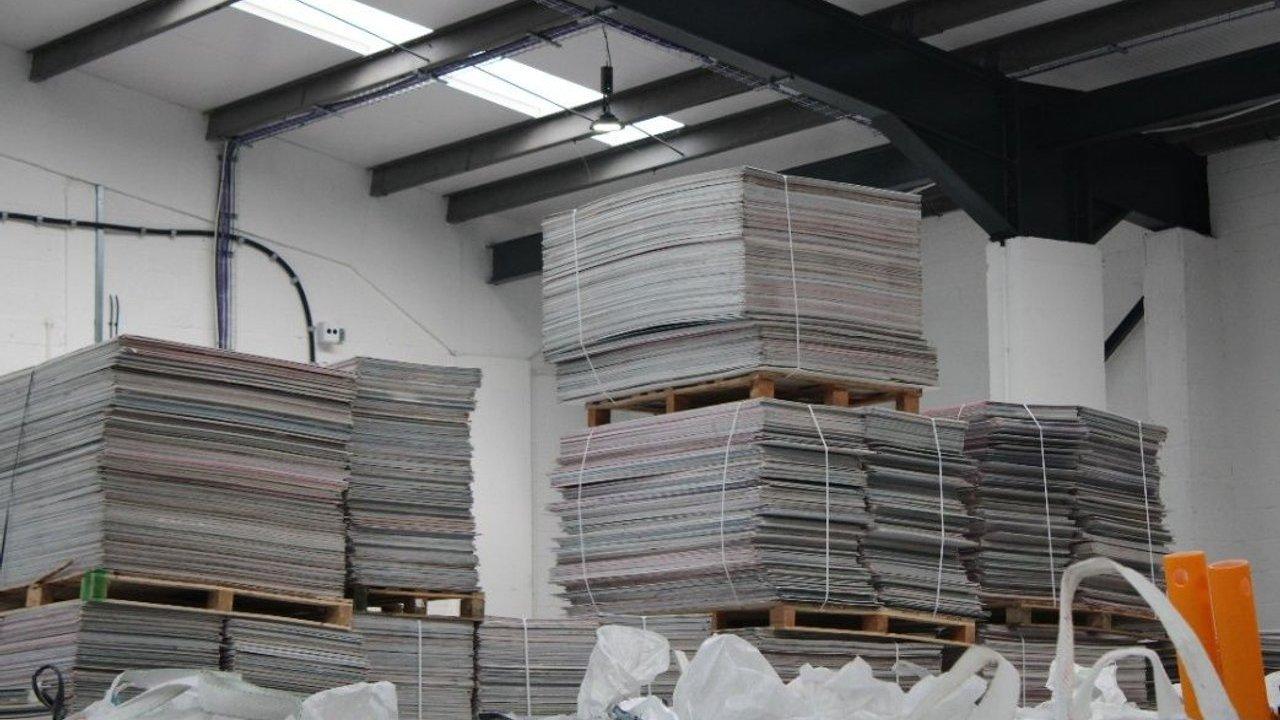
Bus advertising boards are often used for short campaigns because each advertisement needs a permit. Under the established model, printed vinyl is applied to Correx® polypropylene board, then stripped away when a campaign ends. The vinyl is sent to landfill or incineration, while the board may be reused only two or three times before being downcycled into lower-grade material.
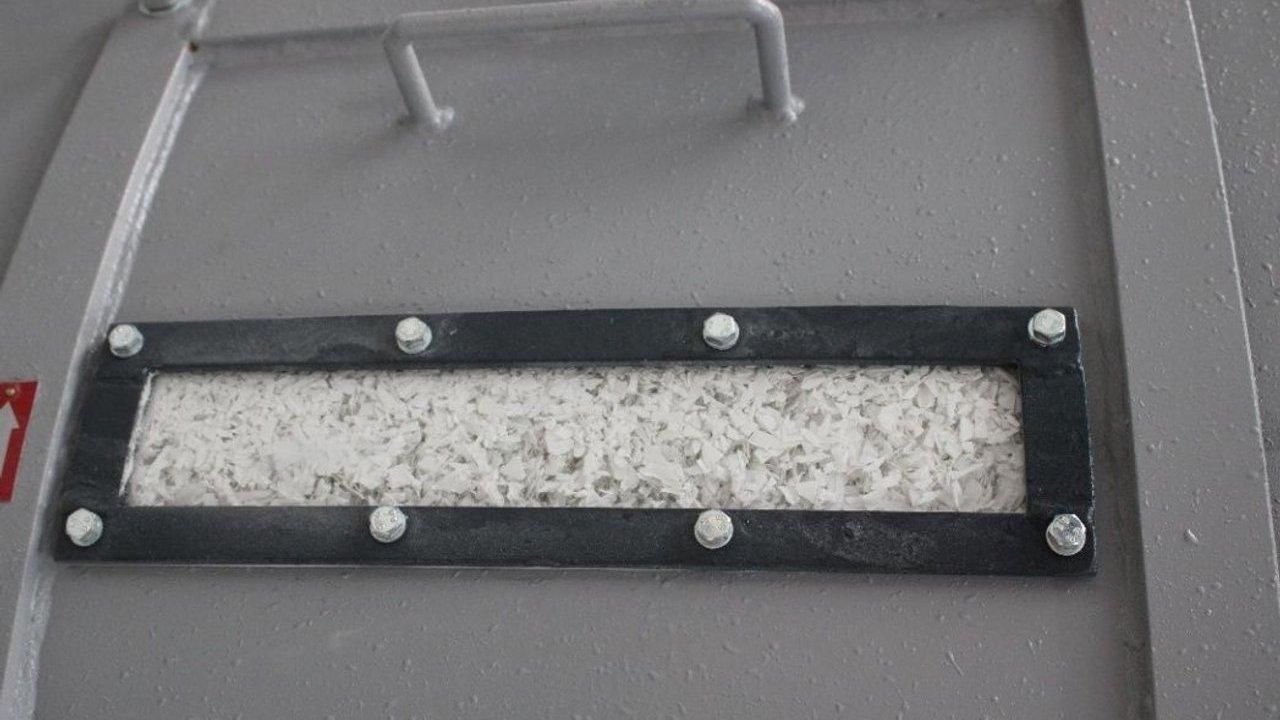
Corplex has removed the glued vinyl layer by printing directly onto mono-material Correx® boards. After use, the boards are shredded into flakes and the ink is washed off without degrading the plastic. The resulting white chips are used to produce new advertising boards, keeping the material within the same product cycle.
The approach addresses a broader plastics challenge. The European Commission has stated that 70% of plastic waste in the European Union still ends up in landfill or incineration. For a material designed to withstand public transport conditions and changing weather, retaining quality through repeated use is central to the case for closed-loop recovery.
Measured Environmental Gains
Corplex compares its deinked polypropylene with PVC banners, fibreboard and aluminium composites, citing durability, cleaner recycling and improved reuse. The company says eliminating vinyl application and removal also reduces processing time, waste and cost.
Independent certification from Carbon Quota confirms an 80% reduction in carbon footprint, according to Corplex. The company estimates this saves more than 3,000 tonnes of CO₂ each year. Its water filtering and reuse system eliminates wastewater, while the process uses a mild detergent that Corplex says poses no harm to users or the environment.
Material recovery has increased from 20% to 70% in new boards because the deinked flakes are purer. This enables a board that would previously have had a short service life to return to advertising use more than 10 times, reducing demand for virgin material.
A Gloucester Deinking Facility
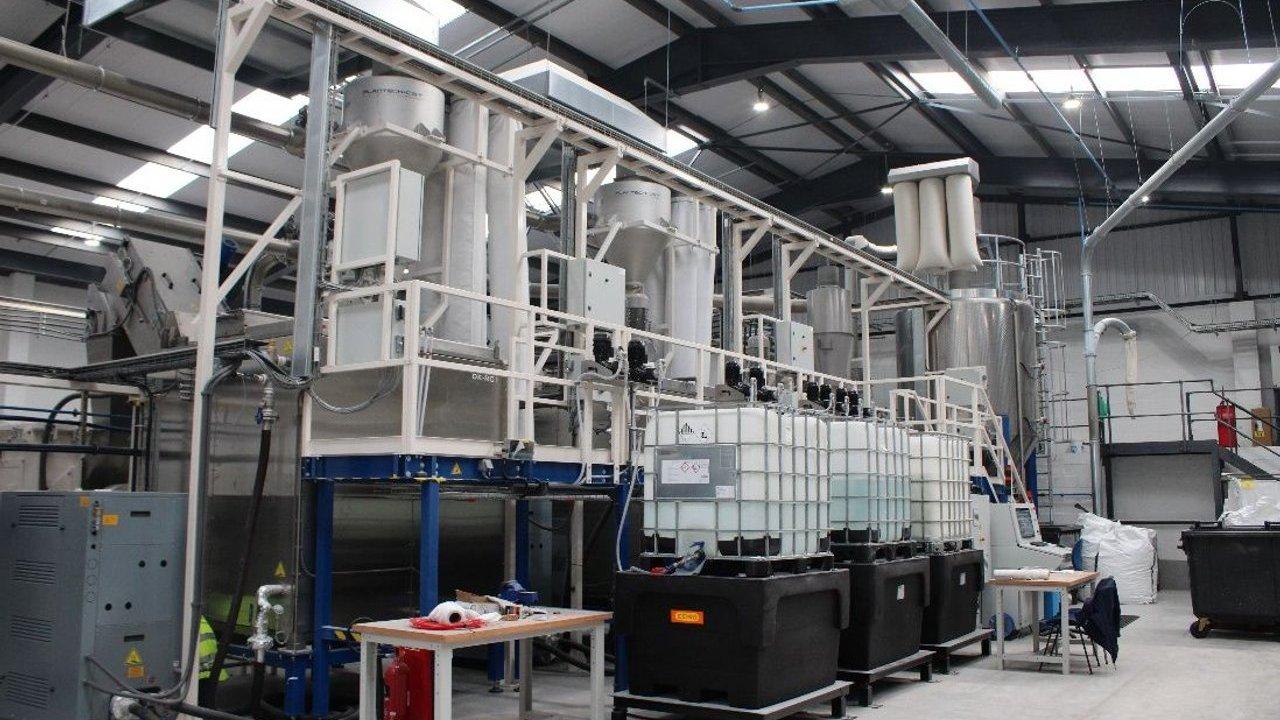
At its 22,000 sq. ft Gloucester site, Corplex operates a Granulation and Deinking Turnkey Production Facility to shred and clean advertising sheets. Siemens SENTRON measuring devices and PAC3220 meters collect process-line data on energy consumption, voltage, current, power factor and frequency.
Tabitha Clark, Market Director, Construction, Steel & Manufacturing at Corplex, said:
“That initial concept has evolved into a fully operational, first‑of‑its‑kind system. What makes it so powerful is that we’re not just recycling material. We’re restoring it to a quality that allows up to 70% of it to go straight back into the same product. That’s genuinely circular. The process itself is also impressive. It’s simple in principle, but the engineering behind it is pioneering, especially for such a heavy substrate.”
Corplex is exploring potential uses for the technology with customers in retail and pharmaceuticals. The development is also creating roles including operators and process engineers at the UK operation.
Finance For Specialist Equipment
The production line was acquired through a £3.15 million Sale & Hire Purchase Back facility. Eurolease introduced Corplex to Siemens Financial Services, which financed the turnkey line and considered the project’s multiple machine-component suppliers when structuring the facility.
Rob Derry, Financial Controller at Corplex, said:
“The process was smooth, the support was excellent, and ultimately it freed up capital for other important investments across the group. We’d certainly consider financing again as we continue to innovate.”
The arrangement marked Corplex’s first use of finance to acquire equipment. It allowed the manufacturer to invest in specialist production capacity while retaining capital for other investments across the group.
A Circular Route For Signage
Corplex’s system provides a practical route for keeping printed polypropylene boards in circulation rather than treating them as short-life advertising material. Its combination of direct printing, mechanical deinking, water reuse and process monitoring shows how a familiar product can be redesigned around repeated recovery.
Eva de la Torre Sans, Director of New Solutions at Corplex, said:
“For me, one of the most important aspects of this project is how many partners came together to make something genuinely pioneering a reality. This wasn’t just a technical achievement; it was a shared vision. We’re talking about the world’s first de inking capability for this type of substrate, which is a major milestone not only for us but for the industry as a whole.”