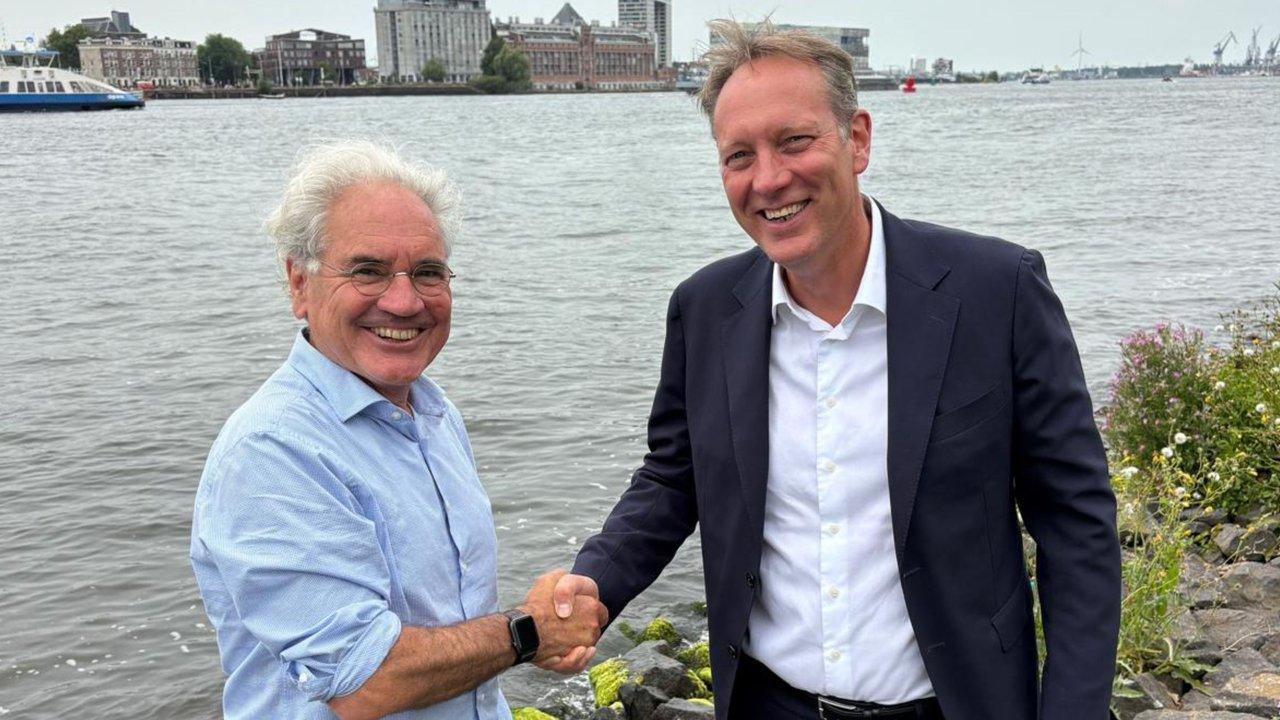
CAPE Holland, a Venterra Group company, and GBM Works have signed a Memorandum of Understanding to develop and commercialise Vibrojet® for offshore wind projects worldwide. The installation technology combines vibratory driving with controlled water jetting for monopile foundations. Its deployment on three monopile foundations at Hollandse Kust West earlier this year has provided a practical milestone ahead of commercial availability targeted from 2027. The partners aim to provide a single integrated service spanning design, engineering, execution and optimisation, tailored to local ground conditions.
A Quieter Installation Option
Foundation installation remains a central technical and environmental consideration for offshore wind developers. Conventional methods can create substantial underwater noise, while the sector continues to seek approaches that can lower environmental effects and contribute to a reduced Levelised Cost of Energy.
Vibrojet® pairs vibratory driving with the controlled application of water jetting. CAPE Holland and GBM Works state that the approach enables faster and more efficient monopile installation, with significantly lower underwater noise levels than conventional methods. The technology is intended to support offshore wind projects seeking an alternative method for installing the large foundations required beneath wind turbines.
The agreement brings together two specialist capabilities. GBM Works developed the patented Vibrojet® technology and has expertise in controlled water jetting for offshore foundation installation. CAPE Holland operates a fleet of vibratory hammers and lifting equipment, with experience in offshore vibratory installation technology.
Hollandse Kust West Milestone
The partnership follows the successful installation of three offshore wind turbine monopile foundations at the Hollandse Kust West wind farm earlier this year. That deployment demonstrated Vibrojet® in an offshore wind setting and marked the technology’s next step towards commercial deployment.
Govert Meijer, CEO at GBM Works, said:
“The successful installation of three monopile foundations at Hollandse Kust West marks an important milestone for Vibrojet®. By combining the expertise of our two organisations, we can accelerate the global deployment of a proven technology for the offshore wind industry.”
For an industry pursuing lower-noise construction methods alongside reliable delivery, the completed installations provide a meaningful foundation for the companies’ commercial plans. The MoU sets out an intention to build on that experience through a long-term strategic relationship.
Integrated Delivery Model
Under the proposed collaboration, GBM Works will lead Vibrojet® technology development, project feasibility studies and marketing. CAPE Holland will take responsibility for Vibro Lifting Technology development, system integration and the operational execution of offshore projects.
The division of responsibilities is designed to create a fully integrated offering for clients. Rather than separating technology development, installation equipment and offshore operations between suppliers, the companies intend to bring these elements together through one collaboration. This model is expected to allow the solution to be adapted to local ground conditions for individual projects.
Frank Koopman, Managing Director at CAPE Holland, said:
“By combining GBM Works’ Vibrojet® technology with CAPE Holland’s offshore vibratory installation expertise, we can offer our clients an integrated installation solution that meets the growing demand for quieter, more efficient and more sustainable foundation installation methods.”
Commercial Plans From 2027
Over the coming months, CAPE Holland and GBM Works will work to formalise their relationship through licence and long-term cooperation agreements. Their stated ambition is to make Vibrojet® commercially available as an integrated solution for offshore wind farm installation projects from 2027 onwards.
The collaboration also reflects the value of pairing specialised engineering technologies with established offshore operational capacity. GBM Works brings its patented foundation installation method to the partnership, while CAPE Holland contributes its equipment fleet and operational experience. Together, the companies are positioning Vibrojet® as a practical option for developers seeking quieter, efficient and more sustainable monopile installation.
As offshore wind projects advance in increasingly varied locations, technologies that can respond to site-specific ground conditions will be closely watched. The new agreement gives Vibrojet® a clearer route from successful project deployment towards broader international use, with both companies focused on building a commercial offering for the sector.